
ALMATY – Kazakhstan has nearly doubled its agricultural exports over the past five years, reaching $7 billion in 2025 from $3.8 billion, according to an analysis published by the World Financial Review. The growth has strengthened Kazakhstan’s role as a food supplier to Central Asia and beyond. Still, it raises a broader question about the country’s agricultural future: can rising export volumes translate into a higher-value agri-food economy?
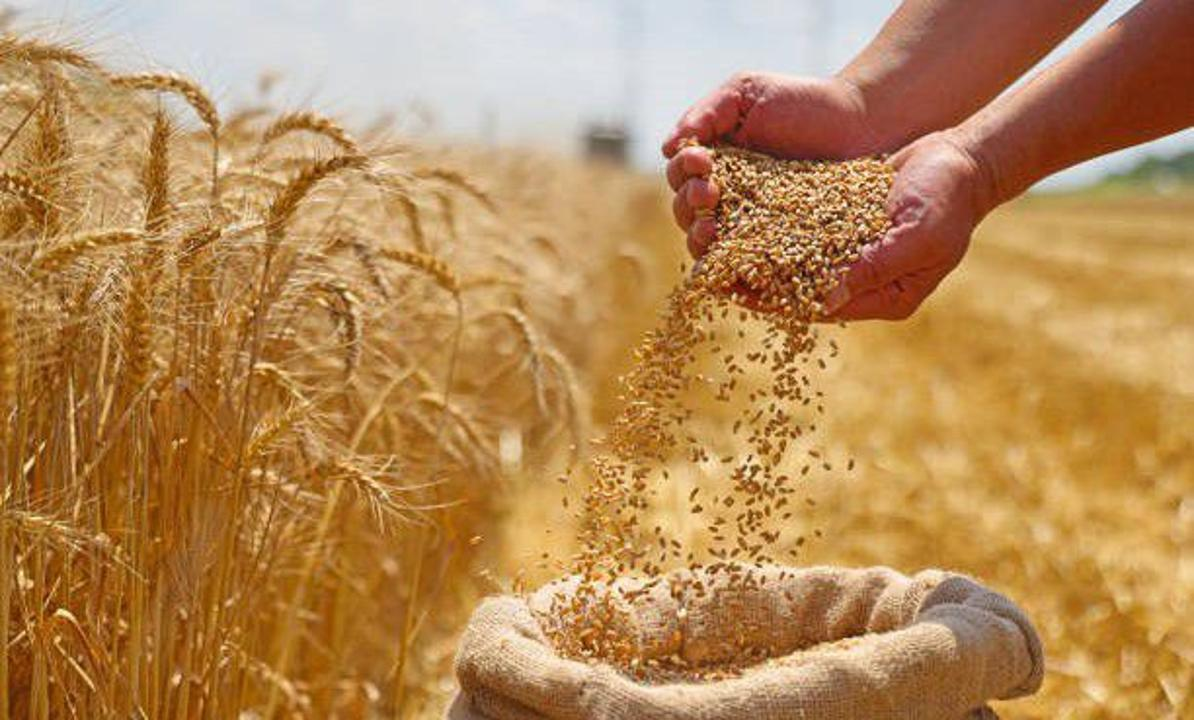
Photo credit: Agriculture Ministry.
According to the World Financial Review, Kazakhstan’s growing agricultural capacity and location between major Eurasian markets are creating new opportunities for the country to play a larger role in regional food security. The Organization for Economic Co-operation and Development (OECD) and the UN Food and Agriculture Organization project that international trade will become increasingly important to global food systems, with around 22% of calories consumed worldwide expected to cross international borders by 2034.
For Kazakhstan, which borders or has close transport links to rapidly growing markets in Central Asia, China, the Caucasus and beyond, this creates an economic advantage. The country can supply regions with growing food demand while using its agricultural surplus to expand exports.
Kazakhstan’s agricultural products are already exported to more than 72 countries. Grain and flour remain among its most important exports, particularly to neighboring markets. Over the first 11 months of the latest marketing season, exports of grain and flour reached 13.5 million tons, according to figures cited in the World Financial Review.
Shipments increased particularly sharply to regional markets. Exports to Afghanistan rose by 59% to 2.2 million tons, while supplies to Uzbekistan increased by 37% to 5.6 million tons. Exports to the Kyrgyz Republic reached 504,000 tons, up around 40%, while shipments to Turkmenistan rose 34% to 210,000 tons.
These figures underline Kazakhstan’s importance as a regional supplier. But they also reveal the limits of an export model based primarily on increasing volumes of agricultural commodities.
From exporting more to creating more value
The more significant shift may now be taking place in food processing. According to official data, agricultural exports reached $7 billion in 2025, up 37% year-on-year. More than half of this amount, around $3.6 billion, came from processed agricultural products, whose exports grew by 35% compared with the previous year. The figures suggest that Kazakhstan is beginning to capture a larger share of the value generated from its agricultural production.
Vice Minister of Agriculture Yerbol Taszhurekov said processing is becoming one of the main drivers of growth in Kazakhstan’s agro-industrial complex. Speaking at a March 5 briefing at the Central Communications Service, he said the country’s strategy is not simply to increase agricultural output but to retain more of the economic value generated by it within Kazakhstan.
“Our strategic task is not only to increase the production of agricultural raw materials but also to ensure their processing within the country, including deep processing that creates products with high added value. Processing forms new production chains, creates jobs in the regions and strengthens Kazakhstan’s export potential,” Taszhurekov said.
But not all processing represents the same level of economic transformation. Turning wheat into flour is already a step beyond exporting raw grain. Deep processing, however, can create products such as starch, gluten, amino acids, syrups, vitamins and bioethanol, connecting agriculture to more complex industrial supply chains.
This distinction may become increasingly important for Kazakhstan. The country’s long-term agricultural strategy is therefore not simply about producing more grain, but about moving further along the value chain. The government aims to increase the share of processed agricultural products to 70%. New deep-processing facilities planned by 2028 are expected to have a combined capacity of 5.8 million tons per year and attract around 1.9 trillion tenge (US$3.9 billion) in investment.
Changing the fields to change the export model
The transformation is also evident in what Kazakhstan produces. In recent years, the area under wheat cultivation has declined by nearly 900,000 hectares. In comparison, oilseed acreage has increased by more than one million hectares and land used for pulse crops has expanded by 275,000 hectares, according to the World Financial Review.
This is more than a change in crop statistics. A broader crop mix creates a wider raw-material base for domestic processing industries. Oilseeds, for example, can support vegetable oil production, while pulses and grain can feed into increasingly sophisticated food and industrial processing. Kazakhstan produced a record 4.8 million tons of oilseeds in 2025, while food production rose 8.1% to 3.9 trillion tenge (US$8 billion).
The shift suggests that Kazakhstan’s agricultural diversification is becoming increasingly connected to its industrial policy. Diversification in the fields is intended to support diversification in factories, which in turn could change the composition of exports.
