
ASTANA – Kazakhstan is seeking to turn its growing digital capabilities into practical economic advantages, with artificial intelligence, energy infrastructure and cross-border digital transport emerging as key areas of cooperation with Russia, President Kassym-Jomart Tokayev said at the AI Journey 2026 international conference in Moscow on Nov. 26.
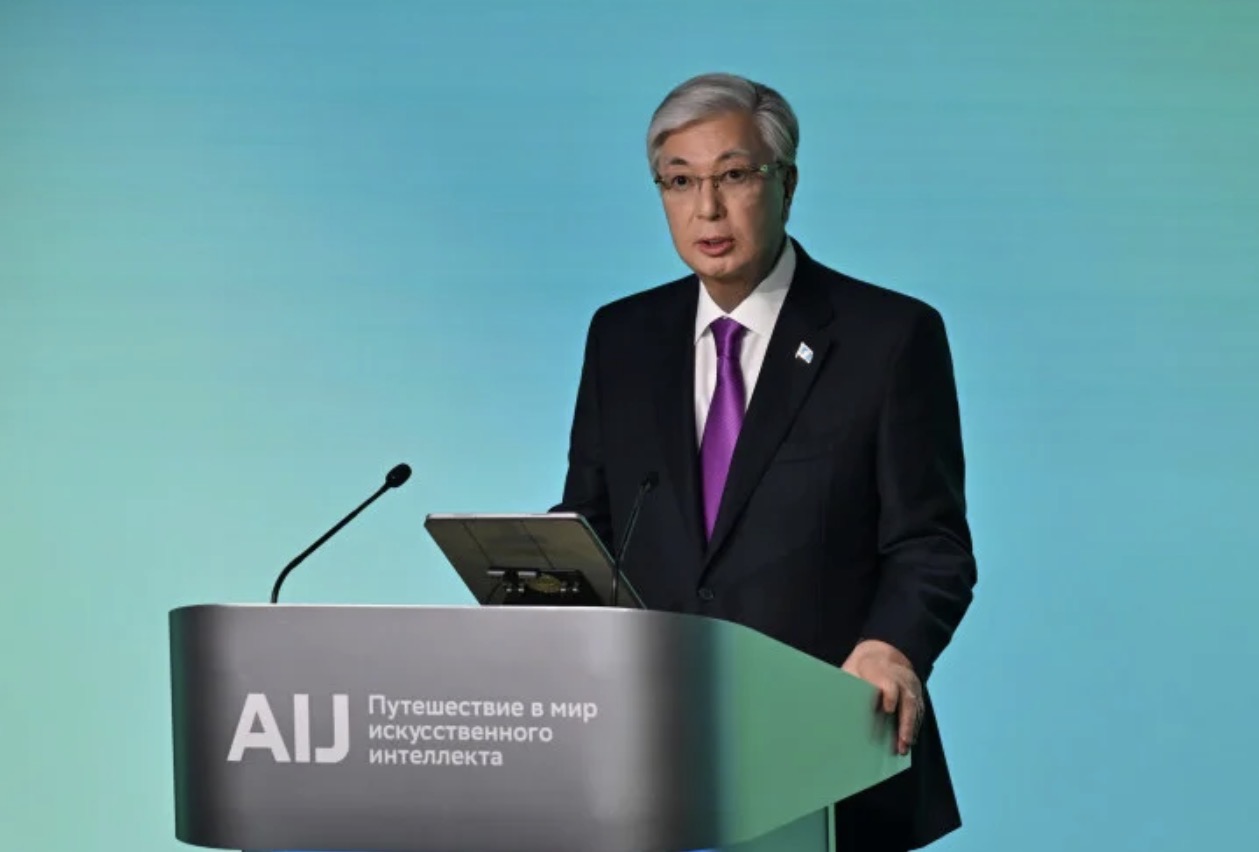
President Kassym-Jomart Tokayev delivers a speech at AI Journey 2026 in Moscow. Photo credit: Akorda.
Addressing the conference alongside Russian President Vladimir Putin, Tokayev outlined Kazakhstan’s digital transformation priorities, highlighting the need to develop domestic AI solutions, expand computing and energy capacity, and strengthen technological cooperation between the two countries, Akorda reported.
Kazakhstan’s digital economy gains momentum
Tokayev said Kazakhstan had established the legal and institutional foundations for its digital transformation through the nationwide Digital Qazaqstan strategy, the Law on Artificial Intelligence and the Digital Code. More than 90% of government services are now available online, while nearly 13 million people have registered on the eGov Mobile application, representing almost two-thirds of the country’s population. Kazakhstan also ranked 16th globally in the United Nations E-Government Development Index, up eight places over two years.
The country’s IT sector is another area of growth. Exports of domestic IT services exceeded $1 billion last year, while the Astana Hub technology park has grown to 2,700 startups and companies. Its participants have generated nearly $7 billion in cumulative revenue since 2019.
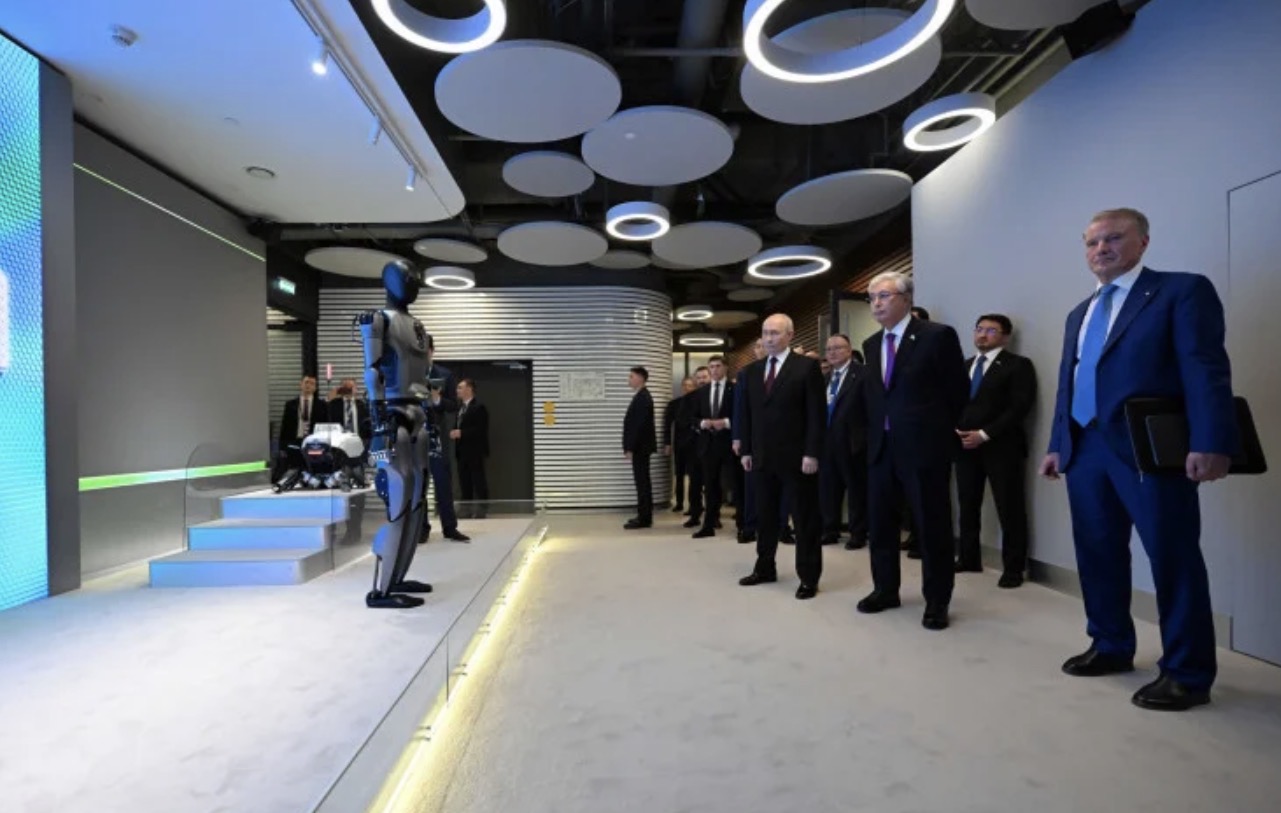
Presidents Kassym-Jomart Tokayev and Vladimir Putin visit the AI exhibition. Photo credit: Akorda.
Tokayev also highlighted Higgsfield, which he described as Kazakhstan’s first unicorn. Two Kazakh entrepreneurs founded the company, and it has attracted significant international attention. More than 100,000 students are acquiring practical AI skills through the AI-Sana program, reflecting the government’s focus on preparing specialists for the digital economy.
However, Tokayev stressed that infrastructure and trained personnel alone would not guarantee technological breakthroughs. Countries must also develop their own solutions and integrate them into real economic processes.
In this regard, he recalled his proposal to launch AI Challenge, an initiative introduced at the Digital Bridge forum in Astana. It aims to bring businesses and developers together to address specific industrial challenges.
AI growth puts energy security in focus
The rapid expansion of artificial intelligence is creating another challenge: rising demand for electricity and computing capacity. Citing International Energy Agency projections, Tokayev said global electricity consumption by data centers could reach 950 billion kilowatt-hours by 2030, more than doubling the 2024 level.
He identified reliable power supplies and efficient electricity networks as increasingly important factors in technological competitiveness. Against this backdrop, Kazakhstan has made a strategic decision to build several nuclear power plants. The first, the Balkhash nuclear power plant, is being developed in partnership with Russia, with Rosatom taking the leading role.
Kazakhstan and Russia consider a digital transport corridor
Transport and logistics represent another promising area for bilateral technological cooperation. Tokayev highlighted Kazakhstan’s Smart Cargo and AI Jol projects, which use digital solutions to improve freight transportation and transport infrastructure management.
In October, the two countries conducted a pilot road freight shipment using an electronic consignment note, marking another step toward paperless cross-border transportation. The next priority, according to Tokayev, is to ensure compatibility between national information systems and expand the practical use of digital solutions.
He proposed developing a fully integrated digital transport corridor between Kazakhstan and Russia, which could streamline freight movement and strengthen the countries’ positions in regional logistics.
AI education and security emerge as shared priorities
In a separate meeting, Tokayev and Putin met with young AI talent from Kazakhstan, Russia and India, including winners of international artificial intelligence competitions. Tokayev urged governments to create better opportunities for talented young people to develop their skills, emphasizing that AI and digitalization would fundamentally shape the future.
He also called for responsible AI education, noting that students must learn to think independently, critically evaluate information and make informed decisions rather than simply rely on instant AI-generated answers.
President Tokayev warned about the growing misuse of artificial intelligence in digital fraud, disinformation, personal data violations and attacks on civilian infrastructure. Referring to the Aqaba Process summit held in Astana on Nov. 6, he stressed the importance of coordinated international efforts to prevent emerging technologies from being used for criminal purposes.
The conference also featured an exhibition showcasing AI applications in Kazakhstan and Russia. Kazakhstan’s pavilion presented six areas: Technological Nation, Startup City, GovTech, Aitu, AI in Transport and FinTech. AI Journey has been held annually since 2016 and has developed into an international platform for discussing advances and challenges in artificial intelligence.
