
ASTANA – Kazakhstan posted growth in oil and coal production in 2025, while natural gas and copper output declined, revealing contrasting trends across the country’s energy and mineral industries, according to Italian energy company Eni’s World Energy Review 2026.

Photo credit: Pixabay.
The report, released on Nov. 2, examines global energy production, consumption and trade, as well as developments in critical minerals and renewable energy.
Kazakhstan’s oil production, including crude and unconventional oil and natural gas liquids, increased 11.8% to 2.098 million barrels per day in 2025, up from 1.876 million barrels per day a year earlier.
The country remained Central Asia’s largest oil producer, accounting for approximately 88% of the region’s combined output. Turkmenistan followed with 200,000 barrels per day, while Uzbekistan produced 81,000 barrels per day.
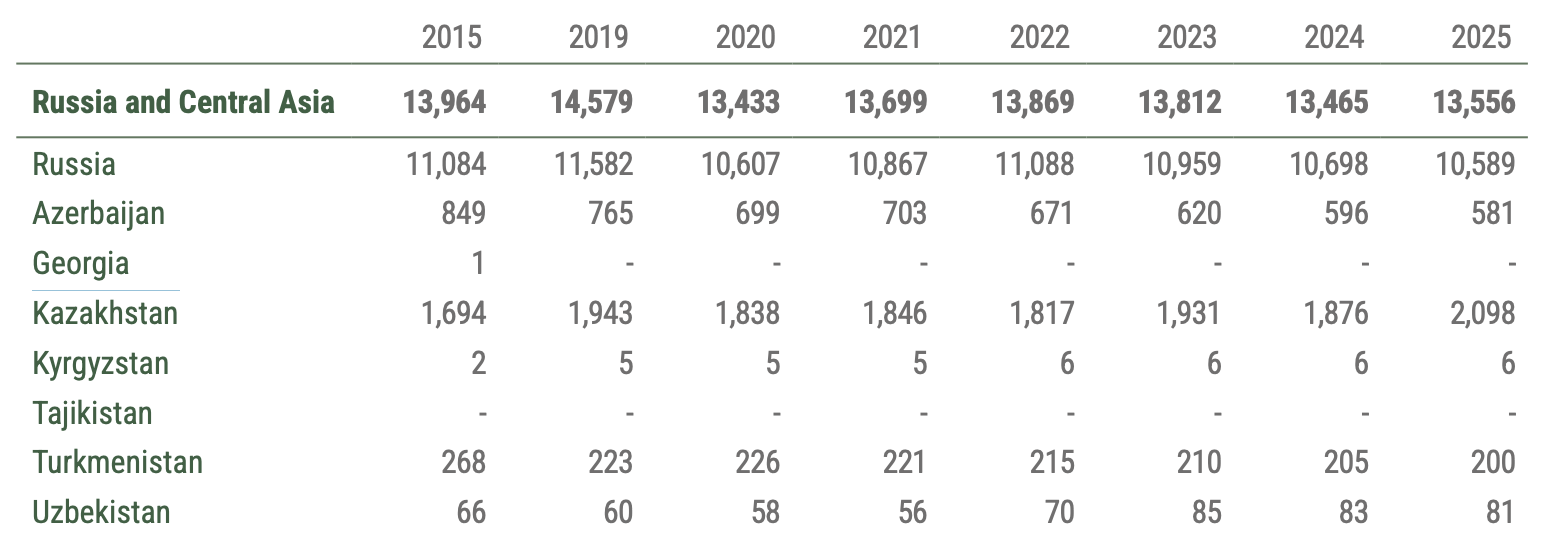
Crude and non conventional oil, natural gas liquids (thousand barrels/day). Photo credit: Eni
The increase preceded a sharp contraction in global oil demand in 2026. According to the International Energy Agency’s (IEA) November Oil Market Report, worldwide oil consumption is projected to fall by 2.7 million barrels per day this year to 102.3 million barrels per day, amid supply disruptions and elevated fuel prices.
The IEA expects demand to rebound by two million barrels per day in 2027, with liquefied petroleum gas, ethane and naphtha accounting for approximately 80% of the increase as supply chains normalize.
The agency also said the global oil market shows “tentative signs of rebalancing.” Global oil supplies have for the first time exceeded demand since the war in Iran.
Coal
Coal production in Kazakhstan also increased, rising 6.7% to 106 million tons, compared with 99 million tons in 2024. Kazakhstan ranked ninth among the world’s largest coal producers and recorded the fastest annual growth among the top 10.
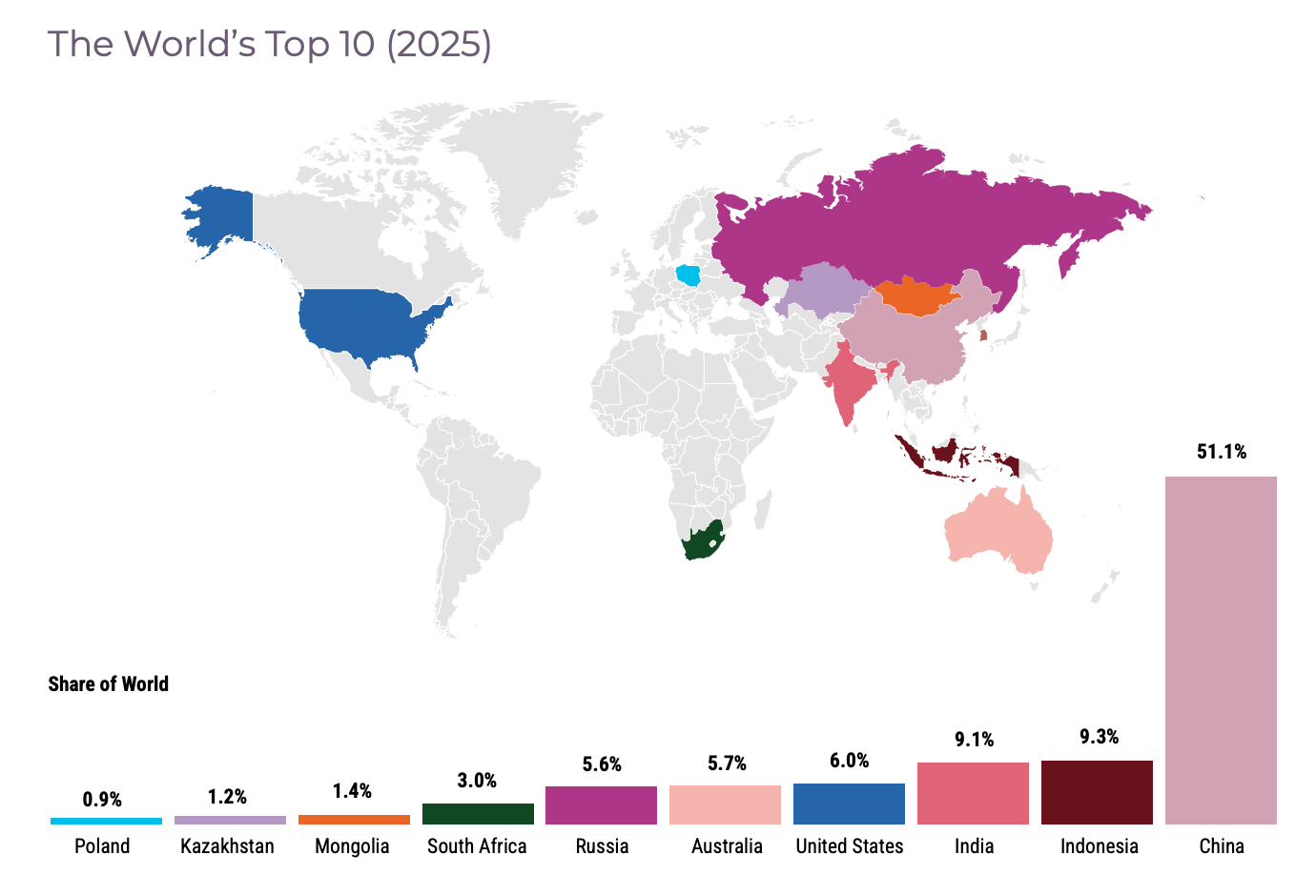
Kazakhstan is among the world’s top 10 largest coal producers. Photo credit: Eni
The increase contrasted with a marginal decline in global coal production, which fell 0.1% to 8.825 billion tons in 2025. China remained the world’s largest coal producer, accounting for more than half of global output.
Natural gas
Natural gas production followed a different path, falling 6.1% to 28.21 billion cubic meters in 2025, down from 30.04 billion cubic meters in 2024. Kazakhstan remained the third-largest natural gas producer in Central Asia, behind Turkmenistan and Uzbekistan.
According to the report, Turkmenistan produced 72.48 billion cubic meters, a decline of 1.4%, while Uzbekistan increased production by 2.4% to 40.16 billion cubic meters.
Copper production
The report also highlighted Kazakhstan’s position in global mineral production. Kazakhstan produced an estimated 710,000 metric tons of mined copper in 2025, down from 724,000 metric tons in 2024 and 740,000 metric tons in 2023.
The country accounted for approximately 3.1% of global copper production, placing it among the world’s 10 largest producers. The decline comes as global copper mine production reached 23.01 million metric tons in 2025.
Copper is an important material for electricity networks, renewable energy technologies and industrial manufacturing, making its production increasingly significant to global energy supply chains.
According to the United Nations Conference on Trade and Development (UNCTAD), global demand for the metal is projected to increase by more than 40% by 2040, driven by the expansion of renewable energy, electricity grids, electric vehicles and digital infrastructure.
Profound transformation
The findings come against a backdrop of growing global energy demand. According to Eni, worldwide energy consumption rose by just over 1% to approximately 15.7 billion tons of oil equivalent in 2025, while oil, natural gas and coal continued to account for around 80% of the global primary energy mix.
Eni said the report reflects an “energy system undergoing profound transformation.” This transformation is fueled by rising energy demand stemming from AI and data centers, renewable energy development, and the “continued essential role of conventional energy sources in ensuring security, continuity and affordability.”
Beyond fossil fuels, Kazakhstan also maintained a leading position in the region in terms of wind power capacity. According to Eni, the country’s installed wind power capacity reached 1,909 megawatts in 2025, compared with 1,652 megawatts in Uzbekistan. Kazakhstan recorded a 25.6% increase in wind power capacity.
Financial analyst Andrey Chebotarev, founder of FINANCE.kz Telegram channel, said the findings underscore Kazakhstan’s dominant position in Central Asia’s energy sector but also highlight the importance of using revenue from traditional energy resources to develop other industries.
He emphasized that Kazakhstan’s leadership in oil and coal production provides an important economic advantage, but maintaining that position should not become an end in itself.
