
ASTANA – Kazakhstan presented its efforts to restore the North Aral Sea and rehabilitate ecosystems in the Aral Sea region during a panel session at the 31st United Nations Climate Change Conference (COP31) in Antalya, Türkiye.
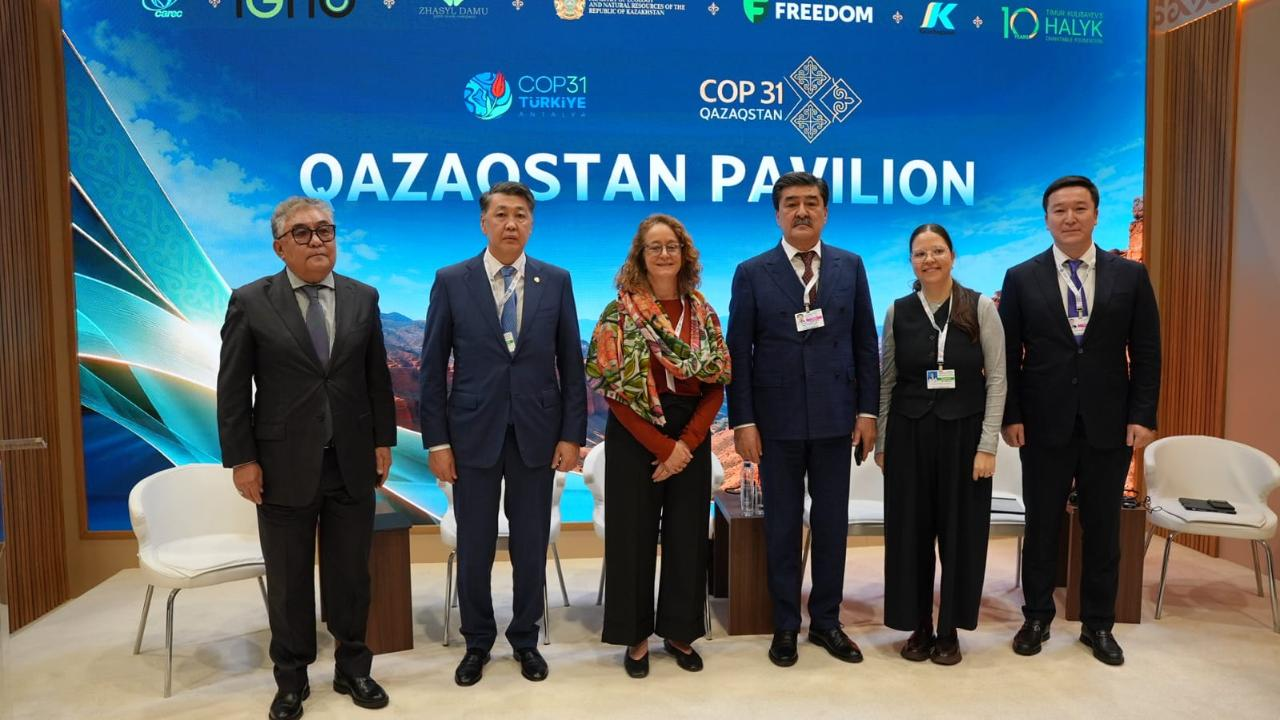
Photo credit: Ministry of Ecology and Natural Resources.
The session on restoration of aquatic ecosystems was held at the Kazakhstan National Pavilion and featured Vice Minister of Ecology and Natural Resources Mansur Oshurbayev, reported the ministry’s press service.
Speaking at the event, Oshurbayev outlined the country’s measures to restore ecosystems in the Aral Sea region and help communities adapt to climate change.
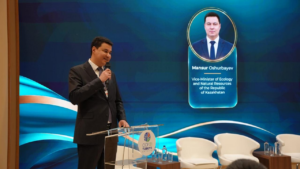
Vice Minister of Ecology and Natural Resources Mansur Oshurbayev presented Kazakhstan’s efforts to restore the North Aral Sea at COP 31. Photo credit: Ministry of Ecology and Natural Resources.
“For Central Asia, climate change adaptation is first and foremost a matter of water. The history of the Aral Sea illustrates this better than anything else: when a water ecosystem is lost, the stability of the land, climate, human health and the economy of an entire region are also affected,” he said.
North Aral Sea shows signs of recovery
Oshurbayev highlighted the results of efforts to restore the North Aral Sea, noting that water management projects, including the construction of the Kokaral Dam with the participation of the World Bank, have helped preserve the northern part of the sea.
According to him, over recent years, the volume of water in the North Aral Sea has increased from 18.9 billion to more than 23 billion cubic metres. Kazakhstan is also carrying out large-scale afforestation efforts on the dried seabed to reduce the environmental impact of the Aral Sea disaster.
Between 2021 and 2025, forest reclamation activities covered more than 1.1 million hectares. Saxaul planting helps stabilize sandy soils and reduce the spread of salt and dust from the exposed seabed.
Regional cooperation and climate finance
Concluding his remarks, Oshurbayev stressed the importance of expanding international cooperation, attracting climate financing and developing joint scientific monitoring to support the restoration of aquatic and terrestrial ecosystems across Central Asia.
The panel provided an opportunity to present Kazakhstan’s experience in restoring the North Aral Sea and discuss broader approaches to water-related climate adaptation in the region.
Earlier, The Astana Times wrote that Kazakhstan is preparing to sign around 28 cooperation documents, including 19 memorandums of understanding with a preliminary package covering meteorology, energy transition, climate investment, clean technologies, environmental protection and healthcare.
