
ASTANA – Kazakhstan released a second Amur tiger into the wild on Oct. 31, marking another milestone in the country’s efforts to restore tigers to their historical habitat after more than 70 years of absence.

Kazakhstan released a second Amur tiger, named Amur, into the wild on Oct. 31. Photo credit: Ministry of Ecology and Natural Resources. Click to see the map in full size. The map is designed by The Astana Times.
The male tiger, named Amur, was released in the Ile-Balkhash State Nature Reserve as part of Kazakhstan’s tiger reintroduction program. The first tiger, a female named Umit, was released on July 31.
The release was attended by Minister of Ecology and Natural Resources Alibek Kuantyrov, Chairman of the Forestry and Wildlife Committee Daniyar Turgambayev, Director General of the Amur Tiger Centre Sergei Aramilev, Freedom Shapagat Corporate Foundation Managing Director Ruslan Dzhumashev, and reserve staff and specialists, including members of the anti-conflict team.
“Today, we are taking another important step towards bringing tigers back to Kazakhstan. On July 31 this year, the tigress Umit was released into the wild, and today we have released the second tiger, a male named Amur,” Kuantyrov said.
He thanked the Amur Tiger Center and its specialists, as well as the World Wide Fund for Nature (WWF) and other partners for supporting the program and helping restore natural ecosystems.
“Our main goal is not simply to return these predators to their historical habitat, but to establish a sustainable population capable of living and reproducing independently in the wild,” he said.
Preparing Amur for life in the wild
After arriving in Kazakhstan, Amur was kept in a specially equipped acclimatisation enclosure in the Ile-Balkhash reserve under continuous specialist supervision. Before his release, the tiger underwent veterinary examinations and behavioural assessments. Specialists evaluated his health, hunting skills, ability to obtain food independently and response to human presence. The results confirmed that he was ready to live in the wild.
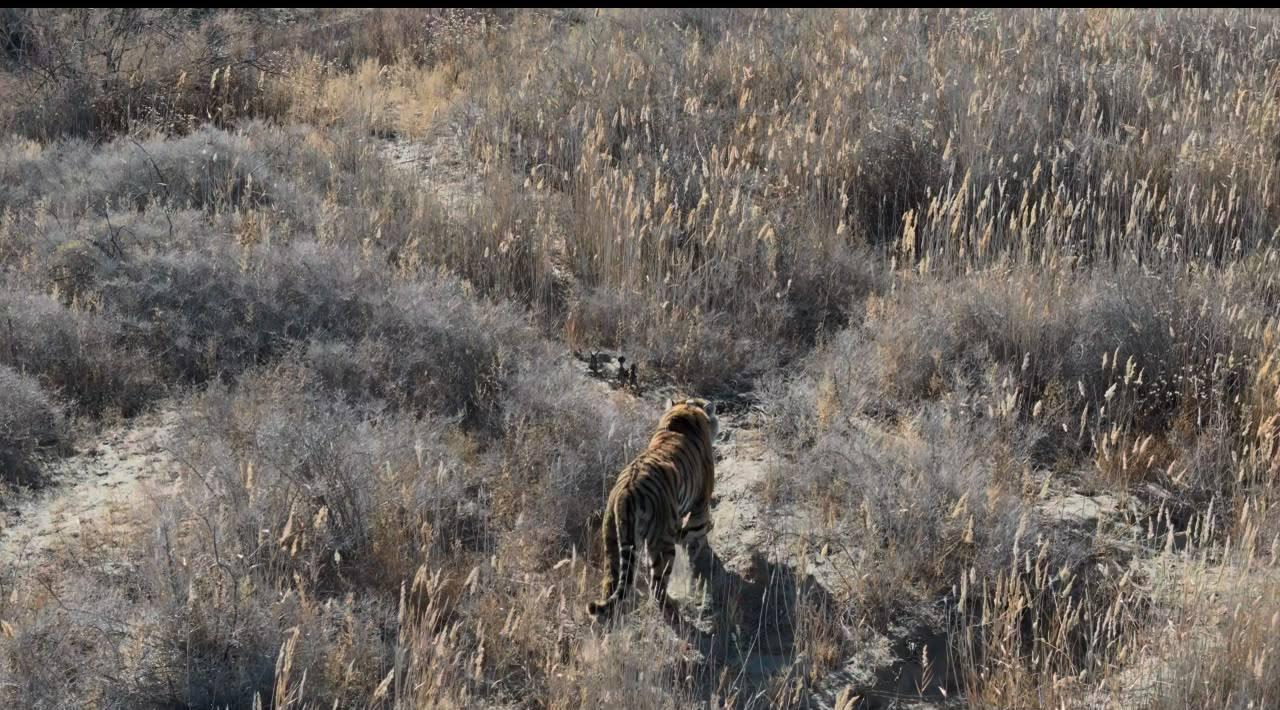
Before his release, the tiger underwent veterinary examinations and behavioural assessments. Photo credit: Ministry of Ecology and Natural Resources.
Amur was fitted with a satellite collar to help specialists monitor his movements and adaptation to the natural environment.
“Every tiger release carries significant responsibility. We must be certain that the animal is ready to live independently in the wild. That is why the decision is made only after a thorough assessment of its health, behaviour and hunting skills,” Turgambayev said.
He added that specialists would continue tracking the tigers’ movements and monitoring their adaptation.
Umit, the first tiger released into the reserve, continues to explore the territory and hunt independently. Her movements are also monitored using a satellite collar, and specialists report that her adaptation is progressing successfully.
Two tiger cubs that arrived in Kazakhstan alongside the adult animals remain under specialist supervision. A decision on their release will be made after they reach the appropriate age and complete the necessary assessments.
Restoring tigers’ historical habitat
The Balkhash region and the Ili River valley were historically home to the Caspian, or Turanian, tiger. The subspecies disappeared from Kazakhstan in the mid-20th century as a result of habitat loss, declining numbers of wild ungulates and poaching.
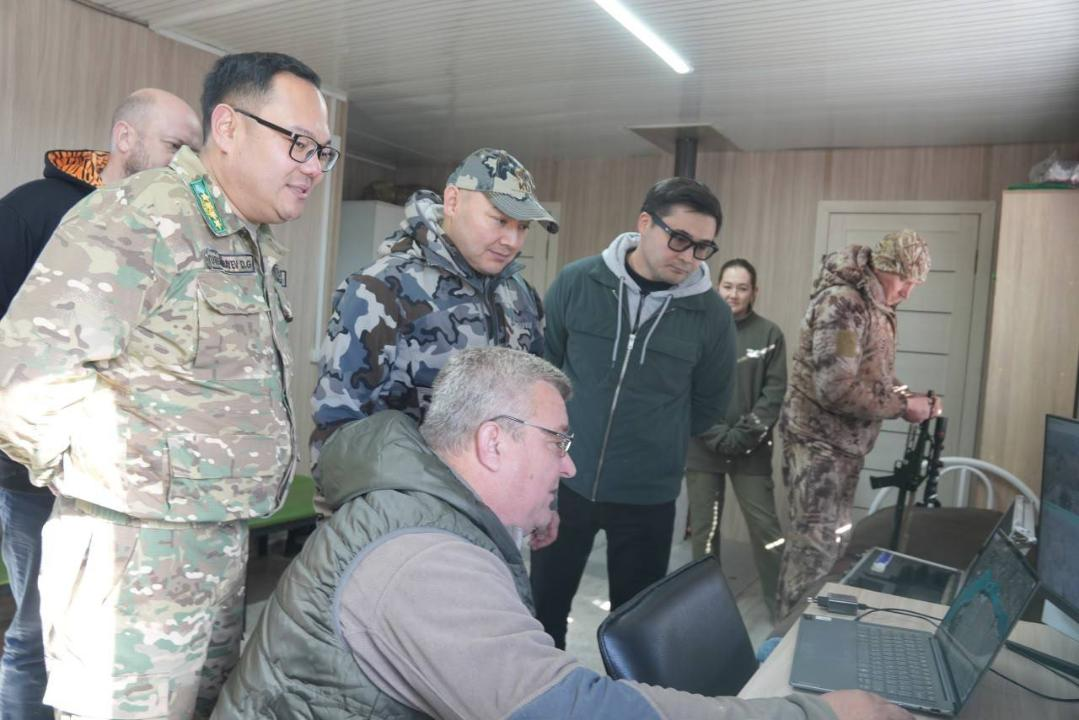
Amur was fitted with a satellite collar to help specialists monitor his movements and adaptation to the natural environment. Photo credit: Ministry of Ecology and Natural Resources.
Kazakhstan established the Ile-Balkhash State Nature Reserve in 2018, beginning efforts to restore natural habitats, rebuild the prey base and develop conservation infrastructure. A key part of the program is increasing populations of wild ungulates, which provide food for tigers. Bukhara deer and kulans have been relocated to the reserve, alongside other measures to protect species that form the basis of the predators’ food supply.
In September 2026, 30 kulans were relocated from Altyn-Emel State National Nature Park to the Ile-Balkhash reserve. Restoring habitats and prey populations has laid the groundwork for the next stage of the program: returning tigers to the region. The effort involves government agencies, researchers and international partners.
International cooperation supports the program
The reintroduction program is being implemented through cooperation between Kazakhstan and Russia, with the participation of international conservation organisations and researchers.
In May 2026, four Amur tigers captured in the wild in Russia’s Khabarovsk Territory, two adults and two cubs, were brought to Kazakhstan. They were placed in specially equipped acclimatisation enclosures in the Ile-Balkhash reserve.
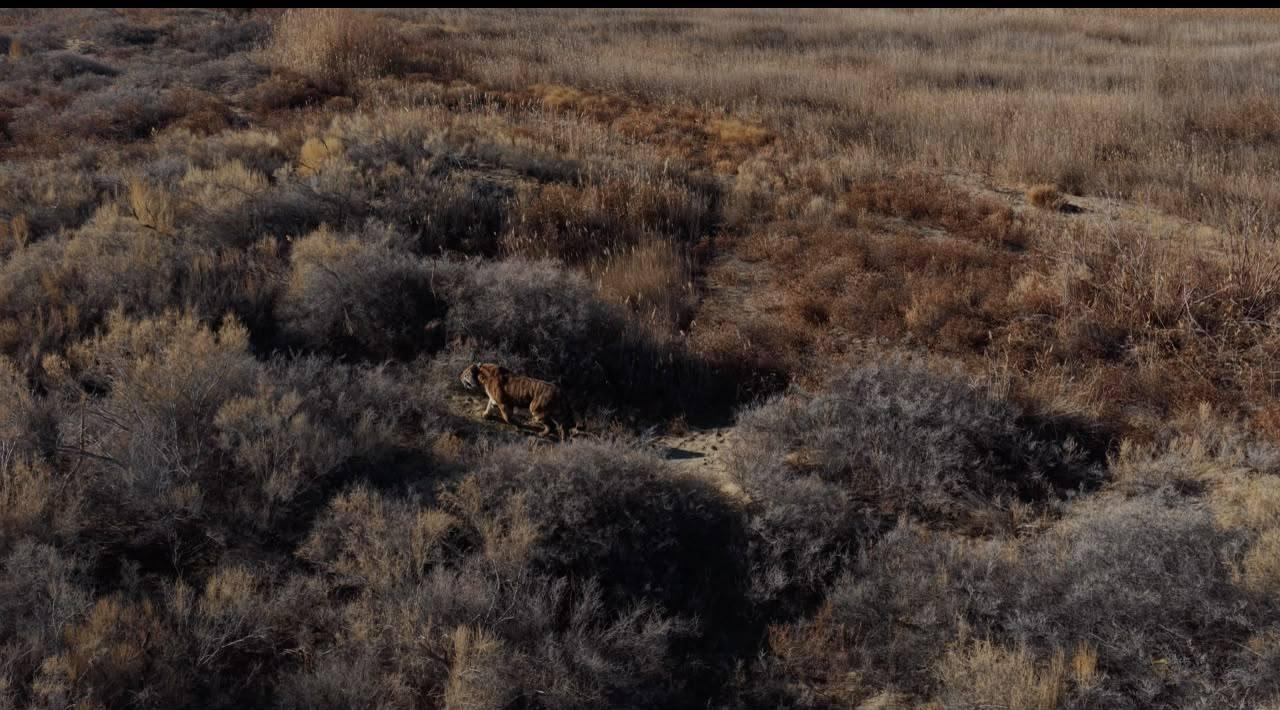
Umit, the first tiger released into the reserve, continues to explore the territory and hunt independently. Photo credit: Ministry of Ecology and Natural Resources.
“The cooperation between Russia and Kazakhstan under the tiger reintroduction program is particularly important for the conservation of this rare species. The transfer of the animals represents a practical contribution to the joint initiative,” Aramilev said.
He described the program as an example of cooperation between the two countries in protecting natural heritage and restoring tiger populations. WWF has also supported Kazakhstan’s efforts to restore ecosystems in the Balkhash region, including work on tugai forests, prey populations and reserve infrastructure. In 2024, Kazakhstan’s Ministry of Ecology and Natural Resources and WWF International signed a memorandum on further cooperation under the tiger reintroduction program.
Protecting local communities and wildlife
Alongside the release of tigers, the program places emphasis on public safety and preventing conflicts between people and predators. A dedicated anti-conflict team monitors the animals’ movements, communicates with local residents and responds to potential incidents.
“The return of tigers is not just about the moment they are released. It also requires the daily work of reserve staff. We continue to monitor the animals, study their behaviour, protect the territory and work with local residents,” said Kanat Kozhabekov, director of the Ile-Balkhash State Nature Reserve.
He said the priority was to ensure that the tigers adapt successfully while local communities feel safe. The reintroduction program is intended to restore not only a predator that disappeared from Kazakhstan, but also the ecological balance of the southern Balkhash region. As an apex predator, the tiger plays an important role in maintaining the natural balance of its ecosystem.
The program’s long-term goal is to establish a sustainable tiger population in the Ili River delta and southern Balkhash region that can reproduce independently in the wild. Achieving that goal will require continued monitoring, habitat restoration, protection of prey species and the gradual release of additional tigers.
Background
The Turanian tiger historically inhabited tugai forests and river floodplains across Central Asia, including the Ili River basin, Balkhash and the Syr Darya River.
Molecular genetic research has confirmed a close genetic relationship between the Turanian and Amur tigers. The Amur tiger was therefore selected for the restoration program in Central Asia. The long-term initiative combines ecosystem restoration, increases in prey populations, phased tiger releases and continuous scientific monitoring.
