
ALMATY – Kazakhstan is holding free breast cancer consultations and diagnostic examinations throughout October as part of an annual Pink October awareness campaign, encouraging women to undergo regular screening and seek medical attention if they notice changes in their breasts.
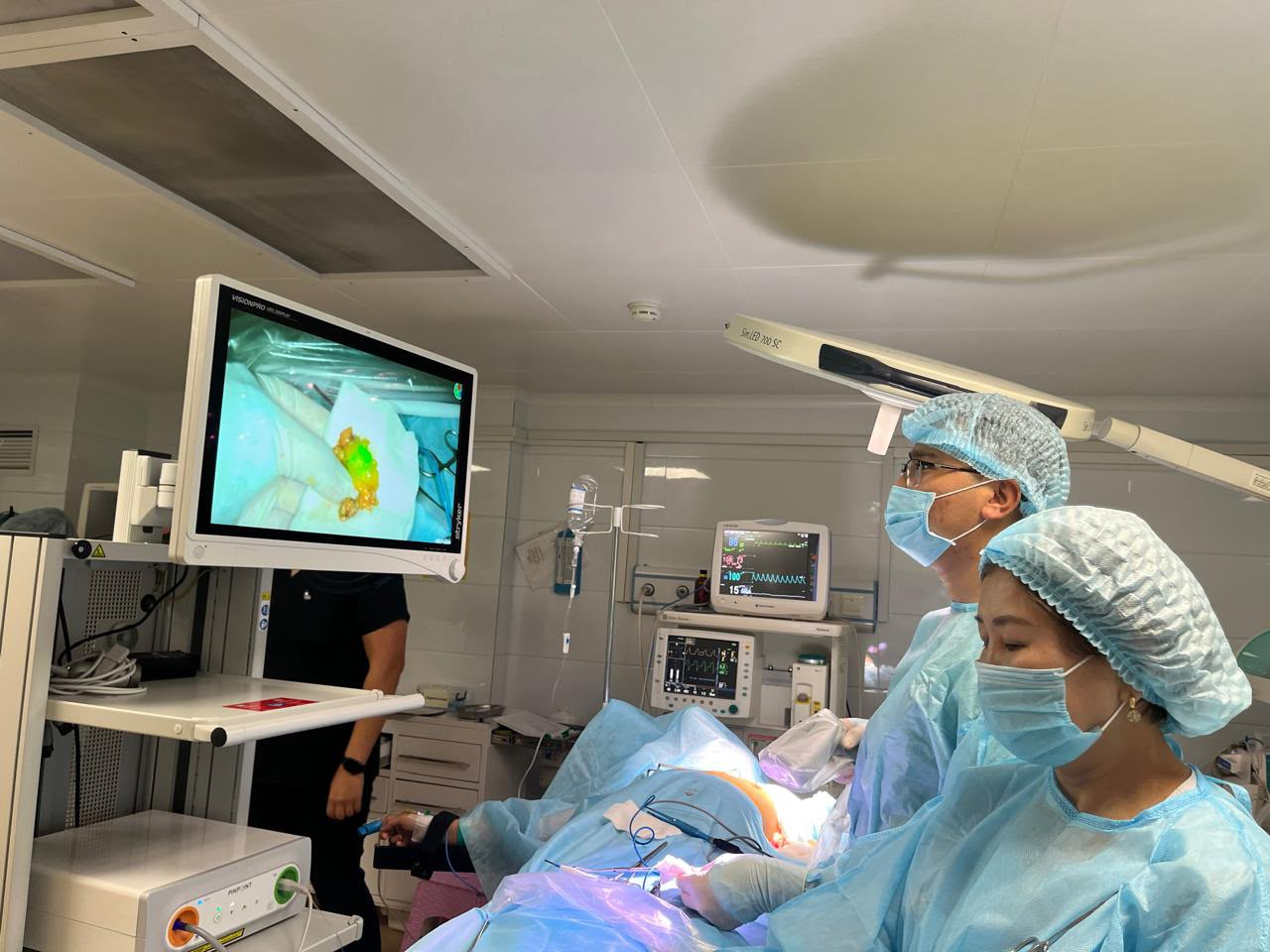
Kazakhstan is holding free consultations and diagnostic examinations throughout October as part of its annual Pink October breast cancer awareness campaign. Photo credit: Regional Communications Service
Breast cancer remains the most common cancer among women in Kazakhstan. In 2025, the country registered 5,743 new cases, according to figures provided by the Ministry of Healthcare.
Breast cancer also remains a major global health challenge. According to the World Health Organization (WHO), an estimated 2.4 million women were diagnosed with breast cancer worldwide in 2024, and 694,000 died from the disease. Breast cancer occurs in every country and can affect women at any age after puberty, with rates increasing in later life.
Since Kazakhstan launched its national breast cancer screening program in 2008, 19,018 cases have been identified, including 17,186 detected at Stages 1 and 2, when treatment is generally more effective. The number of Stage 3 and 4 cases detected through screening fell from 66 in 2011 to 16 in 2025, according to the ministry.
The Pink October campaign includes open days at oncology centers, consultations with oncologists and mammologists, mammography and breast ultrasound examinations. Organizers aim to raise awareness of breast cancer prevention and the importance of early diagnosis.
Breast cancer statistics in Kazakhstan
National figures highlight the importance of early detection. Since the launch of the screening program, thousands of cases have been identified at earlier stages, giving patients a better opportunity to receive timely treatment.

Pink ribbons and other awareness activities highlight the importance of early breast cancer detection during Pink October in Kazakhstan. Photo credit: prohealth.kz.
In Almaty, breast cancer is also the most common cancer among women. According to the Almaty Oncology Center, 659 new cases were identified in the city during the first eight months of 2026. A total of 9,520 patients are registered with the disease at the center.
Speaking at a briefing organized by the Regional Communications Service in Almaty, oncologists said the growing number of recorded cases is partly associated with expanded screening and greater attention to women’s health. However, specialists stressed that the disease can also affect younger people.
“Unfortunately, breast cancer is getting younger every year. The youngest patient we registered at the Almaty Oncology Center this year is 21 years old. She is currently receiving comprehensive treatment, and we are seeing a good response to therapy,” said Akerke Orazbayeva, an oncologist and head of the center’s specialized consultation and diagnostic department.
The oldest breast cancer patient observed at the center was 93, Orazbayeva told The Astana Times.
“The disease can develop not only in women – around 20 men are registered with this diagnosis at the Almaty Oncology Center. Of course, it occurs much less frequently in men, but the risk cannot be ruled out,” said Akbota Adilova, head of the center’s consultation and diagnostic department.
During the first eight months of 2026, doctors in Almaty detected breast cancer at Stage 0 in five women, Stage 1 in 305, Stage 2 in 312, Stage 3 in 20 and Stage 4 in 70.
Who can receive free screening?
The Ministry of Healthcare encourages women to undergo regular cancer screening at their local polyclinics. Kazakhstan currently offers three types of screening: breast cancer screening for women aged 40 to 76 once every two years, cervical cancer screening for women aged 30 to 70 once every four years, and colorectal cancer screening for men and women aged 50 to 70 once every two years.
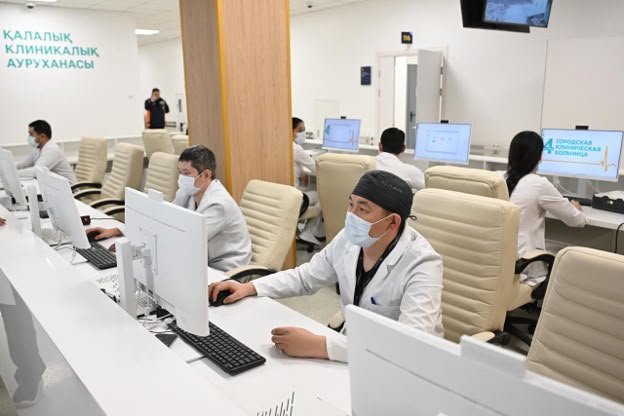
Photo credit: Regional Communications Service
Mammography can identify suspicious changes before symptoms appear. Specialists emphasize that ultrasound and magnetic resonance imaging (MRI) can be used as additional diagnostic methods when medically indicated but do not replace screening mammography.
The WHO also stresses that awareness of symptoms, timely diagnosis and access to treatment are essential to improving breast cancer outcomes. In places where mammography screening is not practical or widely available, public education can still encourage women to seek medical attention when they first notice symptoms.
Risk factors and common misconceptions
Most women diagnosed with breast cancer have no known family history of the disease, and the absence of other obvious risk factors does not necessarily mean they are at low risk.
According to the World Health Organization, approximately 80% of breast cancers occur in women with no specific risk factors other than sex and age.
Risk increases with age, while other contributing factors include certain inherited genetic mutations, excess weight, particularly after menopause, alcohol consumption, hormonal and reproductive factors, dense breast tissue and previous exposure to high levels of radiation.
Having one or more risk factors does not mean a person will necessarily develop cancer. Specialists say the disease can develop through a combination of factors, and regular screening remains important.
Speaking at the briefing, doctors also sought to dispel common misconceptions that may discourage women from seeking medical care.
One widespread myth is that breast cancer can always be detected by feeling a lump. Adilova said small tumors may not be noticeable through self-examination, which is why regular screening and attention to changes in breast shape and skin are important.
Doctors also addressed concerns about deodorants, antiperspirants and biopsies. Research has not established a link between underarm deodorant or antiperspirant use and breast cancer.
Doctors also stress that ultrasound alone is not sufficient to replace mammography as a screening method. Women who notice unusual changes or have concerns about their breast health are advised to consult a medical professional.
Preventive surgery and genetic risk
Oncologists in Almaty also perform bilateral preventive mastectomy in selected cases involving women with a high hereditary risk of breast cancer. Kaisar Nakipbekov, an oncologist, mammologist and oncosurgeon at the Almaty Oncology Center, said the procedure may be considered when a patient has a genetic mutation associated with an increased risk of breast cancer. In some cases, it may also be performed at the patient’s request following medical consultation.
Certain inherited genetic mutations, including those affecting the BRCA1 and BRCA2 genes, can substantially increase breast cancer risk. The WHO says women with high-risk genetic mutations may consider risk-reduction strategies, including medication or preventive surgery, in consultation with medical specialists.
Preventive mastectomy involves removing both breasts to substantially reduce the risk of developing breast cancer. The procedure became more widely known after actress Angelina Jolie disclosed in 2013 that she had undergone the surgery after learning she carried an inherited mutation associated with a high risk of the disease.
Pink October events across Kazakhstan
Oncology centers across Kazakhstan are offering free breast cancer consultations and examinations as part of Pink October, an annual campaign to raise awareness of the disease and encourage early detection.
A nationwide open day is scheduled for Oct. 31, including at the Kazakh Research Institute of Oncology and Radiology in Almaty, where women can consult an oncologist-mammologist free of charge. Visitors are advised to confirm appointment times, registration requirements and available examinations with their local medical facilities.
In 2025, more than 8,400 women took part in examinations organized as part of the campaign. Various breast conditions were identified in 3,337 women, including 144 cases of breast cancer.
The campaign also invites people to support awareness efforts by wearing a pink ribbon, scarf or another pink accessory, sharing information and using the hashtag Pink October Kazakhstan.
Breast cancer screening and treatment are also available through Kazakhstan’s state-guaranteed health care system. Treatment for malignant cancers is covered regardless of a patient’s mandatory social health insurance status.
Patients with suspected cancer can access consultations and initial diagnostic examinations through the Green Corridor, which provides expedited pathways within 18 working days.
Globally, the WHO is working to reduce breast cancer deaths through its Global Breast Cancer Initiative, established in 2021.
The initiative aims to reduce global breast cancer mortality by 2.5% annually and avert 2.5 million deaths by 2040. Its three pillars are health promotion for early detection, timely diagnosis and comprehensive breast cancer management. As organization reminds, improving outcomes requires not only awareness and early detection but also reliable referral pathways and access to effective treatment.
