
ASTANA – The emerging C6 cooperation format, bringing Azerbaijan and the five Central Asian countries together, could strengthen regional trade, transport connectivity and investment, but its success will depend on turning political commitments into concrete projects, experts said during an online webinar on Oct. 15.
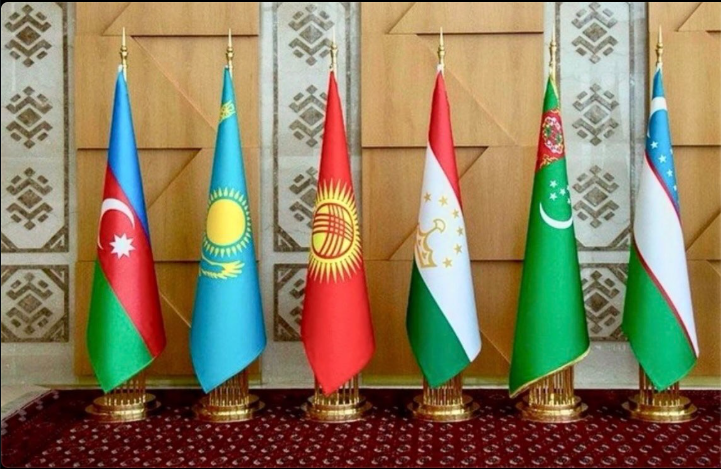
Photo credit: turkmenistan.gov.tm
The discussion examined the implications of Azerbaijan’s participation in the Central Asian Consultative Meetings, which expanded the traditional C5 format into C6, and the outcomes of the recent Avaza summit in Turkmenistan.
The participants discussed how the expanded format could strengthen economic integration, improve regional connectivity and help countries address shared challenges while preserving their national interests.
From political dialogue to practical cooperation
Zhandos Shaimardanov, director of the Kazakhstan Institute for Strategic Studies, described the Avaza summit as a key milestone in regional cooperation, arguing that closer integration does not require countries to sacrifice sovereignty or choose between international partners.

During an Oct. 15 webinar, experts discussed how the C6 format could boost regional integration, connectivity and cooperation while safeguarding national interests. Photo credit: The Astana Times
“Regional cooperation is not a zero-sum game,” he said, adding that stronger ties could benefit each country while strengthening the region as a whole.
He noted that Central Asian countries had initially focused on building national institutions and foreign policy priorities after gaining independence. Today, stronger economies and changing regional dynamics have created greater opportunities for cooperation.
“Azerbaijan’s inclusion in the format opens a new trans-Caspian dimension, connecting Central Asia more closely with the South Caucasus and broader markets,” Shaimardanov said.
The key test will be whether the countries can translate joint initiatives into investment, stronger regional value chains and tangible economic benefits.
“With Azerbaijan’s inclusion in the regional format, this is a timely opportunity to revisit previously proposed initiatives and align the priorities and visions of all six participating countries. The expanded format brings a broader economic geography and new opportunities, making it important to reassess our shared priorities,” Shaimardanov said.
Farid Shafiyev, chairman of Azerbaijan’s Center for Analysis of International Relations and Multiculturalism, also described the Avaza summit as a turning point, saying it reaffirmed the willingness of countries on both sides of the Caspian Sea to develop the C6 framework.
He noted that the summit produced concrete steps, including agreements on the framework’s consultative procedures. Over time, the format could develop into a more structured regional organization, although its evolution will depend on the countries’ priorities and the complex geopolitical environment.
Shafiyev cited growing economic ties as evidence of progress.
“Trade between Azerbaijan and Central Asian countries has increased by 50%. Around 400 companies with capital from Kazakhstan and Uzbekistan are operating in Azerbaijan, as well as joint investment funds established between Azerbaijan and Kazakhstan and between Azerbaijan and Uzbekistan,” Shafiyev said.
According to him, these developments demonstrate that cooperation is moving beyond diplomatic dialogue toward investment and business activity.
Joint production and regional connectivity
Javlon Vakhabov, managing director of Uzbekistan’s International Institute for Central Asia, highlighted a growing convergence among regional leaders on the need to develop joint production, coordinate infrastructure investments and focus on implementation.
He pointed to Uzbekistan’s proposal for a Six Countries, One Product initiative as an example of how the countries could pool their capabilities to produce goods and compete in international markets.
The summit also underscored the importance of removing transport, customs and tariff barriers, developing complementary production facilities and strengthening regional supply chains.
The Middle Corridor, which connects Central Asia with the South Caucasus and Europe across the Caspian Sea, remains central to these efforts. Greater coordination of transport infrastructure could reduce delivery times and costs while making regional exports more competitive.
“The countries could also explore cooperation in energy, industrial production and alternative transport routes,” Shafiyev said.
Azerbaijan’s participation broadens the region’s access to international markets and creates opportunities for closer cooperation with partners in Türkiye and Europe, while also opening avenues for trade with other regions.
Digitalization and trade facilitation
The experts emphasized that closer economic integration will require practical measures to make cross-border trade more efficient.
Shaimardanov proposed launching a pilot initiative to improve the digital exchange of trade and transport information between Central Asian countries and Azerbaijan. Such a system could allow shipment information to be submitted once and shared securely among customs authorities, railway operators and ports.
According to Zuhra Halimova, senior adviser at CAPS Unlock in Tajikistan, digitalization must be accompanied by compatible regulations, clear data-sharing rules and effective institutions. Countries should build on existing national systems and expertise rather than create additional platforms without a clear purpose.
She also highlighted the need to strengthen trade facilitation and address regulatory barriers that hinder cross-border economic activity.
Water and energy security among shared priorities
Beyond trade and transport, the discussion highlighted water and energy security as areas requiring closer regional coordination.
Halimova noted that climate change and melting glaciers are increasing pressure on water resources, with implications for agriculture, hydropower and energy supplies across the region.
“Climate change in Central Asia and the Caucasus, particularly around the Caspian Sea, requires a coordinated regional response rather than separate national approaches. Water and energy security could become key areas of cooperation within the C6 framework,” Halimova said.
She emphasized the importance of improving water management, strengthening regional dialogue and coordinating water and energy policies to address challenges that cross national borders.
The participants also discussed opportunities to expand energy cooperation, including renewable energy and cross-border infrastructure.
