
ASTANA – Artificial intelligence is increasingly shifting beyond text and image generation into art, design and immersive digital experiences. For Kazakhstan, this development presents an opportunity to adopt new technologies, but also rethink the role of creativity in the country’s emerging digital economy.
Nicola Plant, an artist, researcher and lecturer at the Creative Computing Institute (CCI) at the University of the Arts London (UAL) in the United Kingdom (UK), delivered a lecture on AI, creative computing and arts in Astana on Sept. 30. The event formed part of AI Month 2026 and AI & Digital Bridge 2026.
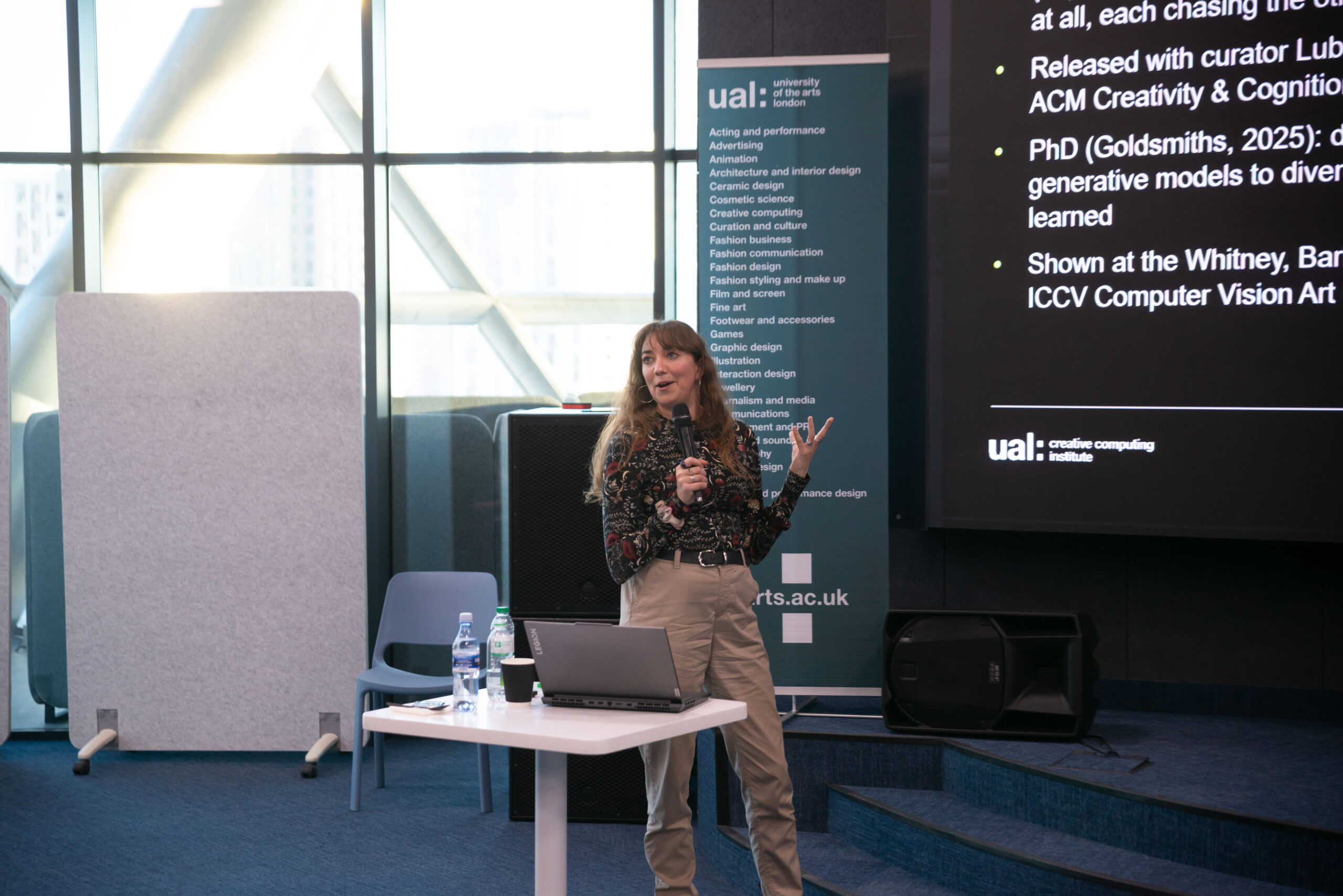
Nicola Plant, an artist, researcher and lecturer at the Creative Computing Institute (CCI) at the University of the Arts London (UAL) in the United Kingdom (UK). Photo credit: Born Nomad
According to Aika Alemi, founder and director of Born Nomad, one of the main challenges for Kazakhstan and other countries in the region is the perception that art is primarily entertainment rather than a business.
“Creative computing and creative AI technologies have huge potential, and it’s still untapped,” Alemi said.
She also noted that technology and creativity increasingly operate together. Digital products, augmented reality and immersive technologies rely on creative decisions involving design, color, visual language and user experience.
“We just need to recognize art as the next frontier of making money and as the space where creativity and genuine human innovation come together,” Alemi said.
Creativity behind the technology
The growing use of AI makes this connection more visible. Generative AI can support emerging artists and designers as they experiment with new forms of visuals and digital expression. Technologies such as virtual reality, motion capture and interactive installations also create new ways for audiences to understand the art.
Creative computing brings these fields together by combining technology, coding, design and artistic practices.
For Alemi, recognizing the economic value of creativity is essential for developing the industry. She pointed to the UK’s creative industries as an example of how creativity can contribute to the wider economy when it receives recognition as an economic activity rather than just entertainment.
“Creativity is the engine and it’s the source of everything that’s happening in technology,” she mentioned.
For Kazakhstan, this approach could create new opportunities across digital media, gaming, design, film and immersive technologies. It could also create a demand for a workforce that combines technological knowledge with creative skills.
What Kazakhstan can bring to creative AI
The development of creative AI also raises questions about cultural representation in technology.
Nicola Plant said that technology has historically developed largely from Western perspectives, including major technology companies and the datasets used to train AI systems. She highlighted the importance of giving other cultures and communities a greater role in shaping digital tools.
“It’s really important for cultures around the world, including Kazakhstan and Central Asia, to have their voices heard in the way that tools are built and who they are for,” Plant said.
The issue is particularly relevant to creative AI, where training data can influence the images, stories and other content generated by AI systems. Greater participation from different cultural communities could contribute to technologies that better reflect a wider range of perspectives.
For Kazakhstan, this means participation in creative AI does not have to be limited to adopting technologies developed elsewhere. Local artists, designers, researchers and developers can contribute their cultural knowledge and perspectives to the development and use of new tools.
Building technology and questioning it
Plant also emphasized the importance of combining technological development with critical thinking.
“You have to be critiquing the technology at the same time as making it,” she said, explaining that developers should consider how technologies are built, who they influence and who they could potentially harm.
The need to balance technological progress with responsible development was also highlighted at AI&Digital Bridge 2026, where President Kassym-Jomart Tokayev called for responsible AI development.
This approach places creative computing at the intersection of technology, culture and human experience. It also broadens the discussion around AI development beyond creating increasingly advanced tools to questions about how those tools should be designed and used.
Kazakhstan’s efforts to build a stronger AI ecosystem have also involved engagement with major global technology companies, including NVIDIA.
As Kazakhstan continues to develop its AI ecosystem, developing creative industries will be an important part of that progress. Creativity can turn technology into new ideas and products, while also creating opportunities for filmmakers, artists and designers. At the same time, a stronger creative sector can help Kazakhstan bring its own culture and perspective into the global development of AI.
