
ASTANA – Kazakhstan and Switzerland have expanded the legal framework for direct air connectivity, with the two countries signing a memorandum allowing designated airlines to operate up to 28 passenger flights per week, the Kazakh Civil Aviation Committee’s press service reported.
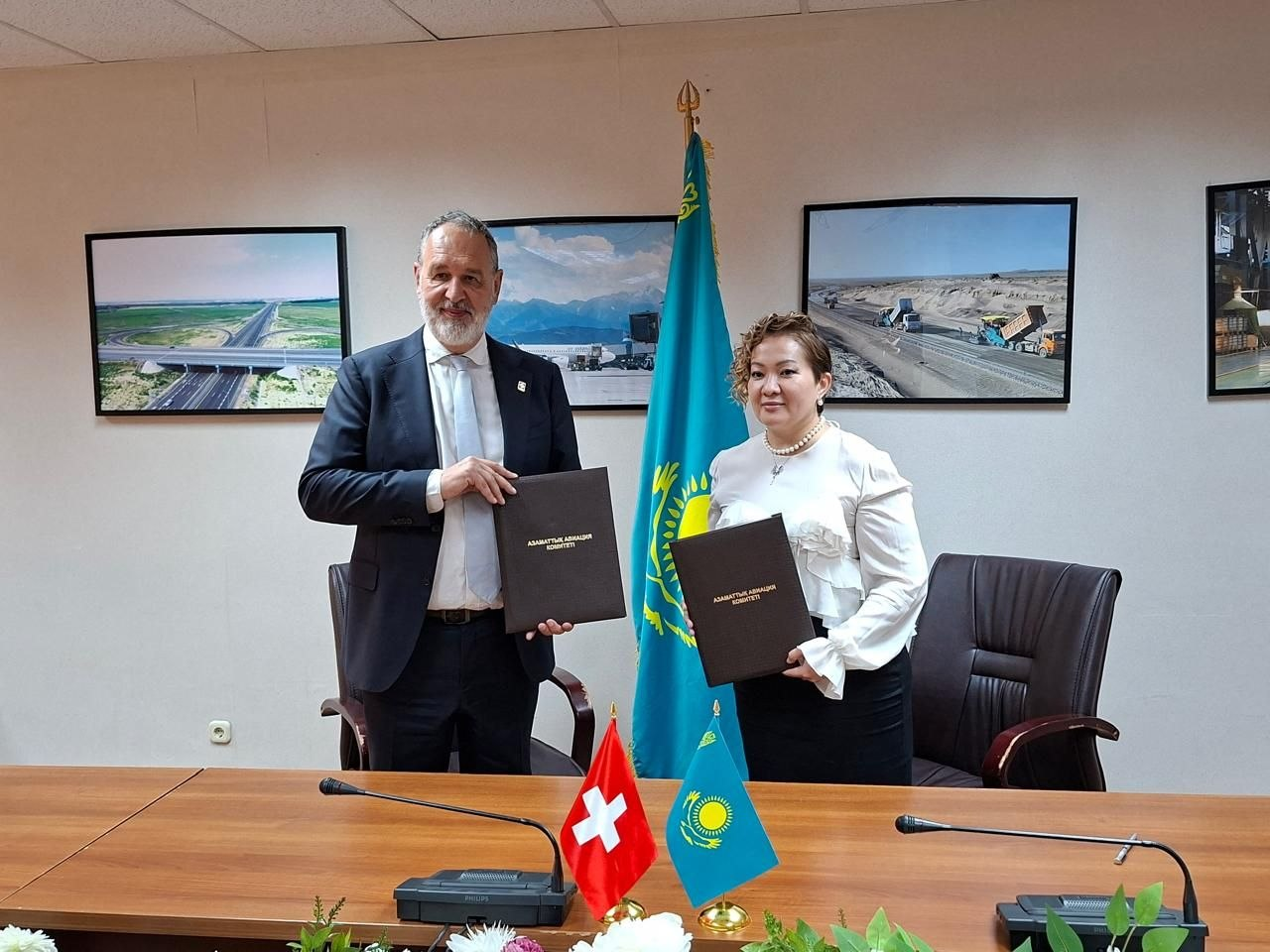
From L to R: Laurent Noel and Saltanat Tompiyeva. Photo credit: CAC.
The memorandum was signed following negotiations between the aviation authorities of Kazakhstan and Switzerland in Astana on Sept. 23. The Kazakh delegation was led by Civil Aviation Committee Chair Saltanat Tompiyeva, while the Swiss delegation was headed by Laurent Noel, head of the negotiation division at the Swiss Federal Office of Civil Aviation (FOCA).
Representatives of Air Astana, SCAT, SWISS International Air Lines, Basel Airport, Kazakhstan’s Ministry of Foreign Affairs and the Embassy of Switzerland in Kazakhstan also took part in the talks.
The negotiations focused on prospects for developing direct air links and practical issues related to opening new routes between the two countries. The document also establishes a legal framework for cargo services without restrictions on flight frequencies or capacity. The two sides also agreed and initiated a draft air services agreement for subsequent signing. The agreement is expected to provide an updated legal basis for further development of air connectivity between Kazakhstan and Switzerland.
The Swiss side said it sees potential for expanding direct air links and is currently considering the launch of regular flights to Kazakhstan. The development of direct air connectivity is expected to create additional opportunities for tourism, trade and business cooperation between Kazakhstan and Switzerland.
New routes could also increase passenger and business flows between the two countries by providing more direct travel options for tourists, companies and other travelers. The memorandum and draft agreement create the regulatory conditions for airlines to consider new services, while the actual launch of regular routes will depend on decisions by the carriers involved.
