
ASTANA – Kazakh singer, composer and producer Dimash Qudaibergen called for greater investment, infrastructure and legal support for Kazakhstan’s creative industries during the opening ceremony of Astana Finance Days (AFD) 2026 on Sept. 9.

Dimash Qudaibergen performs his song “Aqerke.” Photo credit: AFD 2026
AFD 2026 is a two-day event bringing together more than 5,500 participants from over 80 countries to discuss capital markets, investment, artificial intelligence, innovation, real-economy financing and cross-border capital.
While on stage, Qudaibergen performed “Aqerke,” “Stranger” and “Weekend,” as well as the traditional Kazakh kui “Adai” on dombra.
Following the performance, Astana International Financial Centre (AIFC) Governor Renat Bekturov spoke with Qudaibergen about the potential of Kazakhstan’s creative economy, attracting investment to the sector, intellectual property protection and the challenges artists face when entering international markets.
Qudaibergen said the development of the creative industry requires not only investment, but also stronger legal protection for artists and mechanisms to connect creators with investors.
“Artists need legal protection and support from creative industry development funds. These funds can become a bridge between investors and new creative projects,” Qudaibergen said.
Bekturov noted that Kazakhstan’s creative sector brings together thousands of companies and more than 140,000 people, while its contribution to the economy remains relatively small, highlighting the need to develop the sector as a source of future growth.
When asked why investors should consider creative industries, Qudaibergen pointed to Kazakhstan’s culture, history and music as assets with strong international appeal.
“Our culture, our history and the music are truly unique, and that makes them interesting to an international audience,” he said, drawing on his experience of performing around the world.
Protecting creative independence
For Qudaibergen, attracting investment should not come at the expense of an artist’s independence or ownership of intellectual property.
He said the decision to share rights with investors or business partners is ultimately personal, but artists should understand the financial and contractual side of their profession before making such decisions.
“I choose the second option, because for me it is essential to keep both creative independence and ownership of my intellectual property,” he said.
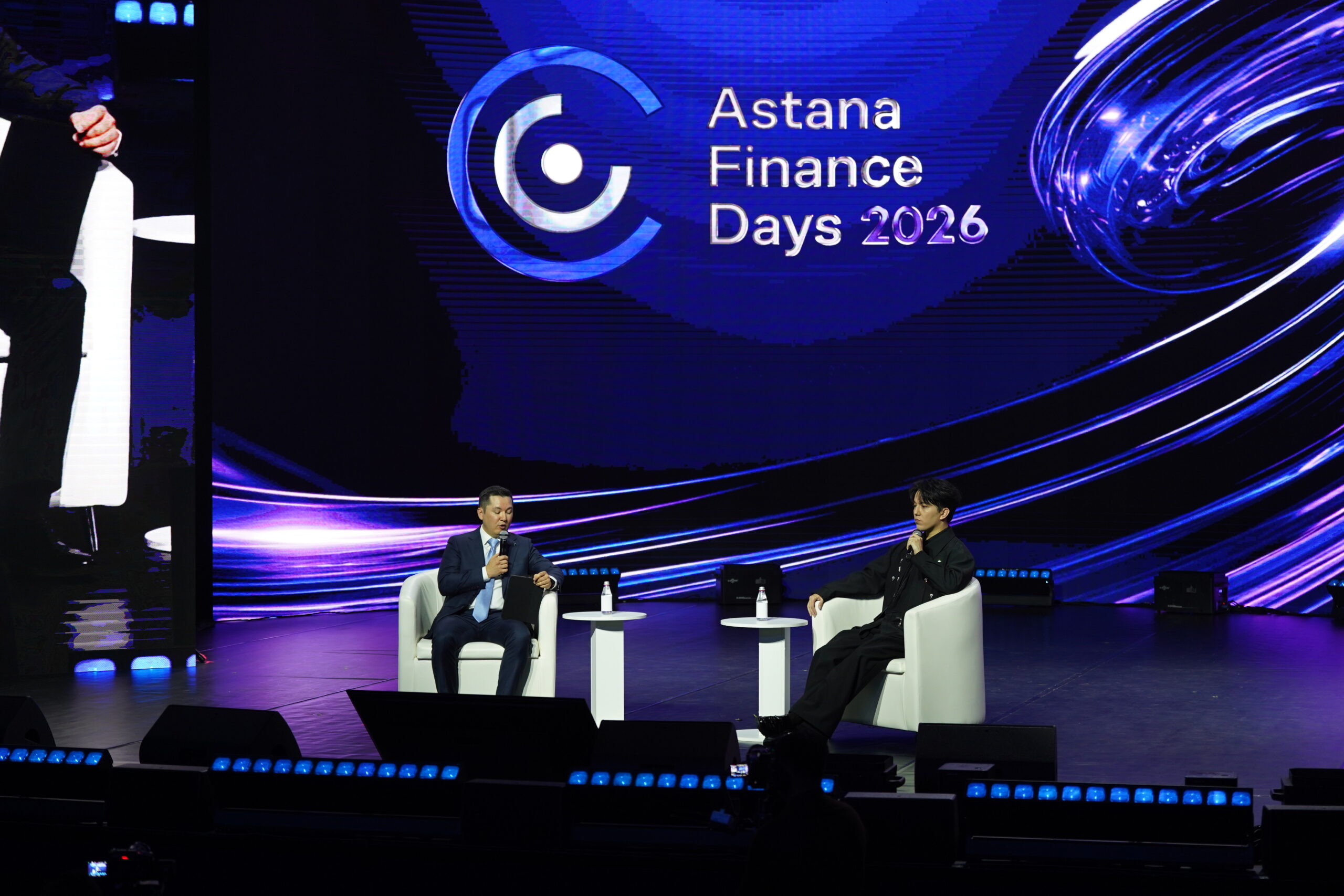
Astana International Financial Centre (AIFC) Governor Renat Bekturov and Dimash Qudaibergen. Photo credit: AFD 2026
Qudaibergen stressed that financial literacy is part of an artist’s professional responsibility, allowing creators to better understand contracts, finances and the business side of the industry.
“Education everywhere is very important,” he said, adding that understanding contracts, finances and the business side of the industry allows artists to make informed decisions and retain control over their work.
He also cited his own career as an example of how an artist can gradually move from performer to producer and entrepreneur.
Qudaibergen said he now works directly with business partners and operates his own label, established by his father, which promotes not only his work but also young artists.
His transition into production included an international vocal project on China’s Hunan TV, where he first gained international recognition through “I’m a Singer” show. Returning to the network as a producer, he said, gave him an opportunity to introduce other Kazakh talents to a global audience.
From Kazakh roots to global audiences
Qudaibergen said Kazakhstan’s cultural identity can become a competitive advantage internationally when traditional heritage is combined with contemporary approaches.
Dimash Qudaibergen during the opening ceremony of Astana Finance Days 2026. Photo credit: AFD 2026
“Our uniqueness comes from combining respect for our roots with a desire to innovate,” he said. “We can make traditional things feel fresh and turn something authentic into a modern trend.”
During his tours, Qudaibergen has introduced audiences to musicians from his team and traditional Kazakh instruments, including dombra and kobyz. He said some international fans also became interested in Kazakhstan’s history, language and traditional music.
He also encouraged young Kazakh artists to remain connected to their identity while pursuing international careers.
“To become an international artist, you have to follow your own path, first of all. And then you need to believe in yourself,” he said.
He warned young artists against changing direction simply because of short-term financial opportunities.
“Professional career management means thinking long term,” he said. “You shouldn’t accept every offer just because it looks profitable today. You always have to remember the goal you are moving towards.”
Building a system for young talent
Qudaibergen said Kazakhstan’s creative sector needs a more systematic approach to developing talent, particularly in management, professional training, broadcasting and distribution.
He identified a shortage of qualified professionals as one of the industry’s key challenges, arguing that talented artists need more than opportunities to perform.
“We have not yet become a full-fledged industry with a clear system. So, we need to do our best to train professionals,” he said.
He also pointed to the limited presence of creative projects across television, radio and large-scale distribution platforms.
“The main task is to build professional infrastructure and create a clear, systematic path to international markets,” Qudaibergen said.
Qudaibergen said this was particularly important because young artists should not have to rely on chance encounters or simply hope that someone will discover them.
“This is exactly what I was missing when I started,” he said, recalling his own experience as a young artist from Aktobe who had little understanding of how to build an international career.
“Right now, it has become one more mission,” he said. “Young talents should grow inside a real creative development system, instead of simply hoping that one day they will get lucky and someone will invite them somewhere.”
Qudaibergen’s own career, from a young performer in Aktobe to an internationally recognized artist and producer, illustrates the potential of such opportunities. Reflecting on his journey, he emphasized that talent alone is not enough to build a lasting career.
“Hard work is also very important. It’s the most important thing,” he said. “When the universe turns to your side, you need to be ready.”
Qudaibergen is now preparing his new Dimensions world tour, continuing his international career while expanding his work as a producer and supporting young Kazakh artists.
