
ASTANA – The Caspian Sea is home to the Caspian seal, the world’s only seal species found exclusively in the Caspian Sea. The species spends most of its life in the water and travels considerable distances in search of food, while the northern Caspian’s winter ice fields provide critical breeding grounds.
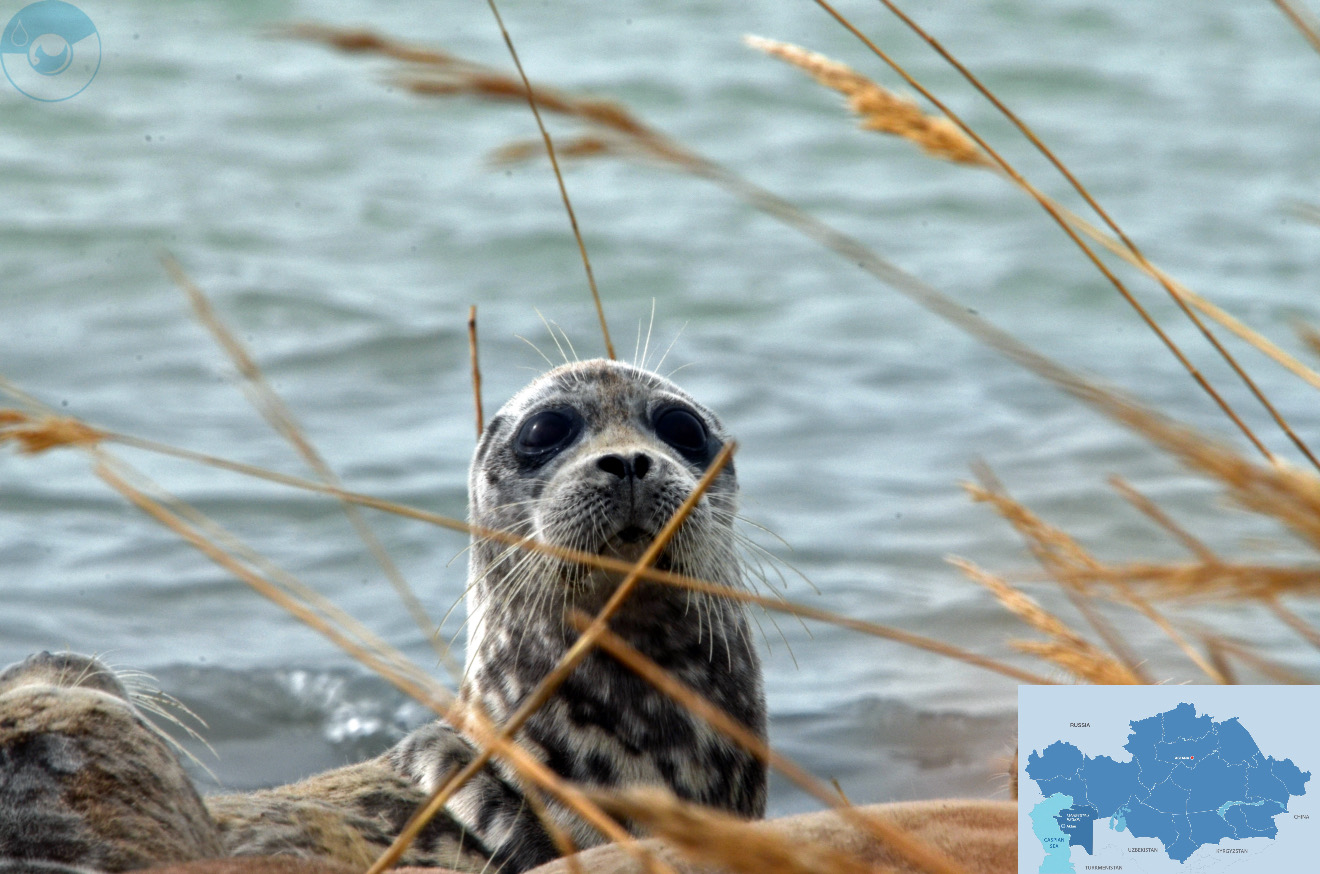
In November 2020, the Caspian seals were listed in Kazakhstan’s Red Book of Endangered Species. Photo credit: Assel Baimukanova Click to see the map in full size. The map is designed by The Astana Times.
The main conservation challenge is no longer simply protecting known seal habitats, but adapting protection to a changing Caspian Sea. Declining water levels and warmer winters are affecting traditional breeding and haul-out areas, while pollution, fishing nets and other human activities add to the pressure.
In Kazakhstan, the Caspian seal is listed in the Red Book and is protected by law. Scientists are increasingly focused on how environmental changes affect the species and where new protection measures may be needed, according to the Ministry of Ecology and Natural Resources.
A habitat in transition
A documentary by the Institute of Hydrobiology and Ecology, “On the Shoals of the Caspian Sea, the Call of the Seals”, highlights the work of Kazakh researchers. Scientists conduct aerial surveys, locate seal rookeries and analyze population and habitat data.
Assel Baimukanova, a researcher at the institute, said the retreating sea is changing the distribution of suitable habitats.
“As the sea regresses, seals lose their traditional habitats. However, new islands are forming, and it is crucial that they remain safe for the seals,” she said.
This means conservation can no longer focus only on historically known sites. Newly formed islands and shoals may become important resting and breeding areas and require timely protection.
Climate and human pressure
Climate change is adding to existing human-related risks. Caspian seals breed on ice in the northern Caspian during winter, but warmer winters can reduce the availability of suitable ice. Pollution, fishing, shipping, oil activities, tourism and poaching pose additional threats.
“Seals breed on the ice of the northern Caspian, but with warmer winters becoming more frequent, we are facing a critical question: can the species adapt to these changes and survive?” Baimukanova said.
Fishing gear remains a particular concern. Researchers and partner organizations have removed several tonnes of discarded fishing nets and plastic waste from seal habitats during previous conservation campaigns, reducing direct risks to the animals.
From monitoring to regional action
The Caspian seal is also an important indicator of the wider health of the Caspian ecosystem. The sea is home to more than 300 endemic invertebrates, 76 fish species and globally significant populations of migratory birds. As a top predator that moves across the basin, the seal can reflect changes throughout the food chain.
Researchers monitor seal mortality, population structure, habitat and food sources. Satellite imagery identifies new islands and sandbanks that may serve as haul-out sites, while field teams collect water, soil and biological samples.
The problem extends beyond Kazakhstan’s borders. All five Caspian states have ratified regional agreements on marine environmental protection and aquatic biological resources. Kazakhstan established the Caspian Seal State Nature Reserve in 2024, according to Baimukanova, but researchers argue that coordinated transboundary protection will also be needed as habitats shift.
Dr Simon Goodman of the University of Leeds said some decline in the Caspian Sea level is likely to continue even with efforts to reduce global greenhouse gas emissions. Conservation planning should therefore begin early enough to balance biodiversity protection with human interests and wellbeing, he said.
For Kazakhstan, the next challenge is to turn scientific evidence into coordinated conservation measures. Their effectiveness will depend on protecting existing seal habitats, identifying and securing new areas as the Caspian ecosystem evolves, and reducing human pressures from fishing, shipping, pollution and other activities.
