
ASTANA — Kazakhstan has reached an agreement to resolve a yearslong dispute over costs at the Dunga oil field in the Mangystau Region, clearing the way for a development plan targeting 67.4 million barrels of oil production through 2039, the Energy Ministry said in a written response to The Astana Times.

Dunga oil and gas field in the Tupkaragan district of the Mangystau Region. Photo credit: psa.kz Click to see the map in full size. The map is designed by The Astana Times.
The agreement was signed on Oct. 5 by Kazakhstan’s Energy Minister Yerlan Akkenzhenov and KazMunayGas Deputy Chairman Ruslan Balykbayev, in the presence of representatives of PSA LLP, the country’s authorized body overseeing production-sharing agreements, and Dunga Operating GmbH, the field’s operator.
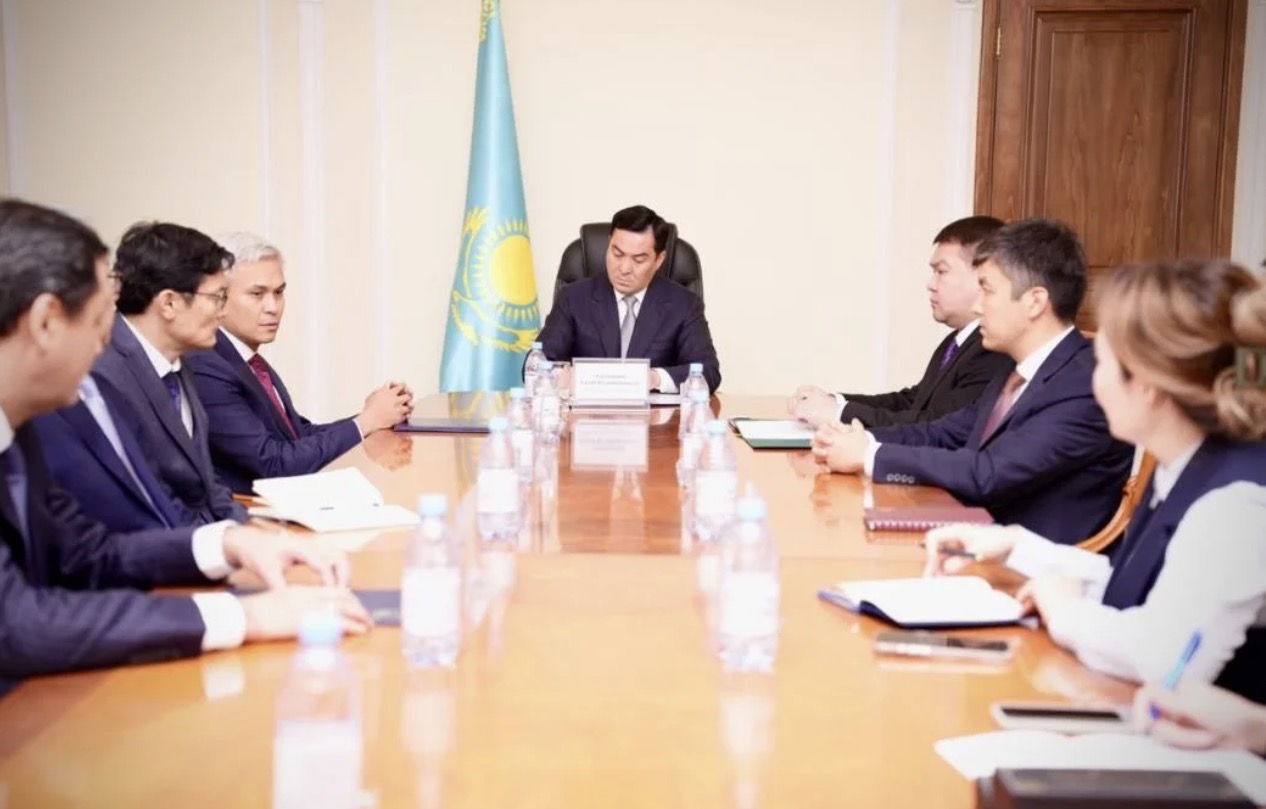
During the signing of an agrement on Oct. 5. Photo credit: Kazakh Energy Ministry
The ministry said the settlement would allow the parties to proceed with a new development plan for 2026-2039, which envisages substantial capital and operating investments in the field.
The document is expected to be submitted for signing to the consortium’s foreign partners, Oman Oil Company Limited and Thailand’s PTTEP Corporation.
The Dunga field was discovered in 1966 in the Tupkaragan district of the Mangystau Region in western Kazakhstan, entered trial production in 2000 and has been under full-scale development since 2007. The field operates under a production-sharing agreement originally signed between Kazakhstan and Oman Oil Company Limited in May 1994. In 2019, Kazakhstan and the consortium agreed to extend the Dunga production-sharing agreement by 15 years, from 2024 to 2039.
In November 2023, Kazakhstan’s national oil and gas company KazMunayGas acquired a 60% interest in the project from TotalEnergies for $358.5 million, according to the company’s financial statements.
The acquisition gave KazMunayGas control of Dunga Operating GmbH, which serves as the field’s operator. Oman Oil Company Limited and PTTEP Corporation each hold a 20% stake.
According to KazMunayGas, Dunga produced 677,300 tons of oil in 2025, compared with 630,000 tons in 2024 and 546,900 tons in 2023. Gas production exceeded 51 million cubic meters in 2025.
The dispute centered on whether certain historical expenses incurred by the project’s contractors were eligible for reimbursement under the production-sharing agreement. Such expenses from oil production are usually recovered before the remaining profit oil is divided between the state and investors.
Nurlan Zhumagulov, an energy analyst and founder of the Energy Monitor Telegram channel, said the project’s previous operator, France’s TotalEnergies, and other consortium partners, had recoverable costs amounting to hundreds of millions of dollars. He linked the resolution of the dispute with the field’s future production potential, saying it could help the operator to increase annual oil output to 850,000 tons.
According to Zhumagulov’s estimates, tax payments to Kazakhstan from the project totaled approximately 40 billion tenge (US$88.2 million) in 2025, including 32 billion tenge (US$70.6 million) representing the state’s share of profit oil.
The latest settlement also entails financial compensation to Kazakhstan. The Energy Ministry, however, did not specify the amount in its response to The Astana Times or provide a breakdown of the disputed historical expenses.
“The Dunga oil field has significant potential and is of strategic importance to the country’s energy sector,” said Kazakhstan’s Energy Minister Yerlan Akkenzhenov.
“The project’s development has long been hampered by unresolved disputes over non-recoverable costs. The agreements reached allow us to protect the state’s economic interests without lengthy legal proceedings and pave the way for a new investment cycle,” said Akkenzhenov.
The settlement is expected to facilitate implementation of the field’s development plan through 2039, with projected oil production of 67.4 million barrels over the period.
According to PSA, Kazakhstan’s authorized body overseeing production-sharing agreements, the third phase of Dunga’s development includes connecting previously drilled wells, expanding oil and gas processing capacity, upgrading export infrastructure and improving operational efficiency.
The settlement therefore removes a longstanding contractual disagreement from the project’s development agenda, allowing the consortium to move ahead with production and investment plans for the remaining life of the agreement.
