
ASTANA – Kazakhstan is undertaking one of its largest energy infrastructure upgrades to address a key challenge: maintaining affordable electricity while ensuring a reliable supply for a growing economy. Through the National Project on Modernization of the Energy and Utilities Sectors, the country plans to expand generation capacity, upgrade aging networks and digitalize energy management.
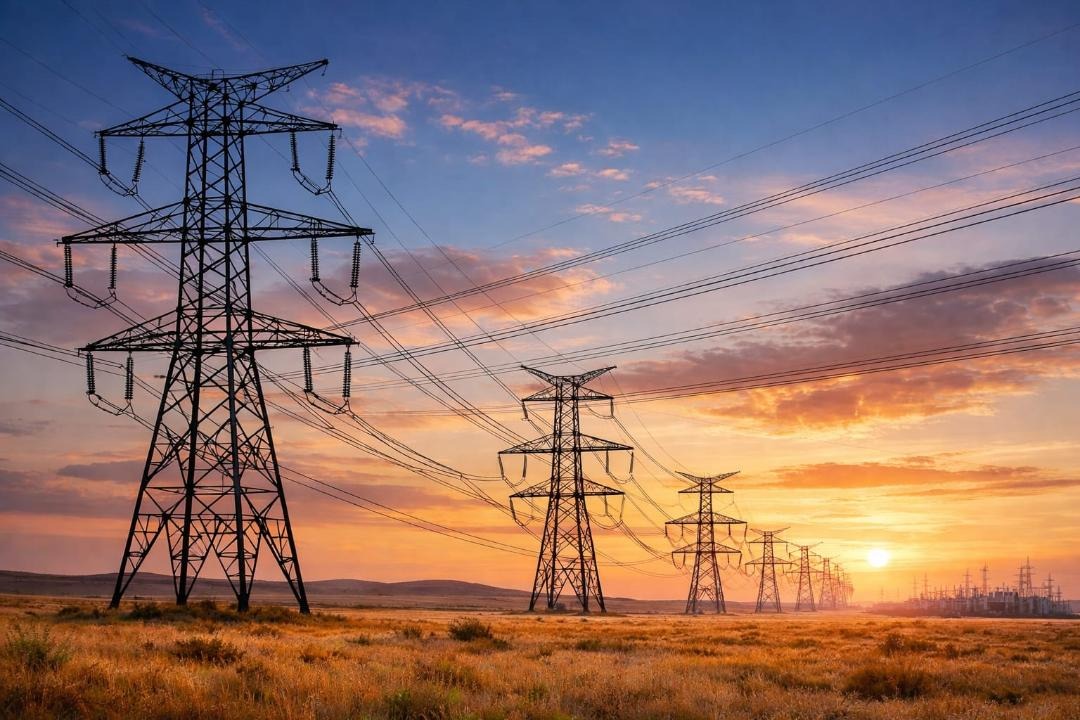
Photo credit: gov.kz
The challenge of affordable electricity
Kazakhstan remains among the countries with relatively affordable electricity prices, with an average household tariff of US$0.056 per kilowatt-hour. However, low tariffs can limit resources for infrastructure renewal, creating a trade-off between maintaining consumer affordability and attracting the investment needed for a reliable energy system, according to analysts at the EconomyKZ.org Telegram channel.
Kazakhstan’s electricity prices are significantly lower than in many developed economies. Average household tariffs stand at US$0.406 per kilowatt-hour in Germany, US$0.447 in Ireland and US$0.466 in Bermuda. However, higher prices in these markets often reflect additional costs related to grid modernization, environmental policies and energy transition measures. The comparison highlights a broader challenge for Kazakhstan: ensuring affordable electricity while investing in new generation capacity and upgrading aging infrastructure.
Expanding capacity and securing supply
The modernization program aims to introduce 7.3 gigawatts (GW) of new and upgraded generating capacity by 2029, with total investment of 6.2 trillion tenge (US$13 billion). Of this amount, 6,484 megawatts (MW) will come from new facilities, while 825 megawatts (MW) will replace outdated capacity.
Energy Minister Yerlan Akkenzhenov said the program will allow Kazakhstan to fully meet domestic electricity demand starting in early 2027 and achieve a surplus of 1.3 billion kilowatt-hours by the end of the same year.
The planned additions include five gas turbine units at the Zhambyl State District Power Plant with a combined capacity of 210 megawatts (MW) and a combined-cycle facility at the Mangystau Nuclear Power Plant with a capacity of 160 megawatts (MW). A further 4 gigawatts (GW) of capacity is planned for 2028-2029, creating a stable reserve and expanding export potential.
Upgrading networks and improving resilience
The modernization effort also focuses on reducing infrastructure risks. By 2029, Kazakhstan plans to reconstruct 77,500 kilometers of electricity networks and 1,600 kilometers of heating networks. The upgrades are expected to reduce average wear levels of electricity networks from 74% to 45% and heating networks from 52% to 42%, improving reliability and reducing losses.
Several projects have already been completed, including the modernization of the Tekeli energy complex and the launch of a 240 megawatts (MW) combined-cycle power plant in the Kyzylorda Region.
Digitalizing the energy system
Digital transformation is another part of the reform. The Ministry of Energy is developing the EnergyTech platform to integrate data from energy facilities, improve monitoring and increase operational efficiency.
The introduction of smart meters, automated management systems and a cybersecurity center covering more than 200 energy facilities is intended to improve transparency, reduce technical losses and strengthen system security.
Looking ahead
Kazakhstan’s energy modernization reflects a broader challenge faced by many countries: ensuring affordable energy while financing the infrastructure required for long-term reliability.
The success of the program will depend on the timely completion of new-generation projects, the modernization of networks and the ability to improve efficiency without creating excessive pressure on consumers. If implemented as planned, the reforms could strengthen Kazakhstan’s energy security, support industrial growth and increase its role as a regional energy supplier.
