
ASTANA — Raising incomes and curbing inflation were priorities for 62.3% and 48.9% of 1,200 respondents, respectively, according to the findings presented at the July 17 Sapar Expert Club meeting in Astana. Experts discussed expectations, party roles and participation ahead of Aug. 23 Kurultai elections under the new Constitution.
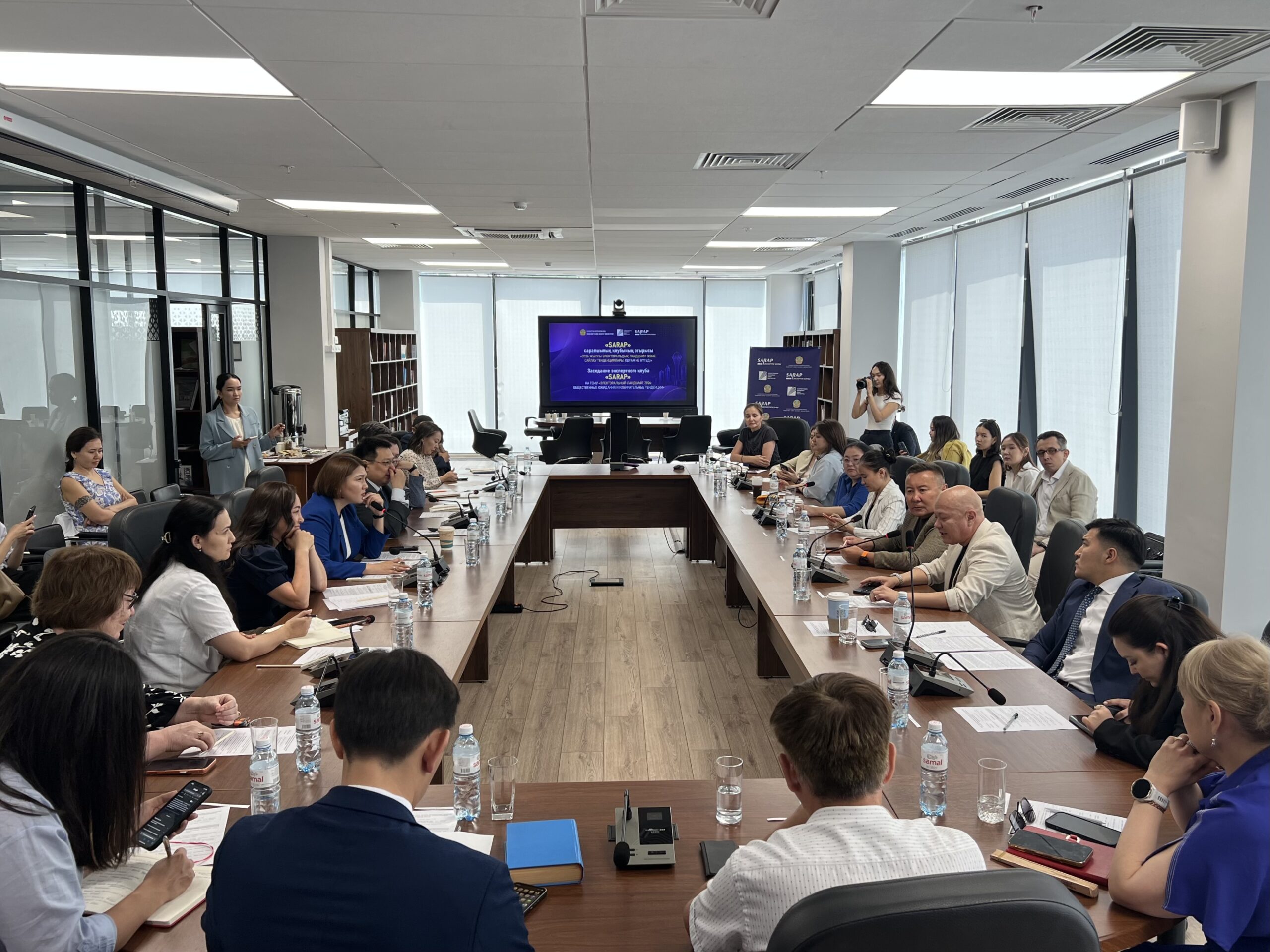
Sapar Expert Club meeting in Astana on July 17. Photo credit: Nagima Abuova / The Astana Times
Fighting corruption ranked third among respondents’ expectations at 30.3%, followed by the creation of new jobs at 29.8%. The same survey recorded potential electoral participation at 75.1%. This included 37.6% of respondents who expressed a firm intention to vote and 37.5% who said they were likely to participate.
Readiness increased with age, from 69.4% among respondents aged 18-28 to 80.7% among those aged 61 and older. The share of rural respondents certain they would vote was approximately four percentage points higher than the corresponding urban figure.
“Overall, citizens expect parties to participate professionally in resolving specific socioeconomic issues. They view the upcoming elections as an instrument for ensuring quality of life and achieving pressing goals,” said Azamat Baigaliyev, the deputy chair of the Kazakhstan Institute of Public Development’s (KIPD) management board.
Surveys capture public mood and electoral expectations
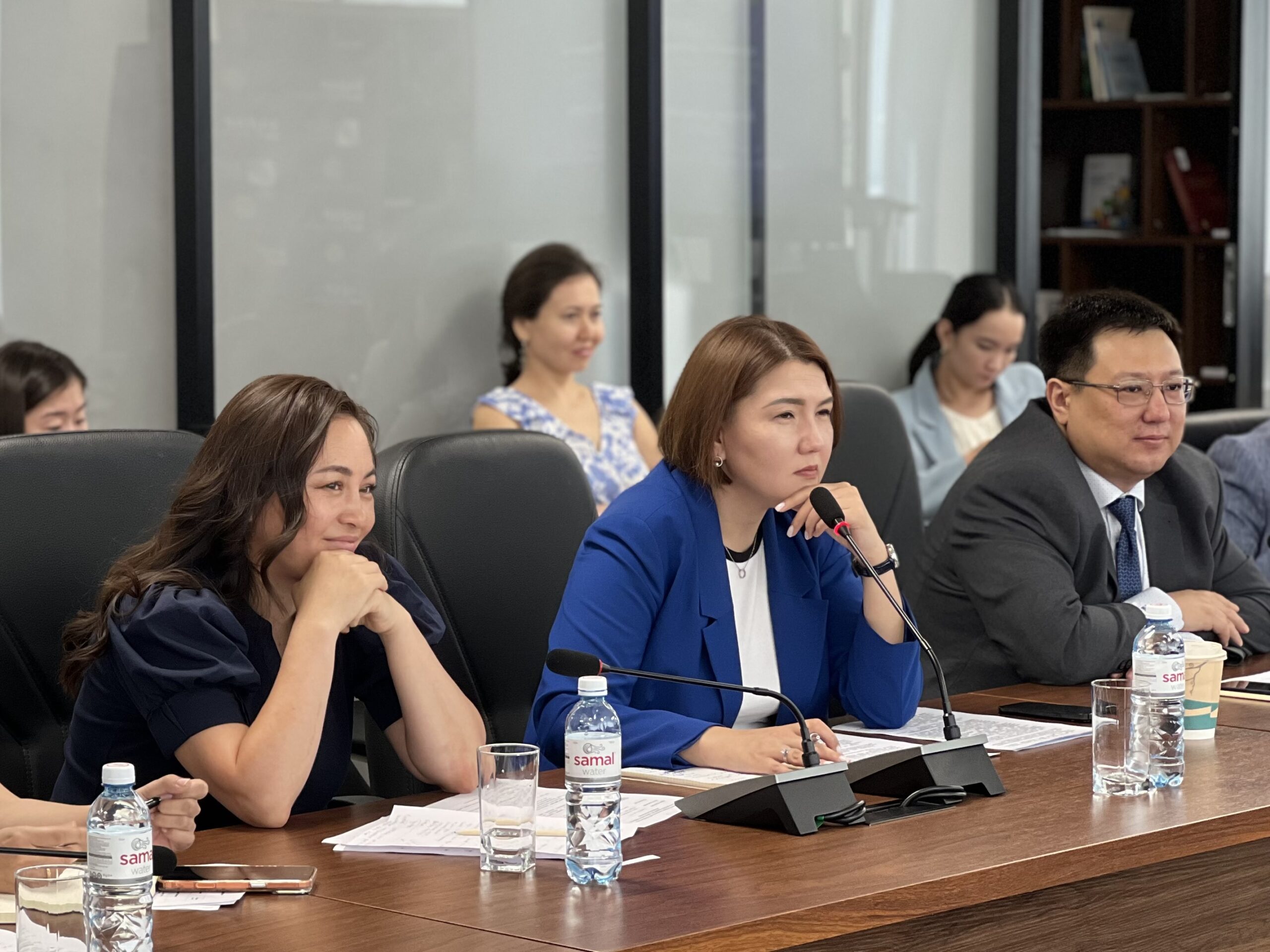
From left to right: Nayla Mukhtarova, Zhuldyzai Iskakova, Azamat Baigaliyev. Photo credit: Nagima Abuova / The Astana Times
The meeting brought together political analysts, academics, leaders of think tanks and research institutes, and doctoral and master’s students.
The institute presented two independent nationwide surveys conducted face-to-face in May. One covered 2,400 respondents and examined perceptions of Kazakhstan’s socio-political and economic situation in the second quarter of 2026. The other surveyed 1,200 people about their political attitudes, intended electoral participation and expectations of parties.
Both studies covered every region of Kazakhstan, including major cities and rural communities. Baigaliyev said their results reflected similar overall trends in public sentiment.
Among the 2,400 respondents, 84.1% considered the socio-political situation favorable or stable, up from 70.4% in the first quarter. A further 76.6% assessed the economy positively, and trust in the president stood at 86.9%.
Trust is built through everyday experience
Political scientist and PhD candidate Nayla Mukhtarova said electoral attitudes should be considered within a broader competition for public trust.

Nayla Mukhtarova. Photo credit: Nagima Abuova / The Astana Times
“In today’s world, countries are competing not for votes but for people’s trust in political and state institutions. Public trust does not appear in one day, on voting day or during the campaign period. It is formed every day, when a person receives public services and sees that justice and the law work equally for everyone,” she told The Astana Times.
Mukhtarova said trust in the president and public assessments of individual state institutions should be examined separately.
“Trust in the president and trust in state institutions are, unfortunately, different things today. People do not always perceive a state institution and the president as one and the same. They may trust him but remain dissatisfied with the work of particular institutions, including health care and education bodies or employment services,” she said.
Asked what could strengthen public confidence in the survey findings, Mukhtarova linked their credibility to citizens’ everyday experiences with the state.
“Improving the quality of public services, which citizens encounter every day. The judicial system must also be fair and equal for everyone, because these factors strongly influence citizens’ trust in the state,” she said.
Parties need distinct values and sustained engagement
Political scientist, publicist and interethnic relations expert Talgat Kaliyev questioned whether general party-preference surveys always capture the depth of voters’ political choices.
“When people are asked which party they would vote for, there is a high proportion of socially desirable answers. But when they are asked which specific figures they trust or which initiatives they remember and support, they begin to struggle. Parties should be based not on platforms, which change from election to election, but on values,” said Kaliyev.

Talgat Kaliyev. Photo credit: Nagima Abuova / The Astana Times
He noted that overlapping positions make it difficult for voters to understand what would change if a particular party gained greater influence.
Mukhtarova and Kaliyev shared the view that political engagement should continue beyond election campaigns. Mukhtarova connected sustained engagement with public trust, and Kaliyev said parties should demonstrate their values through consistent responses to major events and policy problems.
“If something happens, a party should speak and explain what systemic changes are needed to prevent it from happening again. Parties should state their position on every major issue and every high-profile event. This is how they increase their visibility and act in accordance with their values,” he said.
He also highlighted parties’ continued reliance on prominent athletes and entertainers to attract public attention, describing this approach as one developed when television played a larger role in political communication.
“Most parties have tried to use the old model by attracting celebrities and athletes. But now, when television is not as popular, completely different and more creative approaches are needed,” he said.
Kaliyev said parties should instead participate in debates where they offer competing responses to specific problems, allowing voters to compare their positions.
Young voters look beyond campaign promises
Among respondents aged 18-28, 65.6% expected their lives to improve over the next year. Mukhtarova and Kaliyev shared the view that younger voters’ optimism and political interest would not translate automatically into support based on campaign messages alone.
“They will not vote simply because there is a good program or a good promise. They will look at what the party has already done and what it is prepared to do next,” she said. “They will demand dialogue from the state, and they will demand concrete results.”
Kaliyev said researchers are still examining how Generation Z’s electoral behavior is formed.
“Generation Z is an entirely unpredictable category. We are still studying how its electoral behavior is formed. They will be politically active in any case, but where that activity is directed depends on how political actors behave today,” he said.
Parties that secure their attention could channel that interest into constructive electoral participation, he said. If they fail to do so, young people will pursue other forms of political expression.
Kaliyev also described public criticism of party lists and candidates on social media as a sign of political involvement rather than a purely negative reaction.
“Discontent expressed on social media about party lists and their composition should not be viewed negatively. On the contrary, it demonstrates that people are not indifferent and are engaged in the reform. (…) They are paying attention to the choice, are informed about the elections and want to express their point of view, so ignoring this discontent would be unwise,” said Kaliyev.
