
ASTANA – Kazakhstan’s new Constitution entered into force on July 1 following its approval in a nationwide referendum on March 15. Replacing the 1995 Constitution, it sets out changes to the country’s system of government, the distribution of state powers, constitutional rights and public institutions.
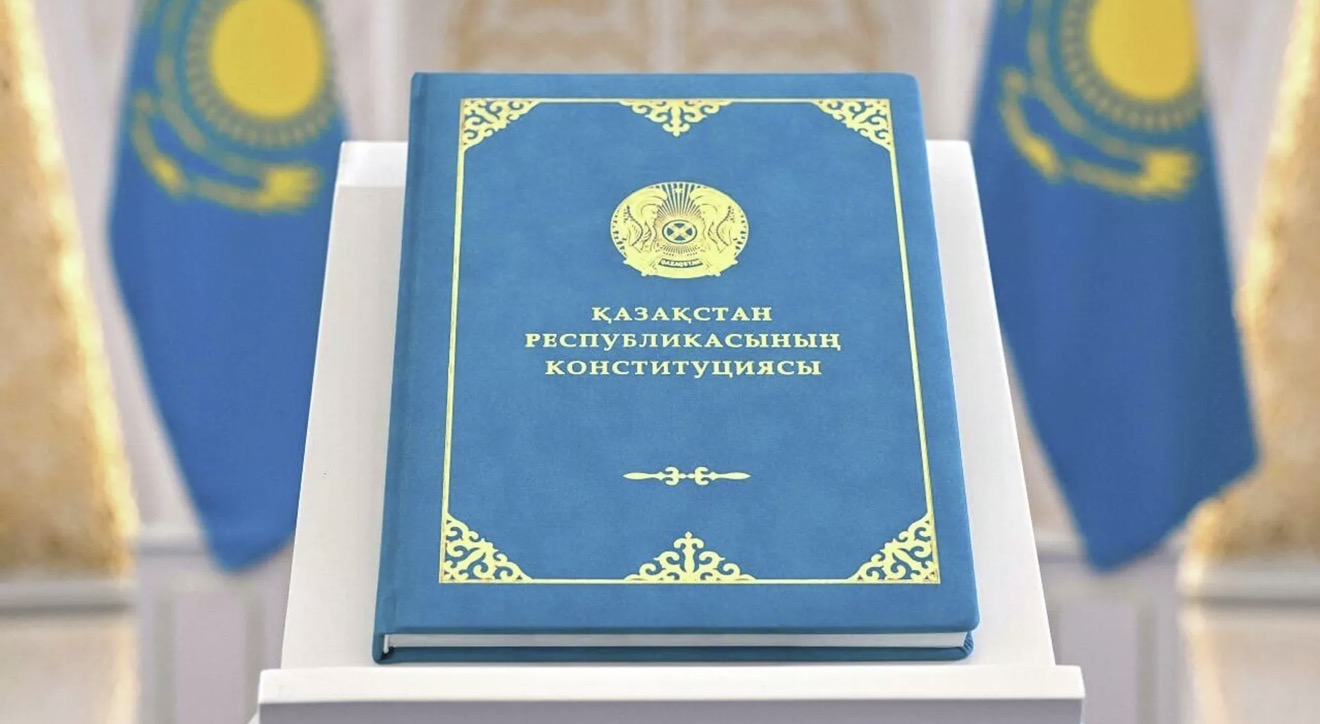
Photo credit: Akorda
The key changes include a unicameral legislature known as the Kurultai, the introduction of the People’s Council as the nation’s highest consultative body as well as the office of vice president.
A new system of distribution of powers
One of the Constitution’s most significant institutional reforms is the replacement of the Mazhilis and Senate with a unicameral parliament, the Kurultai, consisting of 145 deputies elected through a nationwide proportional party-list system.
Deputies will serve five-year terms. Candidates must be at least 25 years old, have lived in Kazakhstan for the previous 10 years and take an oath upon assuming office.
The candidate for the post of Kurultai Chair is nominated by the president.
The Kurultai receives broader oversight powers. It will review candidates for the government, hear regular reports from government ministers and receive an annual report from the prime minister. It will also have the authority to initiate a vote of no confidence in the government.
The Kurultai will approve presidential nominees for vice president, prime minister, judges of the Constitutional Court, members of the Central Election Commission and the Supreme Audit Chamber. It will also elect Supreme Court judges upon the president’s recommendation.
The new Constitution grants the president additional authority to dissolve the Kurultai if lawmakers twice reject the president’s nominee for speaker or other key constitutional appointments, a provision intended to prevent prolonged political deadlock.
Vice presidency institution
The Constitution also restores the office of vice president, which was abolished in 1996. The vice president will represent Kazakhstan internationally, coordinate cooperation between the president and state institutions, and carry out other responsibilities assigned by the head of state. The officeholder may not simultaneously serve as a member of parliament, engage in business activities or belong to a political party.
The Constitution also establishes a clear line of presidential succession. In the event of the president’s resignation, death or inability to perform official duties, presidential powers will automatically pass to the vice president.
If the vice president is unable to assume the office, authority will transfer to the chair of the Kurultai and subsequently to the prime minister. Upon assuming the presidency, the vice president must relinquish the vice presidential post.
People’s Council
The Constitution also establishes a new advisory body, the Halyk Kenesi (People’s Council), replacing the Assembly of the People of Kazakhstan.
The council will comprise 126 members: 42 representing ethnocultural associations, 42 representing major public associations, and 42 representing maslikhats (local legislative body) and regional public councils.
In addition to advising the government on domestic policy, national unity and social development, it will have the right to submit legislative proposals, initiate national referendums, organize public consultations and participate in public oversight.
Human rights at the center
Unlike the 1995 Constitution, the preamble of the new Constitution identifies the protection of individual rights as the state’s highest priority while emphasizing Kazakhstan’s historical continuity, national identity and the legacy of the Great Steppe civilization.
The Constitution also strengthens guarantees of sovereignty by reaffirming the country’s territorial integrity and inviolability of its borders.
For the first time, it enshrines the principles of Law and Order, the development of human capital, responsible patriotism, and the promotion of education, science and innovation as strategic priorities for national development.
It further establishes environmental protection as a shared constitutional responsibility, emphasizing both the careful stewardship of nature and the responsibility of every individual to contribute to environmental well-being.
Education and innovation receive constitutional recognition as key drivers of national development. The state guarantees access to secondary education while reaffirming compulsory primary and lower secondary education. The Constitution also defines the development of science and intellectual potential as a core responsibility of the state.
The Constitution introduces explicit protections for citizens’ rights in the digital sphere, including safeguards for personal data and information processed through digital technologies.
Family, culture and social values
The document strengthens protections for the family by defining marriage as a voluntary union between a man and a woman registered under the law while reaffirming state support for motherhood, fatherhood and childhood.
For the first time, cultural heritage preservation, support for national culture and the right to use one’s native language and preserve cultural traditions are enshrined as constitutional principles, reflecting Kazakhstan’s multiethnic society.
The Constitution also reinforces the country’s secular character, guarantees equality before the law, upholds freedom of religion while maintaining the separation of religion and the state, and gives constitutional status to secular education, except in religious educational institutions.
Another new provision formally recognizes volunteerism and charitable activity as areas deserving state support.
