
World Football Day at the United Nations on May 25 underscores a compelling reality: the FIFA World Cup 2026™ stands as a powerful testament to what countries can achieve through sustained international cooperation. Canada, the United States, and Mexico will each host matches while jointly delivering the largest and most ambitious World Cup in history—an achievement that reflects not only regional coordination, but also the kind of partnership increasingly required to navigate a complex and interconnected world.
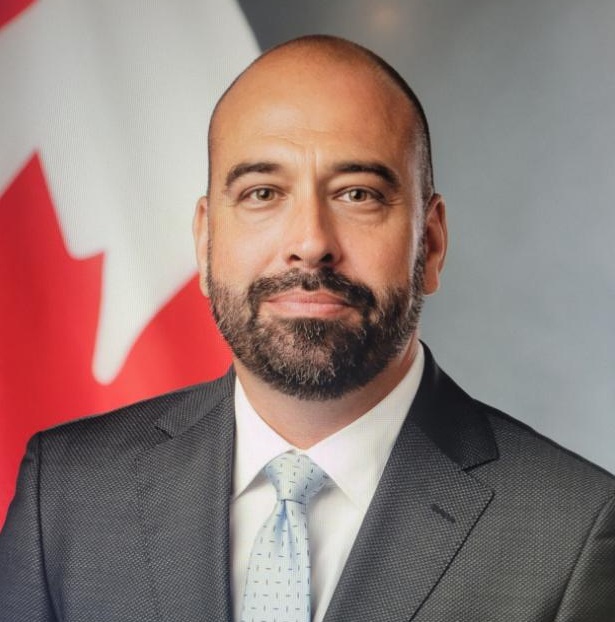
Christopher Duggan.
The tournament has already demonstrated that when countries align around a shared objective, meaningful progress follows. Cross-border cooperation has deepened, from enhanced security coordination to strengthened information-sharing and operational planning—all in pursuit of a safe and successful global event. Beyond sport, the World Cup offers a forward-looking model of collaboration: one rooted in openness, shared prosperity, and collective responsibility.
Canada approaches the FIFA World Cup 2026™ with a clear sense of purpose grounded in its values and international outlook. As one of only four countries to have hosted both the Women’s and Men’s FIFA World Cup, Canada brings experience, institutional strength, and a steadfast commitment to inclusive and responsible hosting. The tournament provides an opportunity to showcase Canada’s culture, the diversity of its communities, and its enduring respect for Indigenous Peoples, whose presence and partnership are central to hosting on this land. At its core, Canada’s approach is anchored in delivering a World Cup that is safe, welcoming, and grounded in mutual respect.
This effort also reflects Canada’s broader role on the global stage. Working closely with partners across borders, Canada contributes to strengthening systems that support security, economic resilience, and people-to-people ties. These are the foundations not only of a successful tournament, but of long-term stability and shared progress. Here in Central Asia, these same foundations are becoming increasingly important as the region expands its global engagement and pursues more diversified partnerships.
Canada’s role in Central Asia is grounded in practical, results-oriented cooperation. Through Global Affairs Canada’s Technical Assistance Partnership (TAP), Canada has supported legal reforms in Kazakhstan, including the development of Kazakhstan’s first criminal law on stalking in line with international standards. On the regional level, Canada supports all five Central Asian states in their counter-terrorism efforts, by building capacity of border control, customs and criminal justice officials in monitoring, preventing, and countering the flow of illicit firearms in the region. Together, these efforts reflect a partnership model that is both practical and focused on long-lasting resilience.
This partnership reflects a natural alignment between Canada and Central Asian states as “middle powers” navigating an increasingly complex geopolitical landscape. Similar to the countries in the region, Canada prioritizes sovereignty, a broad range of partnerships, and pragmatic, respectful cooperation. In an increasingly fragmented global economy, Canada has emphasized the importance of strengthening trade and investment links, building resilient supply chains, and reducing economic vulnerability to economic coercion – objectives that closely align with Central Asia’s own trajectory. Through a collaborative, rules-based approach and technical expertise, Canada contributes to mutual economic growth without creating dependency. Its strengths in sustainable resource development, clean technologies, and environmental governance align closely with Central Asian priorities, particularly in mining, energy transition, and water management.
This alignment extends beyond politics and economics to human connections. The FIFA World Cup 2026™ offers a rare opportunity to translate strategic alignment into shared experience. For Uzbekistan, this World Cup marks a historic first – an achievement that carries deep national pride and brings the region greater global visibility. Even before the tournament begins, that connection will take shape on the pitch, when Canada’s men’s national team meets Uzbekistan in a friendly match on June 1, 2026 – turning diplomacy into something tangible and shared. It also creates a moment of connection: between Central Asian fans travelling to Canada and local communities hosting them, and between millions of fans sharing the same experiences in real time. Football, with its universal appeal, provides a unique opportunity for deeper people-to-people engagement – bringing together athletes, governments, and communities in ways that formal diplomacy alone often cannot.
Canada’s pragmatic, collaborative, and values-driven approach, on full display in the joint delivery of the FIFA World Cup 2026™, underscores its role as a partner others can depend on, whether advancing global initiatives, strengthening economic ties, or addressing shared challenges. The lesson of this historic tournament is clear: when trust is established, cooperation deepens—and with it, the foundation for lasting, shared success.
Christopher Duggan is the Ambassador of Canada to Kazakhstan, Kyrgyz Republic, Tajikistan, Turkmenistan, and Uzbekistan
Disclaimer: The views and opinions expressed in this article are those of the author and do not necessarily reflect the position of The Astana Times.
