
ASTANA – An exhibition marking the 80th anniversary of the Central Kazakhstan Archaeological Expedition opened at the National Museum in Almaty on March 31, showcasing rare artifacts discovered during excavations in Central Kazakhstan.
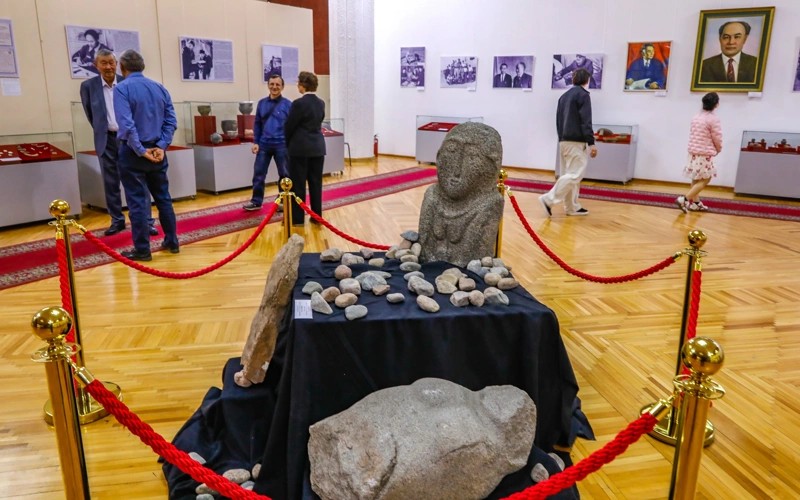
More than 2,000 rare artifacts discovered during excavations in Central Kazakhstan were presented at the National Museum in Almaty on March 31. Photo credit: Alexander Pavsky
The exhibition was organized by the museum in cooperation with the Margulan Institute of Archaeology.
Research fellow Olga Myakisheva from the museum’s archaeology department shared details about the expedition and the artifacts on display in an interview with Kazinform.
According to her, the Academy of Sciences of the Kazakh SSR was established in 1946, followed by the creation of an institute for archaeological and ethnographic research at the initiative of Kanysh Satpayev. Alkey Margulan led the work.
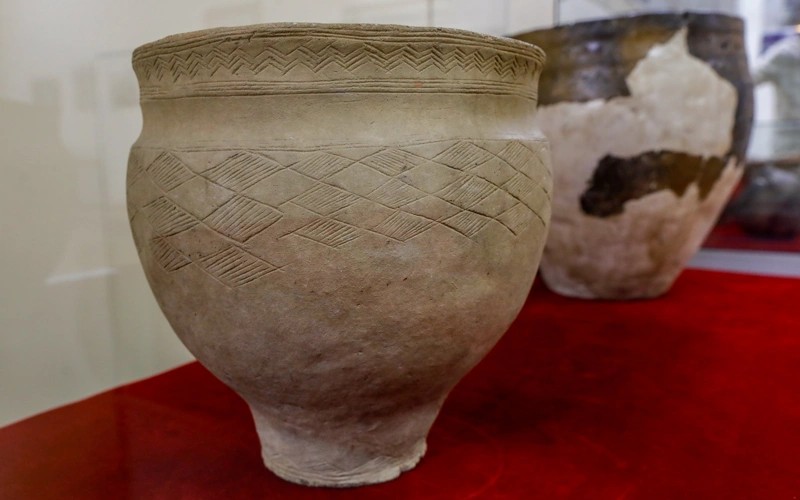
Ceramic vessels, among the most abundant finds, are displayed in various forms, decorated with geometric patterns. Photo credit: Alexander Pavsky
“At the time, Kazakhstan’s industrialization was under discussion, with Central Kazakhstan, rich in mineral resources, at its center. Alongside geologists, archaeologists were also involved, as ancient mining sites had been discovered. As a result, the Central Kazakhstan Archaeological Expedition was established in 1946 under Margulan’s leadership,” Myakisheva said.
The exhibition features photographs of leading Kazakh archaeologists, archival documents, Margulan’s autobiography, research notes by Mikhail Klapchuk and materials from the archaeology department led by Kemal Akishev.
The museum’s collection from the expedition includes more than 2,000 artifacts spanning periods from the Stone and Bronze Ages to the early Iron Age and the Middle Ages.
One of the expedition’s key discoveries was the late Bronze Age sites in the Begazy and Dandybai regions.
Among the exhibits are arrowheads from the Begazy-Dandybai culture, reflecting processes of tribal consolidation and internal conflict, pointing to the emergence of social hierarchy and early power struggles.
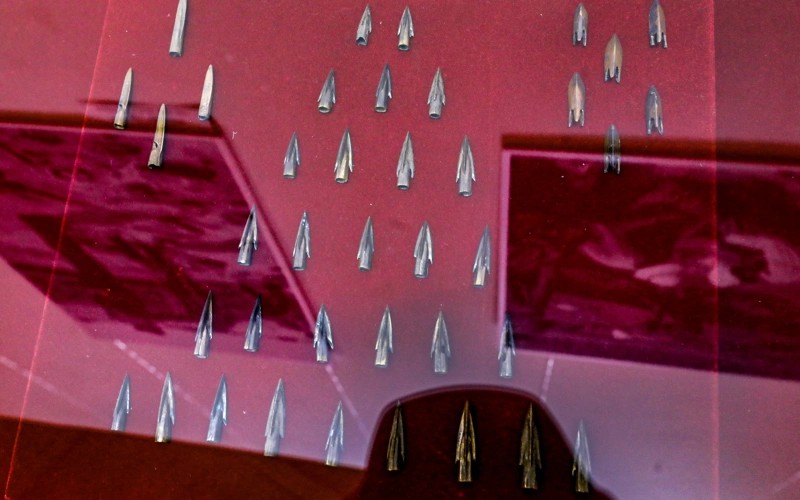
Among the exhibits are Begazy-Dandybai arrowheads, reflecting tribal consolidation, conflict and emerging social hierarchies. Photo credit: Alexander Pavsky
Artifacts also highlight the development of metallurgy, including casting molds, crucibles and small hammers used in jewelry making. Notable items include bone-carved tools resembling anvils, elk antler objects, amulets and ornaments featuring solar symbols. Similar decorations can be seen in reconstructed Bronze Age costumes displayed in the museum.
Horse harness elements are also presented, including cheekpieces of various shapes and bone fittings.
Ceramic vessels, among the most abundant finds, are displayed in various forms, decorated with geometric patterns and solar motifs typical of the Bronze Age. Some show evidence of repair, including clamps used to fix broken pottery.
Other items include stone hammers used for crushing ore, agricultural tools such as hoes, and bone implements linked to household crafts, including processing flax and hemp for textile production.
Climate changes later led populations to adopt a semi-nomadic lifestyle, reflected in the Tasmola culture’s artifacts, discovered by archaeologist Mir Kadyrbayev in 1966.
The exhibition includes metal horse gear indicating this transition, as well as ritual objects. Ancient Saka tribes worshipped the sun, and priests used these items in ceremonies.
Researchers themselves made a significant contribution to the museum’s collection. In 1957, Margulan personally donated a large collection. In the late 1990s, Zholdas Kurmankulov transferred a substantial volume of materials, later adding finds related to Sarmatian culture from western Kazakhstan.
The exhibition also features medieval artifacts, including items from a warrior’s burial site along the Nura River, excavated between 1947 and 1949. These include silk garments, remains of footwear, a silver cup, headgear, bits, quiver decorations and fragments of a birch-bark quiver, dating to the Golden Horde period.
“Early expeditions also explored monumental architecture in the Ulytau Region, including the mausoleums of Jochi Khan, Bolgan Ana and Zhuban Ana. The exhibition displays original bricks, inscriptions, tribal tamgas and stone sculptures from the 9th-12th centuries depicting figures holding vessels,” Myakisheva said.
Modern archaeological research in Kazakhstan continues to advance. Each year brings new discoveries, including geoglyphs visible only through aerial photography and new burial sites, some with horses. Researchers say advances in technology are helping push the field to new levels.
