
ALMATY – Kazakhstan has developed the largest artificial intelligence model for automatic speech recognition (ASR) of Turkic languages, marking a major milestone for the region’s digital transformation and technological sovereignty.
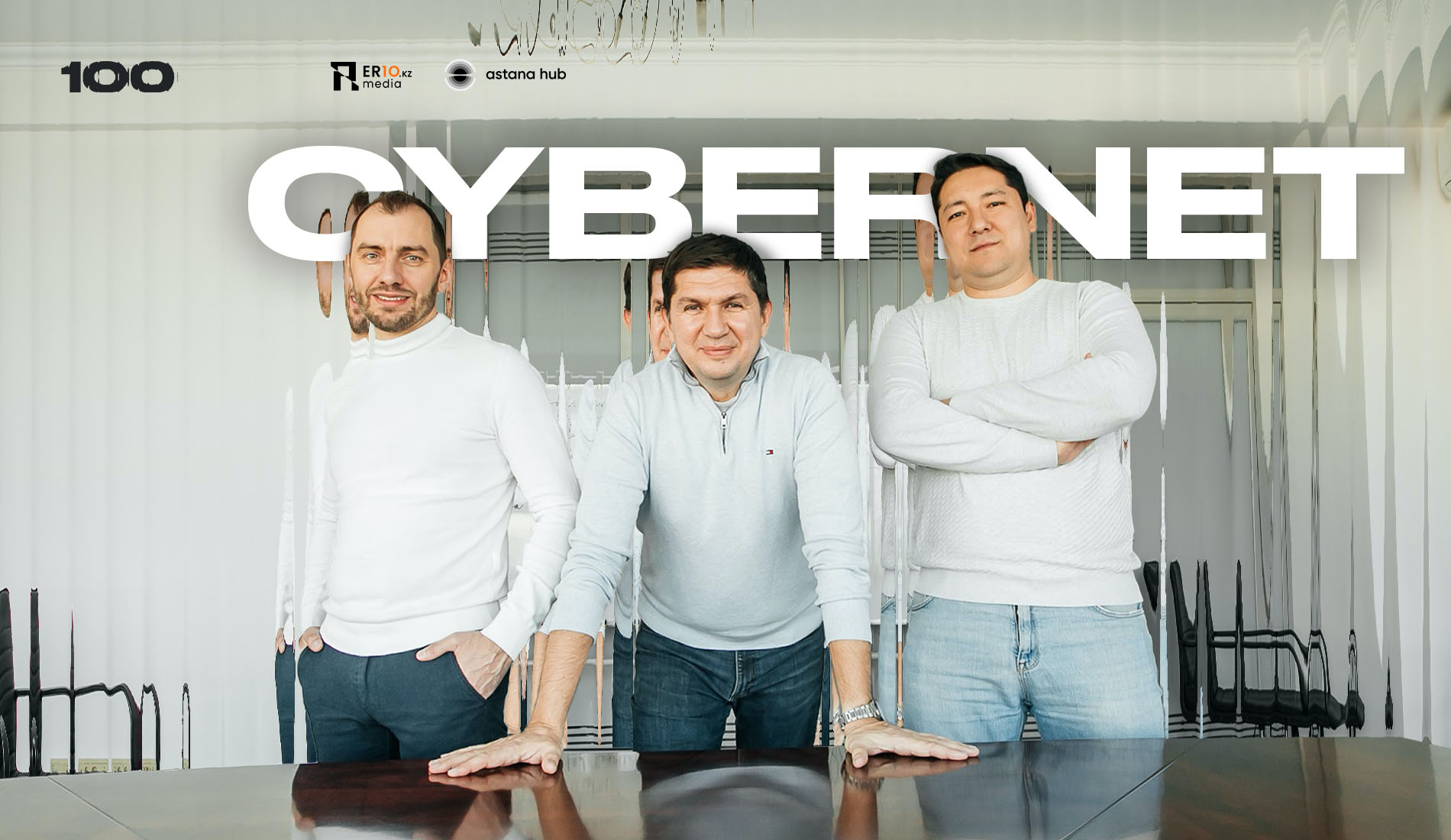
The founders of Cybernet AI Vitaly Akulov, Ivan Belokhvostikov and Rashid Ismailov. Photo credit: er10.kz.
The model was unveiled by Cybernet AI, a Kazakh startup specializing in secure corporate AI solutions. It is the first large-scale ASR system in Central Asia designed specifically for Turkic languages rather than adapted from English-based models, addressing long-standing challenges related to phonetics, accents, and mixed speech patterns.
The project was implemented with strategic support from Astana Hub and Kazakhstan’s Ministry of Artificial Intelligence and Digital Development, using GPU infrastructure provided by Microsoft, reported the ministry’s press service on Jan. 18.
Built for Turkic languages from the ground up
Unlike widely used global ASR systems optimized primarily for English, the new model was trained on linguistic data from Kazakh, Turkish, Uzbek, Kyrgyz, Azerbaijani, and Tatar. It also accurately recognizes mixed Turkic-Russian speech, a format commonly used in real-life conversations, customer service interactions, and public service delivery across the region.
“Development by Cybernet AI opens new opportunities for Turkic-speaking countries to scale digital services and customer support in native languages using artificial intelligence without sacrificing quality or affordability. For Kazakhstan, this represents a shift from being a consumer of global AI solutions to becoming a developer of internationally competitive technologies,” said Tanat Uskembayev, managing director of Astana Hub.
From regional challenge to technological sovereignty
Until now, Kazakhstan and other Central Asian countries relied largely on international ASR platforms that often struggled with Turkic phonetics and code-switching between languages. According to developers, this limited the effectiveness of voice-based AI services in banking, telecommunications, logistics, and public administration.
Cybernet AI took a different approach, building the model locally and embedding linguistic characteristics of modern Turkic languages from the outset.
“We deliberately avoided adapting English-language models. Instead, we created an ASR system that understands live, mixed conversational speech. This makes the project not just a technological product, but a contribution to building a local AI ecosystem and strengthening Kazakhstan’s technological sovereignty,” said CTO of Cybernet AI Rashid Ismailov.
Applications across business and public services
The new ASR model is designed for organizations handling large volumes of voice communications, including banks, financial institutions, telecom operators, contact centers, logistics companies, and government agencies. Developers say the system can significantly reduce customer service costs while ensuring 24/7 availability in the most in-demand voice formats.
The model is resilient to background noise, accents, and language switching within a single sentence, maintaining high accuracy across sectors ranging from fintech to public services.
Cybernet AI is a resident company of Astana Hub and focuses on secure, enterprise-grade AI solutions for regulated industries. The company operates in Kazakhstan, Uzbekistan, the Kyrgyz Republic, the United States, Mexico, and Egypt, and also delivers projects in the United Kingdom and European Union countries. Its platforms currently support 34 languages, including Kazakh, Uzbek, Russian, English, Arabic, and Spanish.
