
The United States Senate Committee on Foreign Relations recently held hearings on the topic of the future of U.S. strategy in the Black Sea region, during which Republican Senator Steve Daines stated that the South Caucasus and Central Asia possess significant natural resources, many of which remain undeveloped or underutilized.
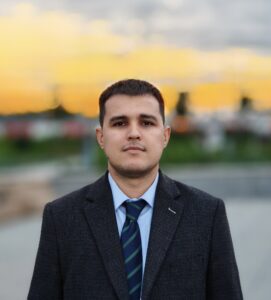
Muhammad Shamsuddinov.
Frederick Starr, the founder and honorary chairman of the Central Asia-Caucasus Institute at the American Council on Foreign Policy, spoke at the hearings. Although these speakers focused on developing the interconnectedness of Central Asia and the South Caucasus with the Black Sea region, it is important to note their concern about U.S. influence in Central Asia, as well as the positions of their geopolitical rivals, China and Russia.
Starr himself, being probably the foremost American expert on the Central Asian region, is also the ideologist behind the Greater Central Asia concept, which is based on the development of transport and logistics links between the region and South Asia. In his opinion, such development will allow the countries of the region to break free from the traditional influence of Russia, as well as the growing influence of China.
Full control by U.S. adversaries over resources (especially critical metals) and transport capacity in Central Asia is not in Washington’s interests. This was confirmed by recent events related to the introduction of restrictions on the export of rare earth minerals and processing technologies by Beijing, which controls 70% of global supplies of these elements. The People’s Republic of China’s (PRC) actions reflected the vulnerability of the US in this area, which responded by imposing a 100% tariff on all Chinese imports.
From this perspective, for Washington, Central Asia, rich in rare elements, should become a region where China cannot completely dominate. But the US’s actions, which isolate the region, are pushing it even further into Beijing’s embrace. In fact, the U.S. has recently taken steps to hinder the development of Central Asian countries’ relations with the south. For instance, after the U.S. tightened anti-Iranian sanctions, a deal between Turkmenistan and Iraq to supply gas through the territory of the Islamic Republic under a swap scheme was disrupted.
It is worth noting that Turkmen gas supplies are completely monopolized by China, making diversification a strategic necessity for Ashgabat. Furthermore, the U.S. has resumed sanctions against the Iranian port of Chabahar, which is one of the key elements connecting Central and South Asia. It should be recalled that after withdrawing from the Iranian nuclear deal in 2018 and resuming U.S. sanctions, Washington excluded Chabahar from the sanctions list, recognizing the importance of this port.
Central Asian countries have high hopes for this port, seeing it as a way out of their maritime isolation and a means of integration into the global economy. The potential deterioration of U.S. relations with Afghanistan over the Bagram base could also isolate Central Asia. Trump has already promised the Taliban “something bad” if they do not agree to hand over control of this base. This “something” could be economic sanctions and diplomatic pressure, which would directly affect Central Asia.
Thus, the U.S. faces a dilemma in Central Asia: on the one hand, it wants to remove the region from the influence of China and Russia and prevent them from gaining complete control, including through transport and trade links between Central Asia and South Asia; on the other hand, its own actions are hindering the process of such integration. Here, we can note the short-sightedness of American policy, which is based on tactical gains to the detriment of strategic ones.
These actions also reflect Central Asia’s place in American foreign policy, which is less of a priority than other regions, particularly the Middle East.
The author is Muhammad Shamsuddinov, a Dushanbe-based international relations expert.
Edited by Aibarshyn Akhmetkali
Disclaimer: The views and opinions expressed in this article are those of the author and do not necessarily reflect the position of The Astana Times.
