
ASTANA – More than two millennia after her legendary confrontation with Persian King Cyrus, Tomyris, the queen of the Massagetae, came to the ballet stage in a new production by Astana Opera. The two-act production premiered on Nov. 26, bringing the story of the ancient ruler to life through classical ballet, contemporary choreography and traditional Kazakh music. A second performance followed on Nov. 27.
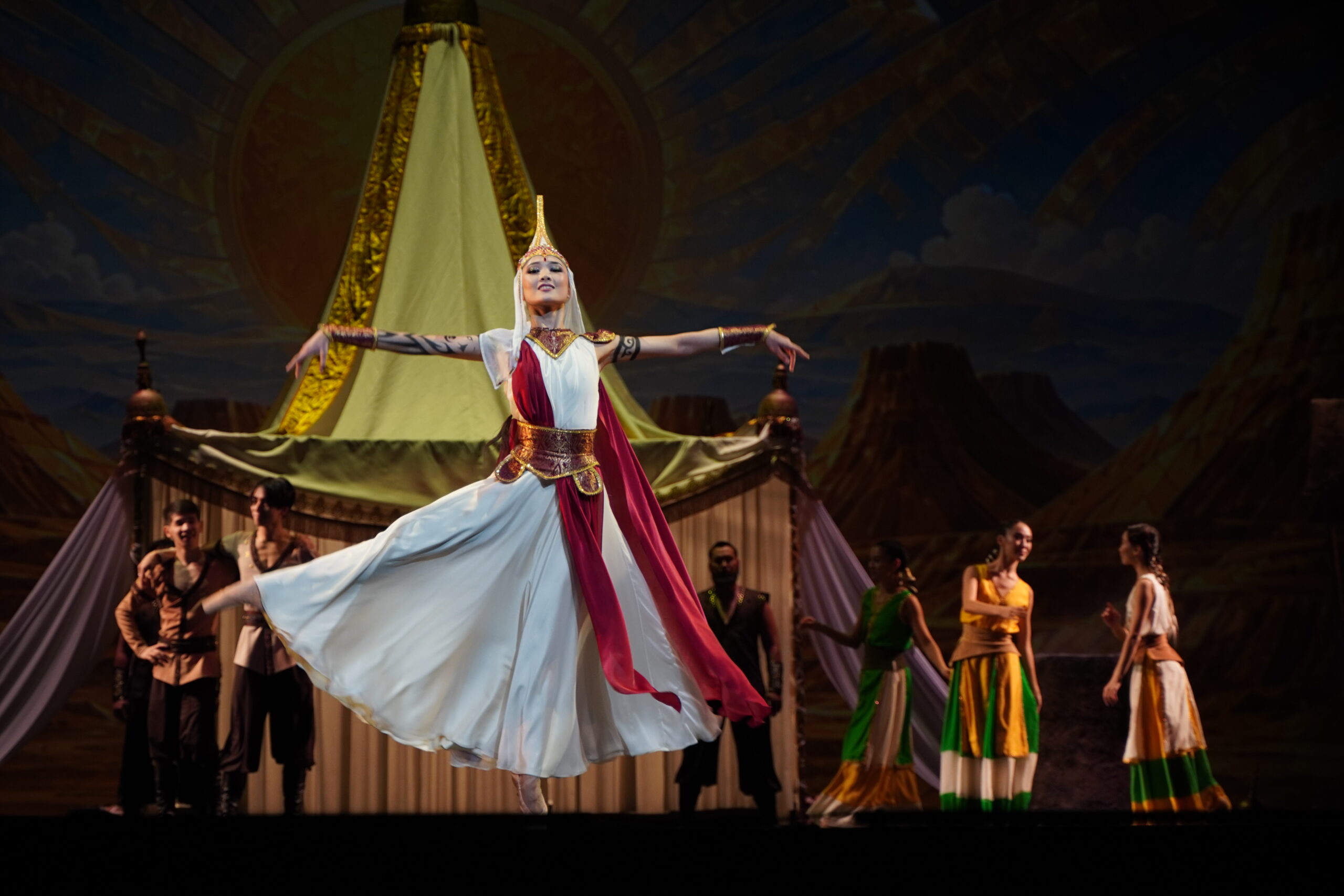
Tomyris, queen of the Massagetae, in Astana Opera’s new ballet production. Photo credit: Fatima Kemelova/The Astana Times
Created to mark the 35th anniversary of Kazakhstan’s independence, the ballet brought together Astana Opera’s own creative team, including choreographer Sultanbek Gumar, composer Khamit Shangaliyev and librettist Yermek Amanshayev.
During a press conference ahead of the premiere, Astana Opera Director Alexander Sovostyanov highlighted the significance of the production as an example of Kazakhstan’s growing creative capacity.
“We are proud that this production was born entirely in Kazakhstan, through the efforts and talent of our own creative people,” he said.
He also highlighted the contribution of the theater’s artistic team, including costume designer Dariga Taishykova, and the importance of mentorship in developing a new generation of Kazakh ballet professionals.
Bringing the story of Tomyris to the stage
Set in the sixth century B.C., the ballet draws on historical accounts and ancient legends surrounding Tomyris, the queen of the Massagetae, and her confrontation with Persian King Cyrus. The story follows Tomyris, her son Spargapises and Arnava, leader of the Amazons and Spargapises’ beloved.
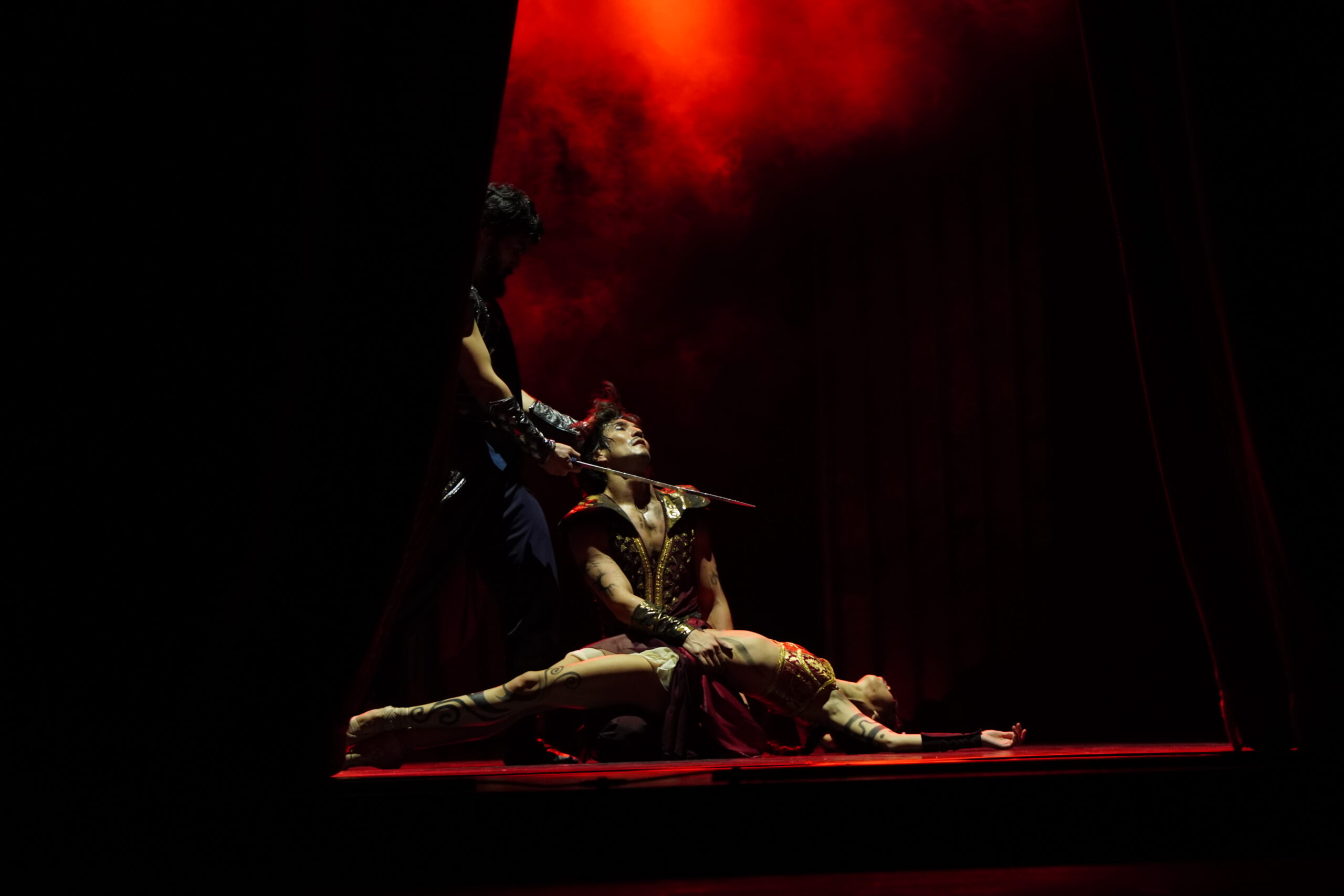
World premiere of national ballet “Tomyris” held in Astana. Photo credit: Fatima Kemelova/The Astana Times
When Spargapises sets out to defend their homeland, Tomyris faces betrayal, his capture and the loss of many warriors. Following her son’s death, she gathers her people for a decisive battle against the Persian forces.
For librettist Yermek Amanshayev, the story of Tomyris reflects the deep historical roots of Kazakh statehood and the legacy of the great steppe.
“Our statehood has a history spanning centuries. It did not emerge overnight or take shape in a short period of time. The great steppe has its own great historical figures, and Queen Tomyris is among the most sacred and significant of them,” he said.
Amanshayev also compared Tomyris’ confrontation with Cyrus to the Battle of Thermopylae, a historical episode familiar to international audiences. He stressed that Tomyris was not merely a regional ruler but a figure whose actions carried broader geopolitical significance. In his interpretation, her victory halted Persian ambitions toward Greece for nearly half a century.
A collaboration between music and movement
For Gumar, working on “Tomyris” was a new challenge. Unlike several previous national ballet productions at Astana Opera, which were staged by foreign choreographers, this time the theater turned to one of its own artists.
From L-R: Sofiya Adilkhanova, Sultanbek Gumar, Altynai Asylmuratova, Alexander Sovostyanov Yermek Amanshayev. Photo credit: Fatima Kemelova/The Astana Times
“Previously, many of the national ballets at our theater were staged by foreign specialists. This time, the responsibility was given to someone who had developed professionally within the theater. We therefore sought to meet that responsibility to the highest standard,” Gumar said.
Music and choreography developed side by side, with Gumar and Shangaliyev shaping the production through a close creative collaboration.
“We worked with Khamit almost around the clock in the studio. When I danced, he would translate my movements into music,” Gumar said.
The creative team initially considered using a symphony orchestra but eventually incorporated traditional Kazakh instruments, including the dombra, sazsyrnai and sybyzgy, to reflect the ballet’s Kazakh identity.
“Since this is a national ballet, we decided to use our traditional instruments. They gave us greater freedom to convey ideas through movement,” he said.
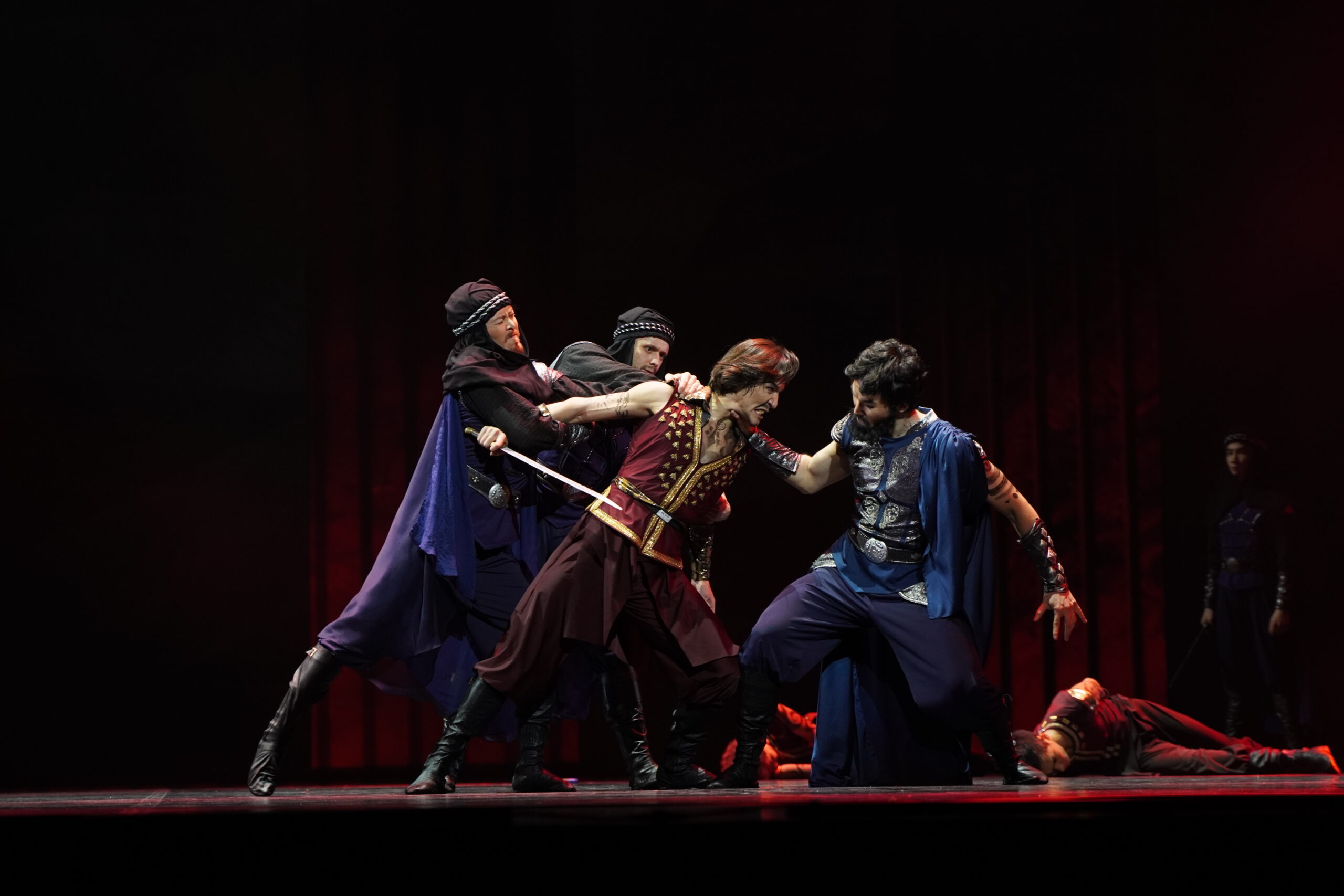
Photo credit: Fatima Kemelova/The Astana Times
Shangaliyev described the production as a collaborative effort in which music, choreography and visual elements had to come together like pieces of a mosaic.
One of the main challenges, he said, was recreating the sound and atmosphere of the Saka period through music.
The composer said the true success of a ballet could not be judged on its premiere night alone.
“If a ballet continues to live on stage for decades, only then can we say that the work has truly succeeded,” Shangaliyev said.
A queen beyond the battlefield
Costume design also played an important role in shaping the production’s interpretation of Tomyris. According to Taishykova, the characters’ inner transformations and personalities were reflected in their stage appearance.
“This production can be described as a tribute to Tomyris. We wanted to portray her as a mother, a woman, a source of inspiration, a warrior and a defender of her people,” she said.
The title role of Tomyris was performed by Sofiya Adilkhanova and Torgyn Leben. Doskhan Zaidin and Islam Kaipbai portrayed Spargapises, while Aidan Kalzhan and Zhaksylyk Saukymbekov appeared as Cyrus. The role of Arnava was performed by Alina Zyryanova and Limara Aidarova.
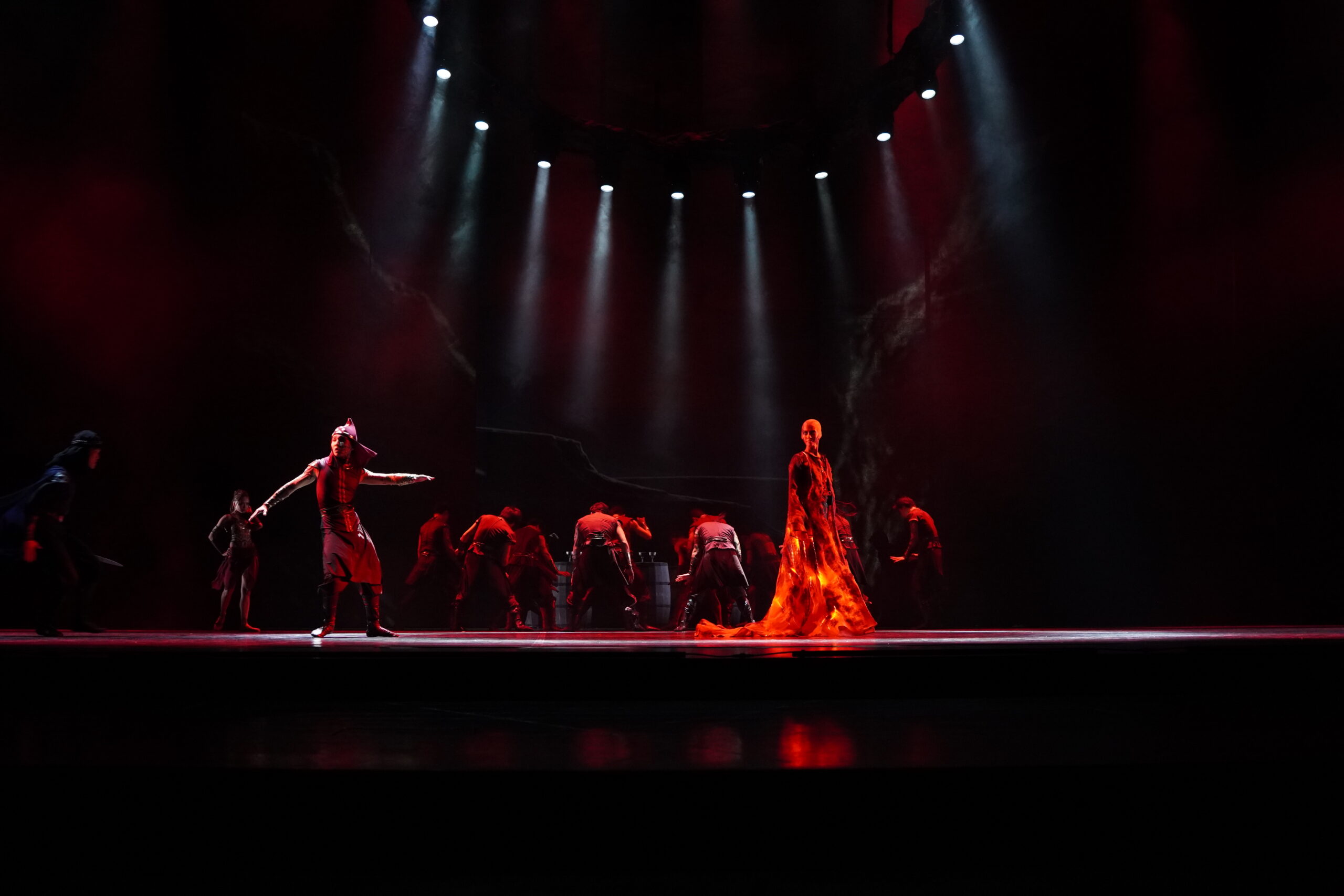
A scene from the national ballet “Tomyris”. Photo credit: Fatima Kemelova/The Astana Times
The ballet combines contemporary choreography with elements of Kazakh and classical dance, bringing together large ensemble scenes and more intimate moments that explore the characters’ personal experiences.
Alongside the warrior and ruler, audiences see a mother facing the loss of her son and the difficult choices that come with defending her people. This balance between personal tragedy and the fate of an entire nation gives the story a more emotional dimension.
With its blend of historical storytelling, contemporary choreography and traditional Kazakh musical elements, “Tomyris” offers a new stage interpretation of one of the most recognizable female figures associated with the great steppe. For Astana Opera, the ballet is also an opportunity to bring a story rooted in the region’s history to a new generation of audiences, while giving Kazakhstan’s composers and choreographers the space to tell it in their own way.
