
ASTANA – Kazakhstan’s Security Council has approved a military reform plan aimed at modernizing the Armed Forces, restructuring military management and training, and establishing a new Unmanned Forces branch, according to the presidential press service.
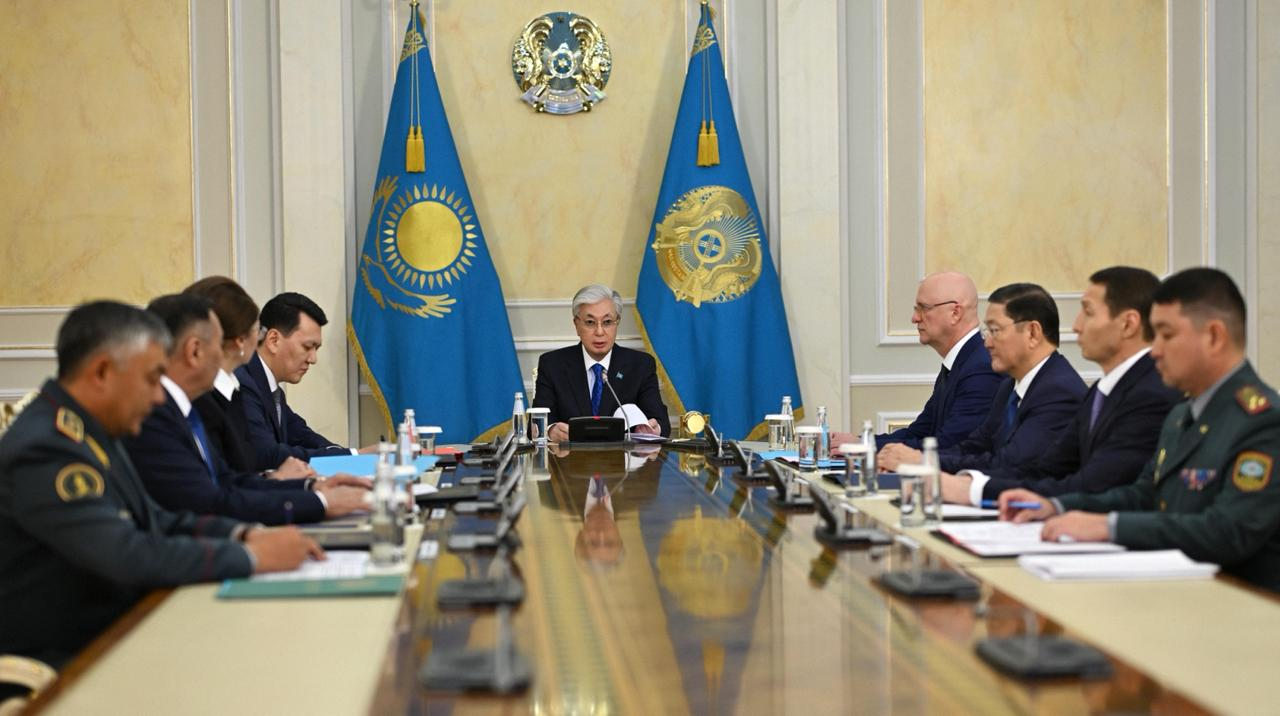
Tokayev shaired the security council meeting on Oct. 21 to review the plan of restructuring the Armed Forces. Photo credit: Akorda.
President Kassym-Jomart Tokayev chaired an Oct. 21 Security Council meeting, where he called for the creation of a modern, mobile and technologically advanced army in the shortest possible time.
“Special attention is required for service security, command culture, and the efficient use of public resources. The interaction between the army and society also needs to be changed. This is a matter of comprehensive reform. Half‑hearted solutions will not yield the necessary results,” Tokayev said.
Deputy Security Council Chair Aida Balayeva presented the main provisions of the plan, which was developed with consideration of international military experience, modern warfare and proposals from domestic specialists. Defense Minister Aidos Myrzakhmetov reported on the planned modernization of the Armed Forces.
The plan introduces a two-stage model of compulsory military service. Recruits will spend the first six months training at military training centers and the next six months serving in military units, focusing on combat training and carrying out tasks as part of their units.
The reform also includes measures to strengthen servicemen’s safety and protect their rights. Kazakhstan plans to establish military adviser positions and an authorized body for servicemen’s affairs to reinforce military discipline. Other initiatives include expanding the unified military-patriotic training system, increasing the number of specialized military schools and improving initial military training.
The Armed Forces will also adopt a new information and communications strategy and improve educational work based on the constitutional principle of Law and Order. Organizational measures under the plan are scheduled for completion by the end of 2026, while the main conceptual reforms are expected to be implemented in 2027.
Tokayev also instructed officials to complete by the end of the year the work of a commission conducting a comprehensive review of the Defense Ministry.
He stressed that military security is a national priority requiring coordinated efforts across relevant government bodies. The government and the Security Council will coordinate implementation of the reform plan.
