
Twenty years ago on Sept. 8, 2006, representatives of Kazakhstan, Kyrgyzstan, Tajikistan, Turkmenistan and Uzbekistan gathered in Semipalatinsk, now Semey, to sign a treaty that would make Central Asia the first nuclear-weapon-free zone in the Northern Hemisphere. It was also the first such zone established in a region where nuclear weapons had actually been tested and deployed.
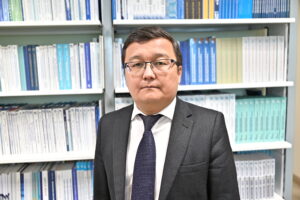
Dauren Aben.
I remember that day well. I was there as a representative of the James Martin Center for Nonproliferation Studies. Kazakhstan was represented by its then Foreign Minister, Kassym-Jomart Tokayev, who signed the Treaty on behalf of the country. The ceremony itself, held at the Abai State Kazakh Musical Drama Theater, was relatively modest. Its significance was anything but.
The idea of a nuclear-weapon-free Central Asia was hardly inevitable. It was first proposed by Uzbekistan at the UN General Assembly in 1993 and developed over the following years, as the newly independent states were dealing with borders, economic dislocation and an uncertain security environment. The region also carried an extraordinary nuclear legacy: the Semipalatinsk test site, uranium mining, radioactive waste and communities affected by decades of Soviet nuclear activities.
Yet the five Central Asian states made a strategic choice. They decided that their common security would not be built around nuclear weapons. But translating the idea into a legally binding regional commitment was not an easy process as it required persistence and, above all, agreement among all the parties.
The Treaty prohibits the development, production, acquisition, possession, stockpiling or use of nuclear weapons and other nuclear explosive devices. At the same time, it preserves the right to peaceful uses of nuclear energy. Its parties also accepted important obligations relating to IAEA safeguards and the Comprehensive Nuclear-Test-Ban Treaty.
There is more to the Semipalatinsk Treaty than the absence of nuclear weapons. It was also an early demonstration that the five Central Asian states could develop a common approach to a question of fundamental importance to their security and future. That is perhaps the Treaty’s most interesting legacy today.
Central Asia has changed considerably since 2006. The region is more economically connected, more strategically important and more closely engaged with the major powers than it was two decades ago. At the same time, the international arms control architecture has come under unprecedented pressure. Nuclear rhetoric has returned to the center of global security debates, while confidence in many traditional arms-control arrangements has weakened.
Against this backdrop, it is tempting to regard the Semipalatinsk Treaty as a relic of a more optimistic era. I would argue the opposite.
Its importance lies precisely in the fact that it was created under difficult circumstances and has survived major changes in the regional and global environment. The Treaty entered into force in 2009 after all five states completed ratification. In 2014, all five nuclear-weapon states recognized under the Non-Proliferation Treaty signed its Protocol, committing themselves, among other things, not to use or threaten to use nuclear weapons against the Central Asian parties. Four have since ratified it; U.S. ratification remains outstanding.
There is also a lesson here about Central Asia itself. The Semipalatinsk Treaty was the first regional security agreement to bring all five Central Asian states together, including neutral Turkmenistan. That achievement should not be underestimated.
But anniversaries should not be occasions only for looking backward. The next twenty years will be more important than the last twenty.
The Treaty provides a framework, but a framework is only as effective as the cooperation built around it. Encouragingly, the five states have expressed interest in the institutional development of the CANWFZ and in closer cooperation with other nuclear-weapon-free zones. This points toward a more practical agenda: strengthening cooperation on nuclear security, peaceful uses of nuclear energy, radioactive waste and environmental remediation, emergency preparedness, and the prevention of illicit trafficking of nuclear and radioactive materials. Its value could also grow as the region’s nuclear energy ambitions develop.
This would give the Semipalatinsk Treaty a renewed practical dimension without changing its basic character.
The Treaty also helped establish something larger than a legal prohibition. It became part of Central Asia’s emerging security architecture – one based not on military blocs or strategic rivalry, but on the idea that regional stability could be strengthened through common rules and restraint.
The significance of the Semipalatinsk Treaty, therefore, is not that it solved every security problem facing Central Asia. It did something more durable: it established a common regional commitment at a moment when the future of the region was still uncertain.
Twenty years later, that commitment has become part of Central Asia’s security identity. The challenge now is to ensure that the Treaty remains a living instrument rather than simply a historic achievement. In a world where the value of restraint, dialogue and nonproliferation is once again being tested, Central Asia has a stake – and perhaps a responsibility – in showing that regional cooperation on nuclear security can endure even when the global environment becomes more difficult.
The author is Dauren Aben, the deputy director at the Kazakhstan Institute for Strategic Studies under the President of Kazakhstan.
Disclaimer: The views and opinions expressed in this article are those of the author and do not necessarily reflect the position of The Astana Times.
