
ASTANA — Kazakhstan is positioning itself as a Central Asian space hub as the nation expands its satellite and spacecraft capabilities and deepens regional cooperation, including discussions on a proposed Central Asia Space Agency.
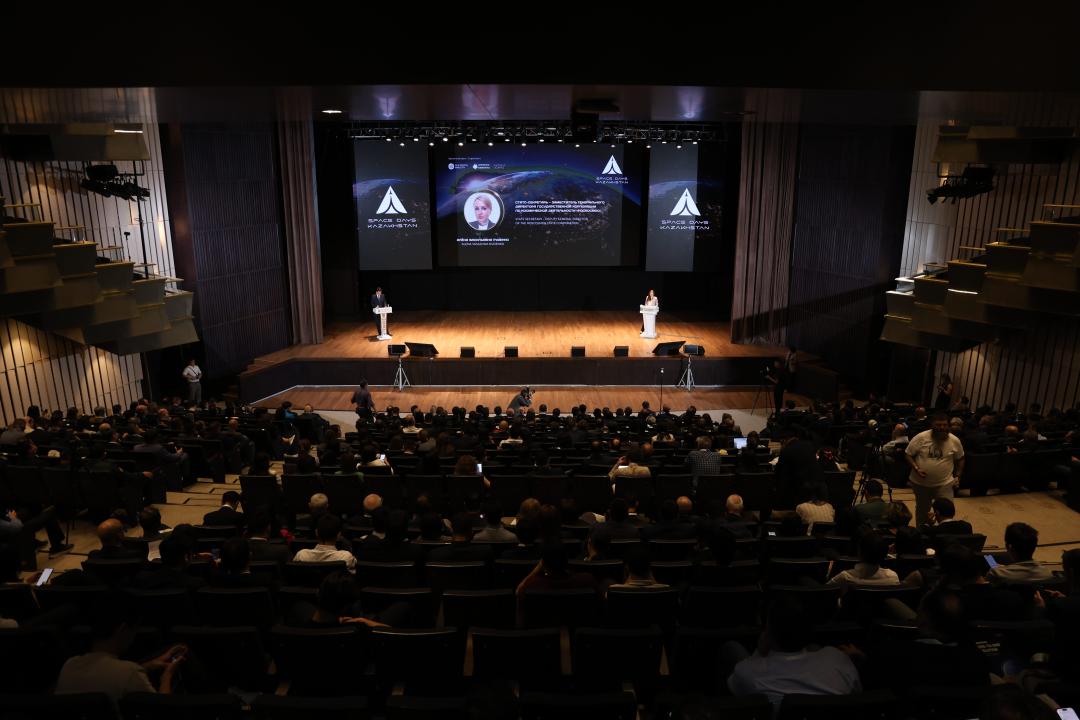
Space Days Kazakhstan 2026 brings together government representatives, space agencies, scientists, technology companies and investors. Photo credit: Ministry of Artificial Intelligence and Digital Development of Kazakhstan
The ambitions were highlighted at Space Days Kazakhstan 2026, an international forum taking place in Astana on Sept. 7–9. The event brings together government representatives, space agencies, international organizations, scientists, technology companies and investors to discuss satellite communications, Earth observation, artificial intelligence and new space technologies.
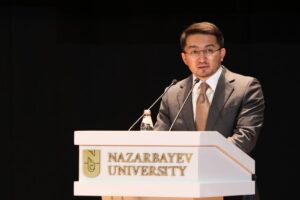
Zhaslan Madiyev, Deputy Prime Minister and Minister of Artificial Intelligence and Digital Development. Photo credit: Ministry of Artificial Intelligence and Digital Development of Kazakhstan
Speaking at the opening, Deputy Prime Minister – Minister of Artificial Intelligence and Digital Development Zhaslan Madiyev said Kazakhstan’s priority is to strengthen its space industry while making greater use of the country’s space infrastructure.
“Our task is to use the unique legacy of Baikonur to develop a modern and competitive space industry,” Madiyev said.
Kazakhstan is currently modernizing its satellite infrastructure and expanding its capabilities in Earth observation and spacecraft manufacturing.
By 2030, the nation plans to create an international Earth remote sensing satellite constellation comprising nine spacecraft. It will include six satellites from Kazakhstan, as well as spacecraft from Mongolia, the Republic of the Congo and Nigeria. Madiyev said Kazakhstan is open to cooperation with new partners and sees potential to expand the constellation to 14 satellites.
The country is also working to replace KazSat-3 with a new KazSat-3R spacecraft to maintain the stability of Kazakhstan’s national satellite communications system and meet modern technological requirements.
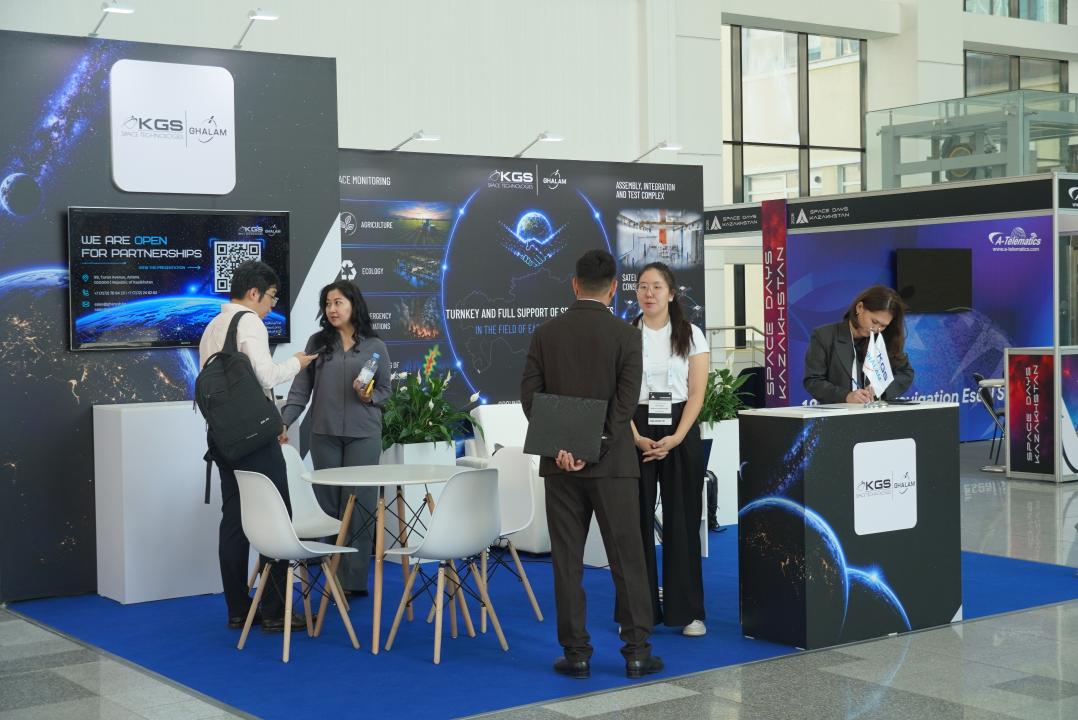
Photo credit: Ministry of Artificial Intelligence and Digital Development of Kazakhstan
In July, the government allocated 10.4 billion tenge ($22.8 million) from its reserve fund for the creation of KazSat-3R. The new spacecraft is intended to enter service as KazSat-3’s expected service life ends in 2029.
At the same time, Kazakhstan is expanding its domestic space capabilities. A spacecraft assembly and testing center in Astana allows the country to build and test satellites, train engineers and participate in international space projects.

Kairzhan Kozhayev, chairman of Kazakhstan Gharysh Sapary. Photo Credit: The Astana Times
Kairzhan Kozhayev, chairman of Kazakhstan Gharysh Sapary, Kazakhstan’s national operator for Earth remote sensing and high-precision satellite navigation systems, said the country is building the capabilities needed to strengthen its role in the regional space industry.
“We are gradually positioning ourselves as a kind of Central Asian space hub,” Kozhayev told The Astana Times.
Kozhayev also highlighted Kazakhstan’s spacecraft assembly, integration and testing center in Astana and the growing pool of young engineers as important advantages for the country’s space industry. The Astana Times visited the facility in December 2025 to see how Kazakhstan’s spacecraft are assembled and tested.
“We have a lot of brave, smart and unique minds, new generations of engineers growing up so fast,” he said, emphasizing the importance of involving younger specialists in major space projects.
Regional cooperation gains momentum
The forum also highlighted efforts to build an integrated Central Asian and Turkic space ecosystem.
Uzbekistan is exploring closer cooperation with Kazakhstan in Earth observation and space-based monitoring, particularly for water management, agriculture, land use and environmental protection.
Shukhrat Kadirov, director of the Space Research and Technology Agency under Uzbekistan’s Ministry of Digital Technologies, said the two countries were also discussing an initiative to establish a Central Asia Space Agency.
“I believe Central Asia has significant potential to become an active regional hub for the space industry, connecting East and West, and creating new opportunities for innovation, business, international cooperation, and investment,” Kadirov said.
He noted that common regional challenges, including water scarcity, climate change, land degradation and desertification, require solutions that extend beyond national borders.
Deputy Secretary General of the Organization of Turkic States Merey Mukazhan said space cooperation was becoming an important part of the organization’s broader technological agenda.
The OTS has held five meetings of the heads of space agencies, alongside technical consultations and working groups. One of the most concrete outcomes is the joint OTS-SAT satellite project, which will support Earth observation, technology demonstrations in orbit and the development of joint space capabilities.
Mukazhan said the project shows how regional countries can combine expertise and resources to develop capabilities that would be difficult to build independently.
“We are determined to ensure that the Turkic world is not merely a consumer of new technologies but an active contributor to their development,” he said.
From satellites to practical applications
For Kazakhstan, the development of the space sector is increasingly tied to practical applications on Earth.
Madiyev stressed that satellites and launches should not be viewed as an end in themselves. Satellite data are used in Kazakhstan for emergency response and monitoring climate and environmental changes.
The next step, he said, is to move from individual satellite images toward integrated data analysis and practical digital services.
“Artificial intelligence allows us to process space data faster, detect changes earlier, and improve the accuracy of forecasting,” Madiyev said.
This approach is particularly relevant to water management, agriculture and environmental monitoring, areas where Kazakhstan and other Central Asian countries face common challenges.
The European Union is also supporting the development of satellite ground infrastructure and digital connectivity in Central Asia. Ambassador of the European Union to Kazakhstan Aleška Simkić highlighted the EU’s cooperation with Kazakhstan in satellite infrastructure and Earth observation.
She noted that satellite data can increasingly support farmers and improve water management across the region.
“This is space technology working best for farmers, for water management, and for us,” Simkić said.
Madiyev said Kazakhstan’s space strategy would continue to combine infrastructure development with international partnerships. Baikonur Cosmodrome, a major space launch facility in southern Kazakhstan, is expected to remain an active launch site while also developing as an international center for space technology, science, education and tourism.
He identified three priorities for the development of Kazakhstan’s space industry: data, technology and people.
These include improving analytical products based on satellite data, expanding the use of AI, integrating space data into government and sectoral digital platforms, attracting investment and commercializing technologies, as well as strengthening education and international training programmes.
For Kazakhstan, Space Days Kazakhstan is intended to become part of that longer-term effort.
“This forum is only the beginning of this journey,” Madiyev said, adding that Kazakhstan expects concrete agreements and joint projects to emerge from the event and plans to make Space Days Kazakhstan a regular international forum.
