
ALMATY – Kazakhstan is expanding geological exploration, increasing geological knowledge and identifying new mineral resources, but experts say the key challenge is no longer simply discovering what lies beneath the country’s vast territory. It is turning geological potential into economically viable projects, investment, production and higher-value exports.
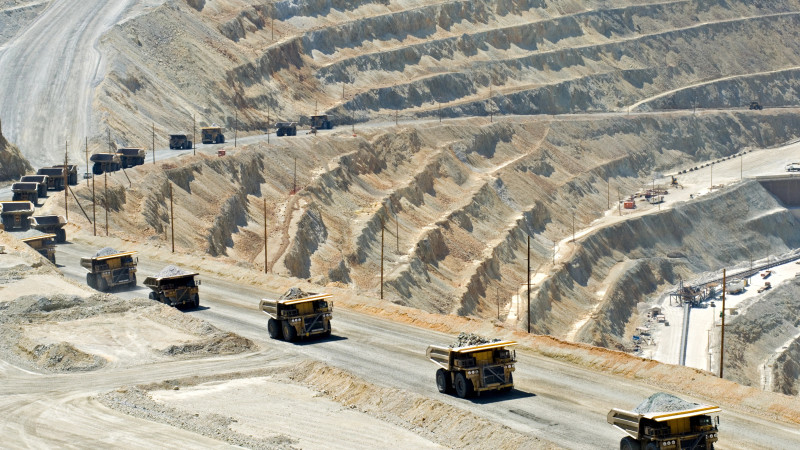
Photo credit: depositphotos.com
The government is increasing the detail of geological surveys, digitizing decades of accumulated geological information and introducing Big Data and artificial intelligence tools. But geological discovery is only the first step in a much longer process.
“An identified resource is primarily confirmation of the presence of certain mineralization. But this is not enough for an investor,” said Qanat Qudaibergen, chairman of the board of GWM Capital, in a conversation with the Astana Times.
From geological discovery to an investment decision
Kazakhstan is increasing the scale and detail of geological studies as part of efforts to strengthen the country’s mineral-resource base. Geological and geophysical exploration at a scale of 1:200,000 currently covers about 2.04 million square kilometers. The government plans to increase this figure to 2.2 million square kilometers in 2026.
Qanat Qudaibergen. Photo credit: gwmcapital.kz.
At the same time, the country has begun 20 projects involving more detailed geological mapping at a scale of 1:50,000. The projects will cover 100,000 square kilometers and focus on areas considered prospective for gold, copper, polymetals, rare and rare-earth metals, lithium, tungsten and molybdenum.
Qudaibergen said that a significant amount of work remains between identifying a resource and making an investment decision. Infrastructure is another critical factor, he said, including electricity, water, roads, railway logistics and access to qualified personnel.
“Only after passing all these stages is it possible to speak about a full-fledged investment decision, financing and construction,” Qudaibergen said, highlighting that this distinction is important when assessing the results of geological exploration.
Askar Ismailov, an oil and gas industry expert, made a similar distinction, noting that geological exploration can produce several different levels of information.
“It is very important not to confuse three completely different things: a geological anomaly, a resource and an economically recoverable reserve,” he said.
According to him, a report that geologists have identified a prospective area or estimated forecast resources in millions of tons does not mean that Kazakhstan has automatically obtained a deposit worth billions of dollars.
New resources expand the base, but do not automatically create new production
Kazakhstan has also recorded an increase in its mineral-resource base following geological exploration. The 54 newly registered deposits over the two years were accompanied by growth in resources and reserves across several commodities.
Kazakhstan currently has around 10,000 deposits of various mineral resources on the state register. Yet the scale of the resource base does not necessarily translate into an equivalent number of new mines or industrial projects.
Qudaibergen said that a more meaningful measure of exploration success would be how many newly identified objects eventually progress from geological discovery to internationally recognized resources and reserves, financing, construction and commercial production.
Critical minerals create a window of opportunity
The growing global demand for critical minerals gives Kazakhstan an additional opportunity to turn its geological potential into a broader industrial role. The country is exploring for lithium, tungsten, molybdenum, rare and rare-earth metals, and other strategic resources. Research has already been completed at 11 sites included in the geological exploration program.
The Kuiraktykol site in the Karagandy Region has been identified as particularly promising, with high forecast concentrations of lanthanum, cerium, neodymium and yttrium. Total forecast resources across the sites amount to 935,400 tons. At the Irgiz area, C2-category reserves have additionally been estimated at 795,800 tons.
Developing these resources could be important for Kazakhstan’s industrial diversification, but Qudaibergen cautioned against equating the presence of critical minerals with a strong position in global value chains.
“Competition today is no longer so much for ore as for control over the entire chain: deposit-beneficiation-metallurgy-chemical processing-materials-components-final products,” he said.
For Kazakhstan, this raises a strategic question: where along these chains can the country create competitive advantages rather than simply export concentrates?
“At the same time, I am not a proponent of the approach that requires us to produce a final product from every mined mineral within Kazakhstan. This is not always economically justified,” he said.
The untapped potential above ground
Qudaibergen also pointed to a less conventional component of Kazakhstan’s mineral potential: resources already accumulated on the surface. These include beneficiation tailings, metallurgical slag, cakes and sludges, ash and slag from power generation and other industrial waste.
Many of these materials accumulated decades ago, when extraction technologies were less efficient, and some rare and rare-earth metals were not considered target products.
“What was historically considered waste can today, with new technologies, prices and the changing structure of global demand, in some cases be regarded as secondary mineral raw material,” he said.
This could create an additional avenue for developing critical-mineral production without opening new mines while also addressing accumulated environmental liabilities.
Oil exploration faces a different question

Oil and gas analyst Askar Ismailov. Photo credit: Personal archives.
The challenge of converting geological potential into production is particularly important for oil, where Kazakhstan is simultaneously planning a major expansion of domestic refining capacity. The country is targeting a total oil-processing capacity of about 40 million tons per year through the expansion of the Pavlodar, Shymkent and Atyrau refineries and the construction of another refinery with capacity of around 10 million tons, according to Ismailov.
That creates a different set of requirements for geological exploration: the country needs to understand not only how much oil may exist underground, but how much production can realistically be made available to domestic refineries over the long term.
“Today a significant part of crude oil is exported. With 40 million tons of annual refining, a large guaranteed domestic market for crude emerges, which is currently not fully secured by the resource base,” Ismailov said.
One possible option would be to negotiate additional supplies from large oil projects such as Tengiz and Kashagan. Ismailov, however, considers this approach less promising and argues that greater attention should be given to exploration and the development of new reserves.
For geological exploration, this means linking long-term resource planning with the expected production profile of existing fields and future domestic demand.
Digital geology seeks to connect data with investment
Digitalization is becoming another key part of the transformation. The Unified Subsoil Management Platform now contains a map of Kazakhstan’s subsoil use, with 66,100 first volumes of geological reports linked to 109,500 study contours.
More than 4.8 million units of primary geological information have also been digitized, including about 4.3 million paper sheets, 355,000 graphic attachments, 97,000 magnetic tapes and 62,000 cartridges.
One important step in connecting data with investment is Kazakhstan’s transition toward international standards for reporting mineral resources and reserves. According to Qudaibergen, the KAZRC system is aligned with the CRIRSCO family of international reporting standards. This makes geological information more comparable with projects in major mining jurisdictions and can help investors, banks and mining companies assess the quality and economic potential of Kazakh projects.
“Essentially, we are beginning to speak to the global investment community in one professional language,” Qudaibergen said.
The next test is conversion, not discovery
Kazakhstan is entering a new phase of geological development in which the quantity of information is growing alongside the sophistication of the tools used to analyze it. The country is mapping larger areas, conducting more detailed surveys, expanding its mineral-resource base, digitizing geological archives and exploring the potential of critical minerals and technogenic resources.
For Qudaibergen, Kazakhstan has a strong starting position because of its large territory, established geological expertise and significant underexplored potential. Modern geophysics, remote sensing, large-scale data processing and AI can allow previously studied territories to be examined in new ways.
“If this opportunity is used correctly, Kazakhstan has the potential to become not just a major supplier of mineral resources, but one of the key centers for critical minerals and materials for global industry,” he said.
