
ALMATY – Kazakhstan ranked 44th among 163 countries in the 2026 Global Peace Index (GPI), placing it among the world’s 50 most peaceful countries and reflecting an improvement from the previous year as Central Asia continues to diverge from a broader global decline in peacefulness.
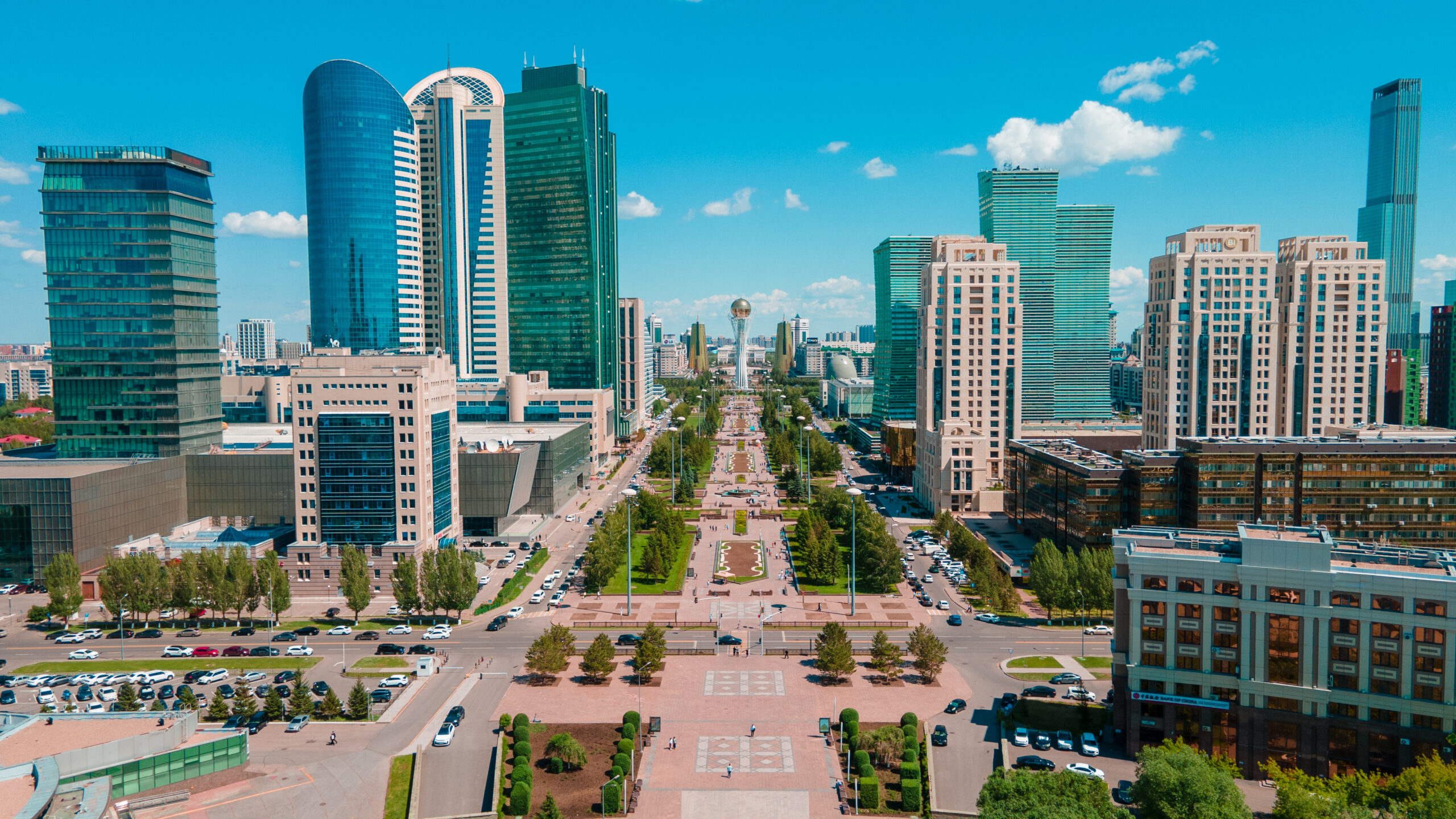
Astana. Photo credit: The Astana Times.
Kazakhstan recorded a score of 1.771 points, improving from 1.791 in 2025 and marking the country’s best result since 2008. It was also the second consecutive year in which Kazakhstan improved its own GPI score.
Among Central Asian countries, Kazakhstan ranked second after Uzbekistan, which placed 37th with a score of 1.726. Tajikistan ranked 47th (1.799), the Kyrgyz Republic 61st (1.853) and Turkmenistan 66th (1.903).
All five Central Asian countries were classified by the Institute for Economics & Peace (IEP) as having a high level of peacefulness. Three – Uzbekistan, Kazakhstan and Tajikistan – entered the global top 50. Kazakhstan was ranked between Uruguay and Romania, and ahead of Armenia, Greece and South Korea.
Central Asia moves against global trend
The regional results stand out against the overall deterioration recorded by the index. The global average level of peacefulness deteriorated by 0.7% over the past year, marking the 12th consecutive year of decline. Of the 163 countries covered by the index, 99 became less peaceful while only 62 improved. A total of 119 countries are now less peaceful than they were in 2008.
Eastern Europe and Central Asia were the only one of the eight GPI regions to record an improvement in average peacefulness. The other seven regions deteriorated, with South Asia experiencing the most significant decline.
The long-term trend is also favorable for Central Asia. Over the past decade, GPI scores have improved in all five countries. In 2016, Uzbekistan had a score of 1.911, Tajikistan 1.971, the Kyrgyz Republic 1.984, Kazakhstan 1.883 and Turkmenistan 1.979. The most substantial improvements over the period were recorded in Uzbekistan and Tajikistan.
The progress, however, has not been linear. Kazakhstan, Uzbekistan and Tajikistan experienced a notable deterioration in 2023, when their scores reached 1.964, 1.959 and 2.033, respectively. Their indicators subsequently improved in 2024 and 2025.
Conflicts drive global deterioration
The improvement in Central Asia contrasts sharply with the global security environment. One of the principal factors behind the worsening global score is the growing number of armed conflicts. According to the latest available data cited by the IEP, 61 active state-based armed conflicts were recorded in 2024, the highest number since 1945.
The economic cost of violence has also continued to rise. The IEP estimated the global economic impact of violence at $21.8 trillion in 2025, equivalent to 10.5% of global GDP. The deterioration is particularly visible among countries experiencing major armed conflicts. Russia ranked 163rd, the lowest position in the 2026 index. Russia’s position is notable because it marked the first time the country ranked last in the GPI.
Iceland remains the world’s most peaceful country
Iceland retained the top position in the 2026 ranking with a score of 1.161. It has held the number one position for 19 consecutive years. New Zealand ranked second with 1.343, followed by Switzerland (1.363), Slovenia (1.369) and Ireland (1.371).
Austria, Portugal, Singapore, Finland and Japan completed the top 10. Seven of the 10 most peaceful countries are located in Europe.
At the opposite end of the ranking, countries affected by major armed conflicts dominate the bottom positions. Sudan ranked 162nd, Congo 161st, Ukraine 160th and Israel 159th. Afghanistan, Yemen, Syria and Mali also ranked among the 10 least peaceful countries.
What the index measures
The Global Peace Index is published annually by the Institute for Economics & Peace, an international think tank. The 2026 edition is the index’s 20th edition and covers 163 countries and territories representing 99.7% of the world’s population.
The index uses 23 quantitative and qualitative indicators grouped into three broad areas: societal safety and security, ongoing domestic and international conflict, and militarization. Both domestic and external factors are considered. Domestic indicators account for 60% of the overall score, while external factors account for 40%.
The indicators include homicide and violent crime rates, political instability, terrorism, domestic and international conflicts, relations with neighboring countries, military expenditure, armed forces personnel, and arms imports and exports.
Scores range from 1 to 5, with lower scores indicating greater peacefulness. The IEP also classifies countries into five levels: very high, high, medium, low and very low peacefulness.
