
It would be a mistake to assess the significance of Kazakhstan’s parliamentary elections, held on Aug. 23, solely through the distribution of mandates or the results achieved by individual parties. What is far more important is the broader political and institutional process of which these elections are both a consequence and another stage. In recent years, Kazakhstan has embarked on a distinctive path of evolutionary political modernization, the central element of which is not the sudden dismantling of the existing system, but its gradual transformation.
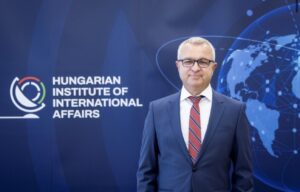
László Vasa.
The elections were held within the framework of the new constitutional system. Following the March referendum, the former bicameral Parliament ceased to exist, and a unicameral Kurultai consisting of 145 deputies was established. Therefore, these elections were not merely about electing a new parliament; they represented the first real test of the functioning of Kazakhstan’s renewed political institutional system.
From this perspective, voter turnout deserves particular attention. According to official results, around 9.35 million citizens took part in the vote, representing a turnout of 74.08%. This is significantly higher than the 54.19% turnout recorded in the 2023 parliamentary elections. Of course, high voter turnout alone does not prove the democratic nature of a political system, but it does indicate that a significant part of society regarded the elections as a relevant political act.
The clear winner of the elections was Adilet, which received 71.17% of the vote and secured 110 seats. At the same time, four other political forces also entered the Kurultai: Auyl, Respublica, Aq Zhol and the Nationwide Social Democratic Party. This, of course, does not yet amount to a competitive multiparty democracy in the Western sense. Kazakhstan’s political system remains strongly presidential, and the dominance of Adilet is unlikely to change this fact in the near future.
Nevertheless, it is important to distinguish between the current democratic condition of a political system and the direction of its democratic development.
I believe it is primarily the latter that should be examined. The reform process launched after 2022 — the concept of a Just Kazakhstan announced by President Kassym-Jomart Tokayev — has gradually been changing the relationship between the state and society. This process has included constitutional reform, the transformation of political institutions, changes to the party system, amendments to the electoral system, and efforts to expand institutional channels for political participation. For this reason, the current elections should not be interpreted in isolation, but rather as part of this multi-year reform cycle.
At the same time, criticism should not be ignored. According to the preliminary assessment of the OSCE/ODIHR, the elections were technically well prepared; however, political pluralism remains limited, and concerns were raised regarding media freedom, the legal framework and certain aspects of the vote-counting process. These are precisely the issues that Astana will need to address substantively during the next phase of reforms.
On the other hand, the complexity of Kazakhstan’s development model is reflected in the fact that the European Union itself acknowledged the significant reform of the political system carried out in recent months, as well as the fact that, despite the short preparation period, the elections were organized and conducted in an orderly manner. The EU also encouraged Kazakhstan to continue further democratic reforms. This latter formulation is particularly important: democratization should be understood as a process, not as a one-time event.
One of the fundamental dilemmas of political development in Central Asia is how to preserve state stability while gradually expanding political participation, institutional accountability and social pluralism. Given the historical, social and geopolitical realities of the region, it is hardly realistic to expect these countries to transform into Western European-style political systems within just a few years. The real question is rather whether the direction of change points toward greater or lesser political participation.
Perhaps the most important feature of President Tokayev’s reform policy is its attempt to reconcile political modernization with state stability. The events of January 2022 clearly demonstrated the serious consequences that may arise when social and economic tensions accumulate without proper political channels for expression. One of the deeper objectives of the current reform process may therefore be to create more institutional opportunities for the articulation of social interests, while preserving the functionality of the state and the country’s geopolitical stability.
This is particularly important for a country located between Russia and China, while at the same time building increasingly intensive relations with the European Union, the United States, Türkiye and the broader Turkic world. Kazakhstan’s domestic political stability is one of the foundations of its foreign policy room for manoeuvre. A destabilized Kazakhstan would have serious consequences not only for Central Asia, but also for the wider Eurasian transport, energy and trade systems.
Therefore, the success of Kazakhstan’s political modernization should not be measured by whether the country meets all Western democratic standards overnight. A much more relevant question is whether political institutions have become stronger, whether citizens now have greater opportunities for participation, whether the political space has become more pluralistic, and whether the feedback mechanisms between the state and society function better than they did five or ten years ago.
From this perspective, Kazakhstan’s progress is difficult to deny.
The current elections, therefore, do not mark the end of the reform process, but rather the beginning of a new stage. The real question for the coming years will be whether the new Kurultai will be able to become an independent political institution; whether the parliament’s oversight function will be strengthened; whether genuine political competition will emerge both within and beyond the currently dominant party system; and whether the institutional strengthening of the rule of law and media freedom will continue.
The key message of the 2026 elections is that Kazakhstan continues to choose the path of controlled, evolutionary political modernization. From the outside, the pace of this process may appear slow, its results imperfect, and the need for further reforms obvious. Yet, based on Central Asia’s historical experience, a gradual transformation that preserves stability and is based on institution-building may prove to be a more sustainable model in the long term than a rapid political transformation imported from outside.
The story of Kazakhstan’s democratic development, therefore, is by no means over. In fact, it has just entered a new and perhaps even more interesting phase.
The author is Professor László Vasa, the Chief Advisor, Senior Research Fellow of the Hungarian Institute of International Affairs, research professor of the Széchenyi István University.
Disclaimer: The views and opinions expressed in this article are those of the author and do not necessarily reflect the position of The Astana Times.
