
HONG KONG – Cyberport digital technology hub sees its collaboration with Kazakhstan’s Astana Hub IT park as a two-way launchpad, enabling Hong Kong to expand into Central Asia’s growing AI market while offering Central Asian startups a direct corridor into mainland China and the broader Asia-Pacific region.
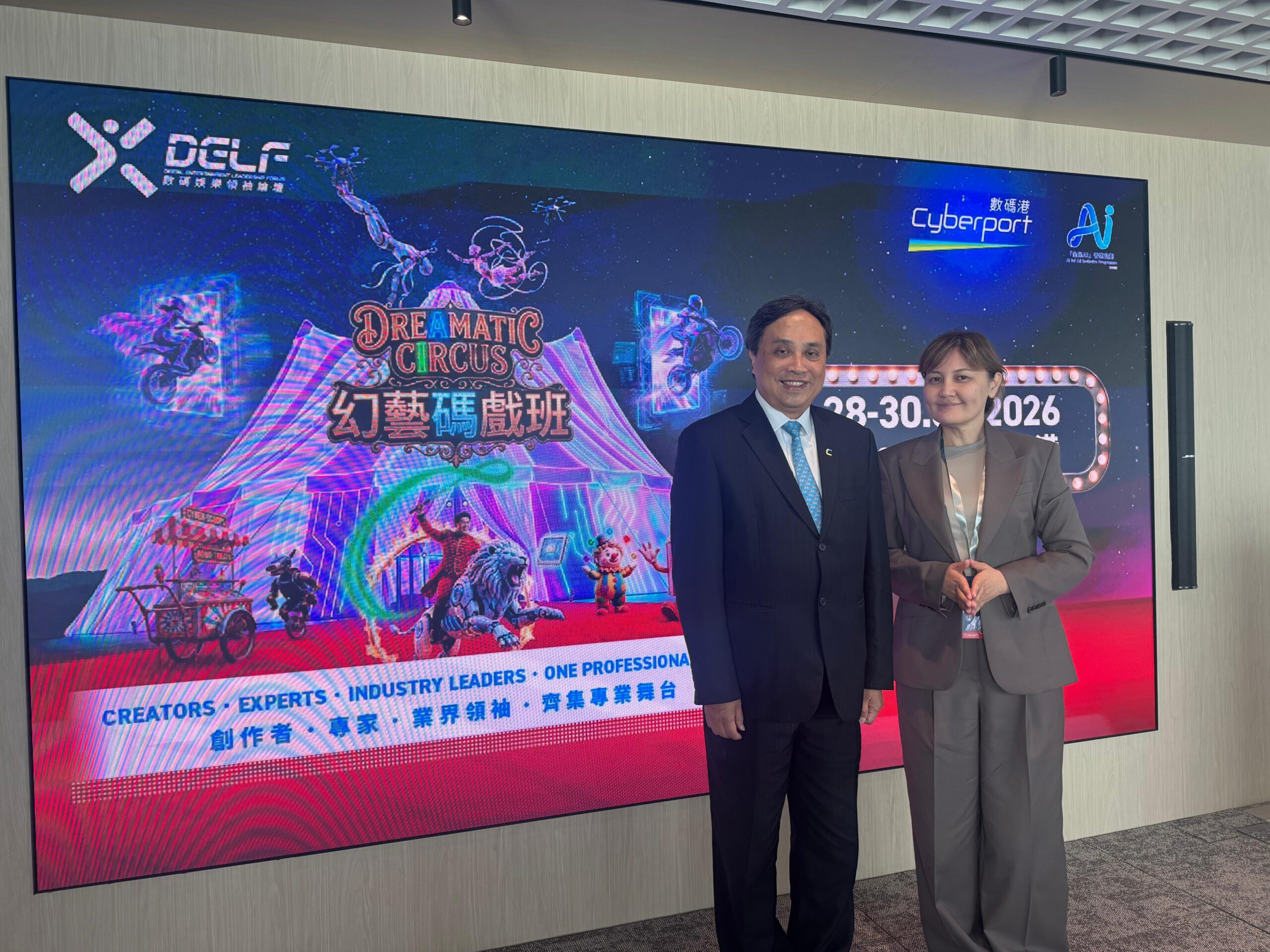
Cyberport Chairman Simon Chan and Editor-in-chief of The AT Zhanna Shayakhmetova during a meeting in Hong Kong on Aug. 28, 2026. Photo credit: The Astana Times
Cyberport Chairman Simon Chan said Cyberport and Astana Hub share similar development priorities, particularly in finance and information technology making the hub-to-hub partnership a platform for business expansion.
In June, Cyberport signed a memorandum of understanding with Central Asian’s largest innovation clusters Astana Hub and IT Park Uzbekistan during the visit of Hong Kong business delegation to Kazakhstan and Uzbekistan, led by Chief Executive John Lee. The partnership focuses on technology transfer, supporting tech companies in areas such as AI, fintech, smart city solutions and Web 3, and facilitating overseas expansion and global market access for innovation and technology companies from both regions.
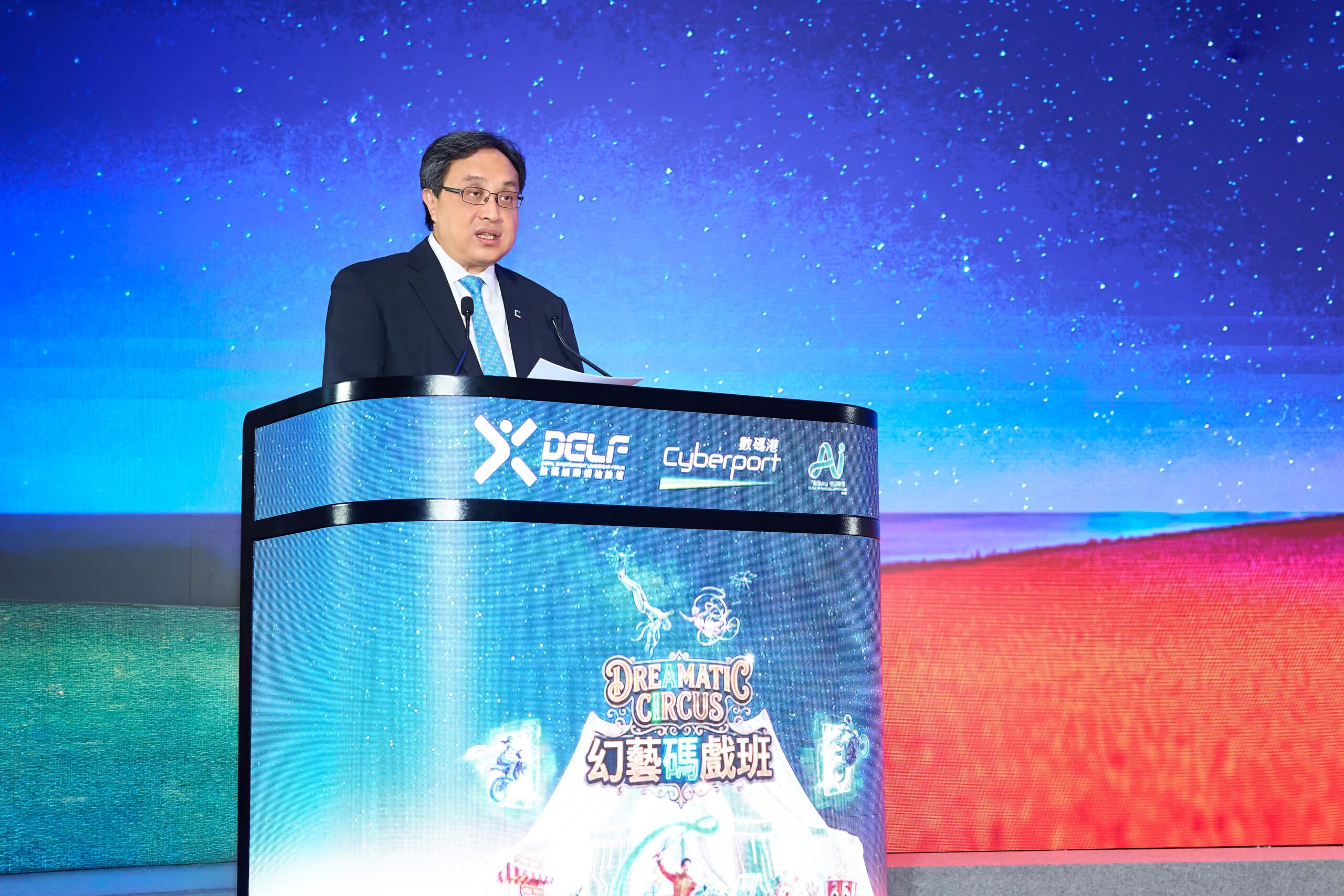
Cyberport Chairman Simon Chan delivers remarks at the opening of the DELF 2026 on August 28 in Hong Kong.
“The finance sector as well as other sectors of the economy are growing fast in Kazakhstan. There’s also a lot of business opportunities. We hope through the collaboration, our companies, stakeholders and startups can open up the business there or find the collaboration with the Kazakh business entities. Astana Hub itself is comprehensive and focused on AI,” Mr. Chan said in an interview for this story.
“Hong Kong is one of the major Asian financial centers, not only Asian but also the international financial center. We hope to build Hong Kong into an international IT hub as well. And Kazakhstan is an ideal place for our companies to open up their businesses or make collaboration with the tech companies or financial companies for more collaboration and widen their scope of business and to seek more business opportunities,” he said.
Cyberport accommodates more than 2,300 companies, including 18 listed companies with a combined market capital of more than 500 billion HK dollars (US$63 billion), nine unicorns worth more than 150 billion HK dollars (US$19 billion). Its innovation ecosystem includes AI, data science, fintech, digital assets and blockchain, cybersecurity, and smart living.
In late August, Cyberport hosted the Digital Entertainment Leadership Forum (DELF 2026) marking this direction as a strategic one.
“DELF is important not only as an event but also its content is evolving every year along with the growth of different types of technology that can be reflected in its solutions. In the past, we focused on digital entertainment and other types of technology. But nowadays, we are focusing on AI and how to incorporate it in promoting the digital entertainment industry. We use this platform to reflect the development of different types of technology and attract guests from overseas to share with us and also to share their experience and insights with our local peers and stakeholders,” said Mr. Chan.
Building a global tech network
The Hong Kong SAR government has taken major steps aligning with the nation’s 15th five-year plan on positioning Hong Kong as a hub for innovative economy in the Asia-Pacific region.
The Cyberport chairman also spoke about the qualities they look for while building connections globally.
“We hope to build a gateway or platform for the different types of companies who can access different countries and industries. The critical success factor of locating a good collaborator or good competitors is the prospects for growth. The mission of the countries or the strategy of the development strategy of the country itself. In Kazakhstan, we have agreed to help make Kazakhstan more AI-oriented.”
Diversity in tech, talent development and different funding schemes for IT building up in Hong Kong are the main advantages.
“Hong Kong welcomes our friends from overseas to open up their office or presence here. We hope for more collaboration ahead. Collaboration is pretty important as the world is changing rapidly. We are looking for more hub-to-hub cooperation to build up more opportunities for the next generations,” said Mr. Chan.
