
ALMATY – Kazakhstan’s updated Foreign Policy Concept for 2020–2030 preserves the country’s balanced and pragmatic foreign policy while adapting it to a new constitutional framework, shifting geopolitical realities and a stronger emphasis on protecting the interests of Kazakh citizens and businesses abroad, analysts say. The amendments, signed by President Kassym-Jomart Tokayev and effective from Aug. 14, do not introduce a new foreign policy doctrine. Instead, experts describe them as an effort to update the existing framework to reflect both Kazakhstan’s evolving state institutions and a more complex international environment.
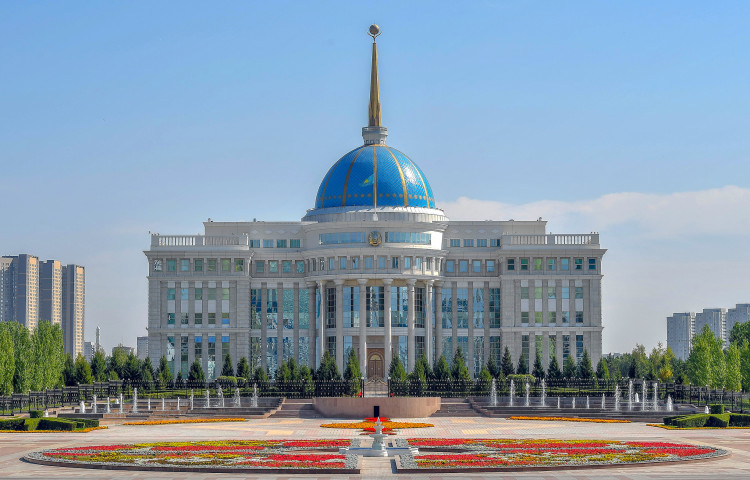
Akorda. Photo credit: Akorda
A balanced foreign policy remains, but its implementation is evolving
Despite the institutional changes, the most significant continuity in the revised document may be the preservation of Kazakhstan’s balanced and pragmatic approach to foreign policy.
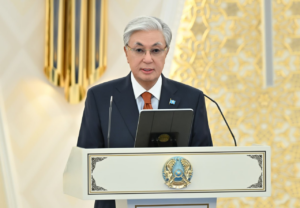
President Kassym-Jomart Tokayev. Photo credit: Akorda.
According to the CCBS analytical agency, supported by the Caspian-Black Sea Studies Foundation, the revision matters less for changing Kazakhstan’s core foreign policy course than for adapting it to an increasingly complex international environment.
“Tokayev himself has repeatedly emphasized in recent months the need for a maximally balanced foreign policy focused primarily on protecting Kazakhstan’s national sovereignty and strategic interests,” the agency wrote.
The revision comes amid broader changes in Kazakhstan’s international engagement, including expanding ties with China and the European Union. According to CCBS, Kazakhstan’s engagement with both partners has become more prominent, illustrating the continued relevance of maintaining relations with multiple centers of political and economic influence.

Zhanat Momynkulov. Photo credit: Qaz365.
For Zhanat Momynkulov, a political scientist and senior lecturer at the Gumilyov Eurasian National University, this balanced and pragmatic approach remains an important mechanism for preserving Kazakhstan’s strategic autonomy, Qaz365 reported.
“Astana seeks to maintain the ability to interact simultaneously with different centers of power based on its own national interests. Kazakhstan’s balanced and pragmatic foreign policy in 2026 is no longer simply a diplomatic principle but an instrument for managing geopolitical risks,” he said, arguing that the country’s diplomatic approach has evolved alongside a changing international environment.
A foreign policy concept aligned with the new constitutional system
The revised document also incorporates the terminology of Kazakhstan’s new constitutional model.
References to Parliament have been replaced with the Kurultai, which the updated concept defines as the country’s highest representative body exercising legislative power.
Other changes are more technical but still reflect the broader legal transition. The term “citizen” has been replaced with the more specific “citizen of the Republic of Kazakhstan,” while “Independence” and “Sovereignty” are now capitalized. These amendments may appear editorial, but together they align one of Kazakhstan’s principal strategic foreign policy documents with the terminology and institutional architecture established under the new Constitution.
Taken together, the revisions show that the document is being updated not only in response to changes in the international environment but also to reflect Kazakhstan’s domestic political and legal transformation.
Greater focus on citizens and business abroad
Another important shift is the stronger emphasis on the practical protection of Kazakhstan’s interests beyond its borders.
The updated concept calls for greater efforts to promote and protect the interests of the state, domestic businesses and every citizen of Kazakhstan abroad. The document describes this as an important condition for building a strong, harmonious and socially responsible state integrated into the modern international system.
The revised concept also strengthens provisions on protecting the rights and legitimate interests of Kazakh citizens abroad, including Kazakh children adopted by foreign citizens and living outside the country. This reflects what could be described as a more citizen-centered dimension of foreign policy.
Momynkulov said this approach suggests that foreign policy is increasingly expected to produce practical benefits for the country’s citizens and economy.
From personalized continuity to institutional continuity
One of the amendments concerns the concept of foreign policy continuity. The previous version referred specifically to the continuity of the foreign policy course of the former President Nursultan Nazarbayev. That wording has now been replaced with a broader reference to the “continuity of the foreign policy course at a new stage of the country’s development.”
The concept also removes provisions concerning Nazarbayev’s special role in foreign policy, including his previously stipulated lifelong right, based on his historical mission, to address the people, state bodies and officials with initiatives on major foreign policy issues.
According to Momynkulov, the change represents a broader institutional transformation.
“The main change is the depersonalization of foreign policy continuity. Now, only the ‘continuity of the foreign policy course at a new stage of the country’s development’ is established,” he said.
In practical terms, this means that continuity is increasingly defined through the state and its institutions rather than through a particular political figure.
The amendments therefore appear to reflect not a departure from Kazakhstan’s long-standing foreign policy direction but a change in how that continuity is formally defined and institutionalized.
