
ASTANA – Hidden in the foothills of the Kyrgyz Alatau in the Zhambyl Region, the village of Merke is far more than a stop along the highway connecting Almaty and Taraz. One of Kazakhstan’s oldest settlements, Merke combines the legacy of the Silk Road, sacred archaeological landscapes and dramatic mountain scenery.
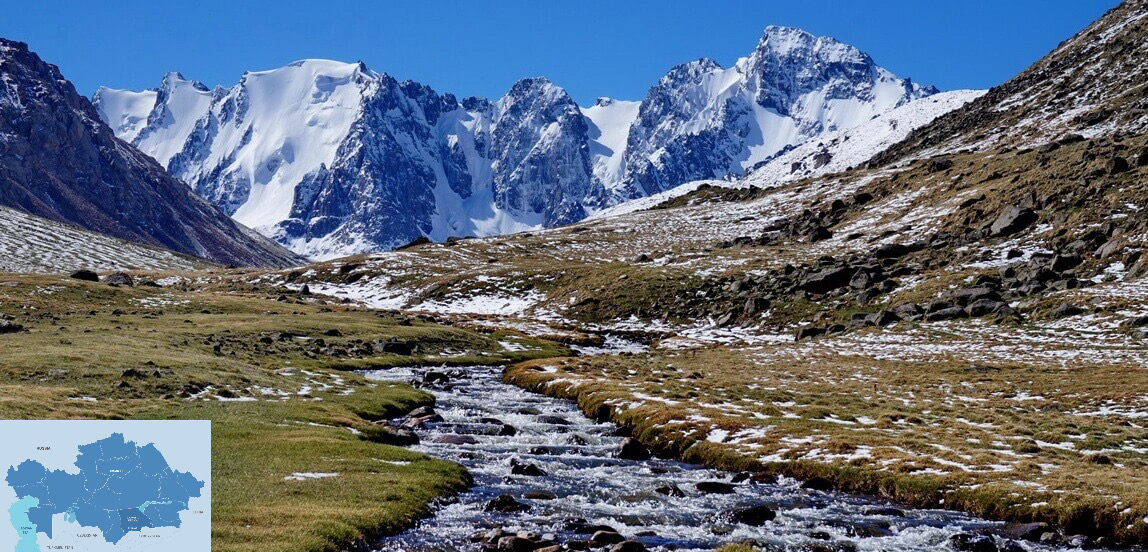
View of the Merke Gorge. Photo credit: Voland/adrenalinicsilence.kz Click to see the map in full size. The map is designed by The Astana Times.
Kazakhstan’s open-air sacred landscape
Merke serves as the administrative center of the Merke District in the Zhambyl Region, but its history stretches back much further than modern administrative boundaries.
The settlement, once known as Mirki, appears in written sources dating to 945 A.D. Arab geographers described it as a prosperous town near Kulan, one of the key settlements along the Silk Road. The Persian name Mirki, meaning “center,” reflected its importance as a regional crossroads linking trade routes across Central Asia.
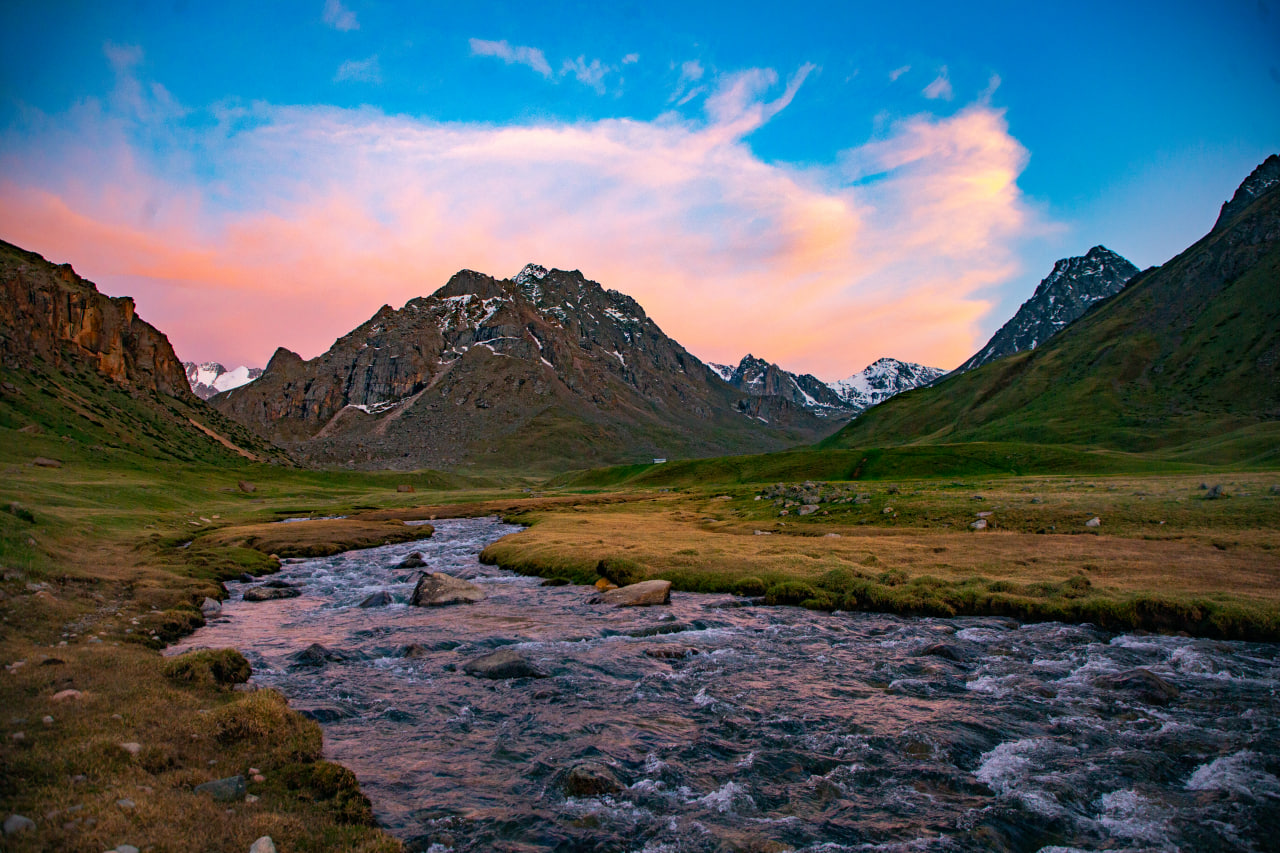
View to the Merke River. Photo credit: merkepark.kz
The region’s best-known attraction is the Merke Sanctuary, one of the most significant Turkic ritual complexes in Central Asia.
Located high in the Kyrgyz Alatau mountains between 2,500 and 3,600 meters above sea level, the sanctuary occupies more than 250 square kilometers across several alpine plateaus, including Sandyk, Shaisandyk, Araltobe, Kashkasu and Ulysai.
Thanks to its remote location, the complex has remained largely undisturbed, preserving nearly a millennium of spiritual traditions practiced by ancient Turkic nomads. In recognition of its outstanding cultural value, the sanctuary was added to UNESCO’s Tentative List of World Heritage Sites in 1998.
More than 170 burial mounds and stone enclosures dating from the sixth to the 14th centuries have been documented across the site. Around 70 ritual complexes feature anthropomorphic stone statues known as balbals, many of which still stand in their original locations.
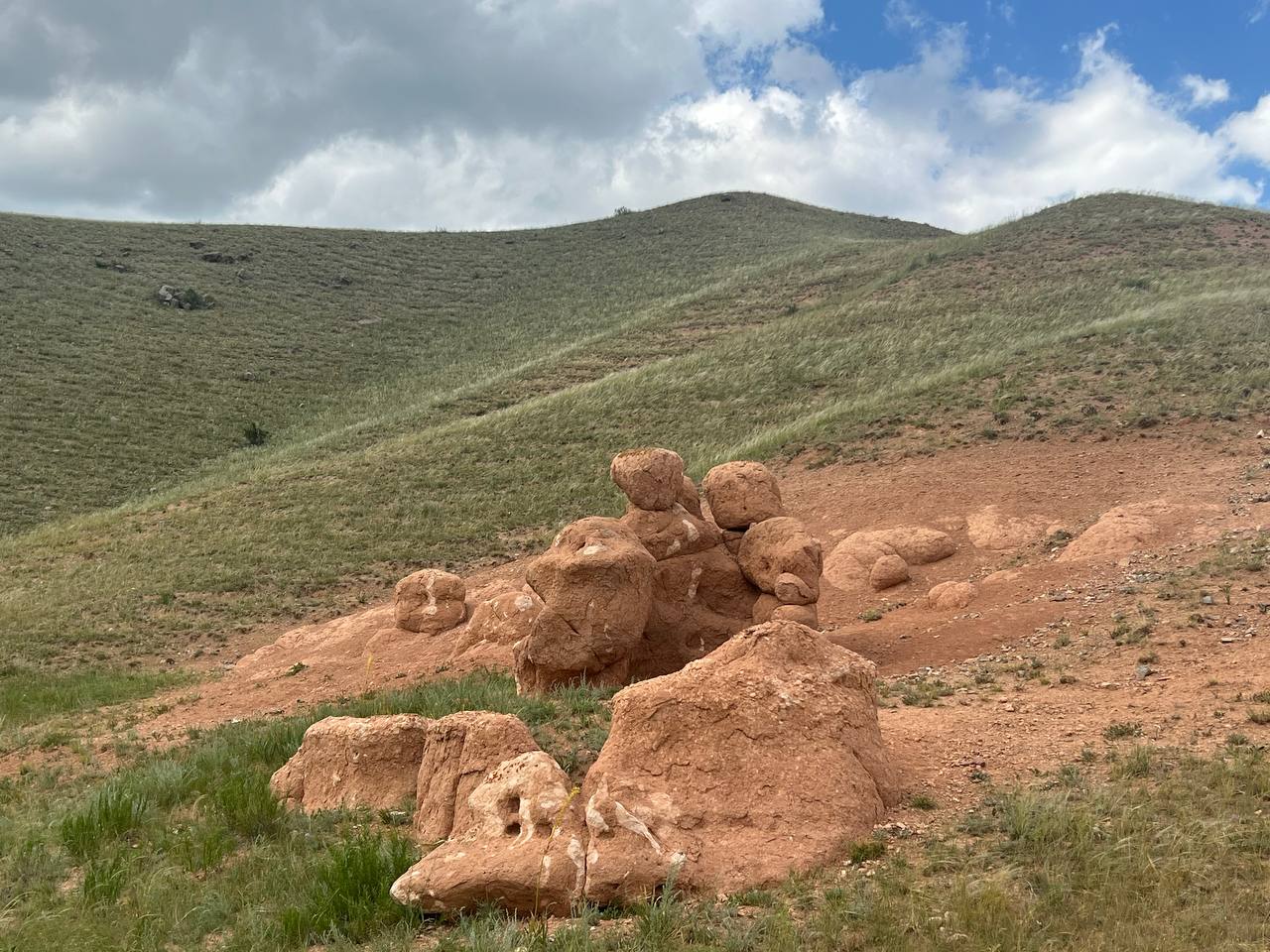
Visitors can still see sections of the Red Mosque’s walls and the remains of a Buddha statue, partially buried beneath layers of windblown sand. Photo credit: roerich.kz
For centuries, people traveled here to perform religious ceremonies and honor their ancestors. Archaeological evidence suggests that the area witnessed the coexistence of multiple belief systems over time, including early Turkic traditions, Buddhism, Zoroastrianism and Nestorian Christianity.
One particularly intriguing feature along the route to the sanctuary is the site known as Kyzyl Meshit (Red Mosque), the remains of what historians believe was an ancient Buddhist temple.
Constructed from massive blocks of reddish sandstone, the structure is thought to date back at least 1,500 years. Although only fragments of the temple survive today, visitors can still see parts of its walls and the remains of a Buddha statue partially buried beneath centuries of windblown sand.
Mysteries of Kok-Kol
Among the sanctuary’s most mysterious landmarks is Kok-Kol, or Green Lake, historically known as Aulie-Kol, meaning “Sacred Lake.”
The alpine lake sits inside a natural basin surrounded by grassy hills and juniper shrubs. While relatively small, roughly 300 to 500 meters across, it has inspired local legends for generations.
According to local folklore, the lake is home to Aidakhar, a dragon that dwells beneath its waters, earning Kok-Kol comparisons to Scotland’s Loch Ness.
Scientific expeditions have found no mythical creature, but researchers have documented several unusual features. The lake contains almost no aquatic life except tiny freshwater crustaceans, its water level remains remarkably stable despite seasonal changes, and its temperature changes little even after cold mountain nights.
Alpine landscapes and rare wildlife
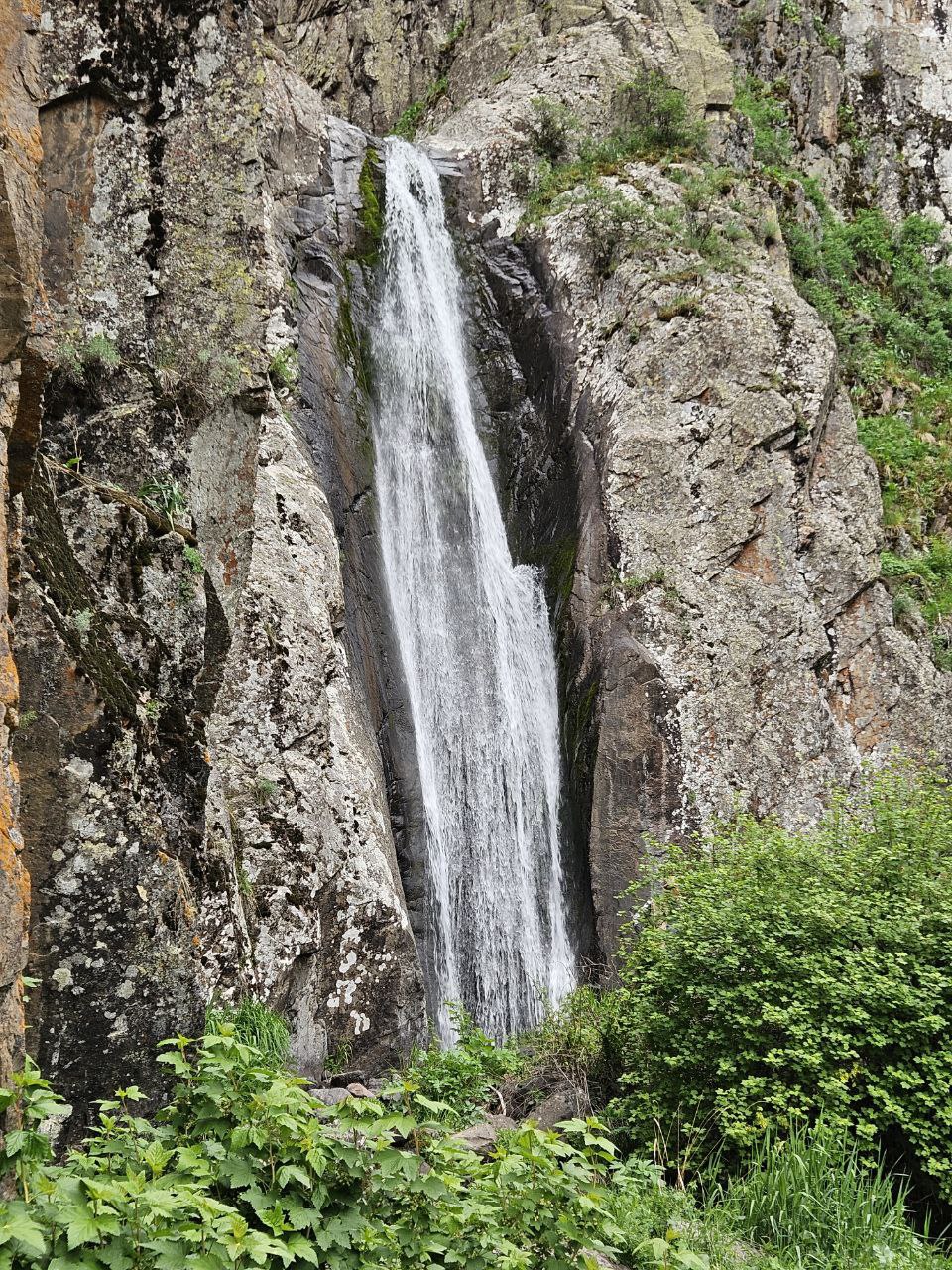
Zhalanash Waterfall. Photo credit: merkepark.kz
Merke’s cultural heritage is matched by its natural wealth.
Established in August 2025, the Merke State Regional Natural Park protects more than 86,000 hectares of mountain ecosystems within the Western Tien Shan. The protected area was created through cooperation between government agencies, scientists and international partners, including the United Nations Development Program, following studies confirming the presence of several rare species.
The park is home to snow leopards, argali sheep, Turkestan lynx, Indian crested porcupines and numerous birds of prey, including golden eagles, falcons and vultures.
Nature enthusiasts visiting Merke often include Zhalanash Waterfall. Hidden deep within the mountains, the approximately 15-meter waterfall is reached via hiking trails that wind through forested slopes and rocky valleys. During spring and early summer, snowmelt feeds the cascade, creating one of the area’s most picturesque natural attractions.
Unlike Kazakhstan’s more developed tourist destinations, Merke offers a wilderness experience with few modern amenities. Travelers should be prepared for changing mountain weather, limited mobile coverage and long stretches without shops or restaurants.
Planning your visit
Merke lies approximately 157 kilometers east of Taraz and around 340 kilometers west of Almaty, making it accessible as either a weekend destination or a stop on a road trip through southern Kazakhstan.
While the village itself is easily reached by paved road, visiting the sanctuary, mountain lakes and waterfalls requires high-clearance vehicles, preferably four-wheel drive, and in many cases local guides familiar with the terrain.
For those seeking destinations beyond Kazakhstan’s established tourist routes, Merke offers something increasingly rare, a landscape where archaeology, mythology and untouched nature remain closely intertwined.
