
ASTANA – The Monetary Policy Committee of the National Bank of Kazakhstan decided to keep the base rate at 18% per year, with a corridor of ±1 percentage point. The decision is based on the latest forecast round, updated assessments of key macroeconomic indicators, and the balance of inflation risks.
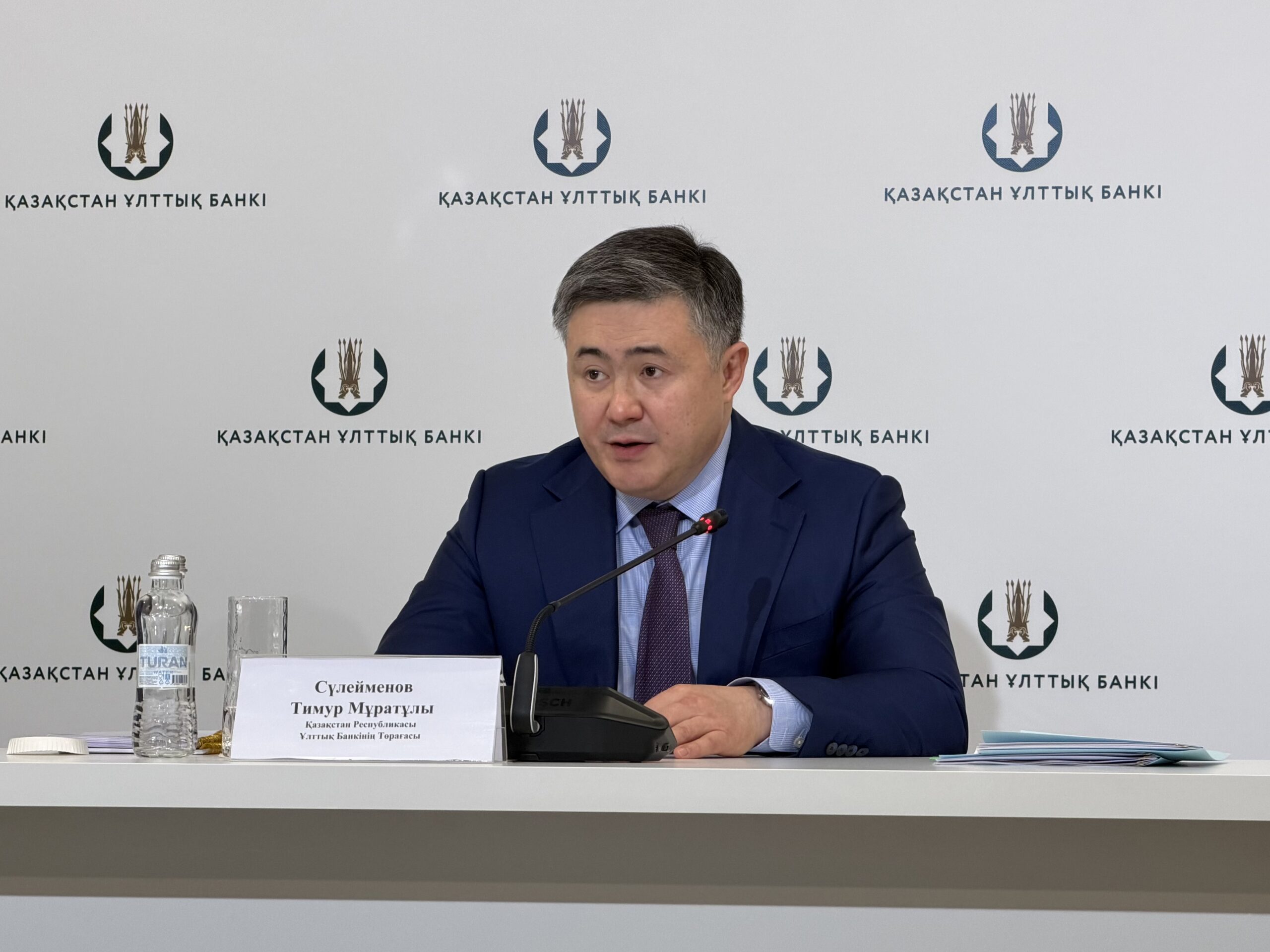
Governor Timur Suleimenov. Photo credit: Nargiz Raimbekova/ The Astana Times
“Annual inflation continued to slow in February, reaching 11.7%. The easing of inflationary pressures has been supported by moderately tight monetary conditions, the implementation of anti-inflation measures, slower growth in unsecured consumer lending, and the withdrawal of excess liquidity through minimum reserve requirement adjustments and mirror operations,” National Bank Governor Timur Suleimenov told journalists during a March 6 press briefing.
“The sharpest slowdown was recorded in the services sector, where inflation eased to 10.8% in February from 12% in January,” he added.
Inflation for non-food products also slowed slightly to 11.6%. Food inflation declined for the second consecutive month, reaching 12.7% in February. However, according to Suleimenov, this component continues to make the largest contribution to overall price growth and remains a key driver of households’ inflation expectations.
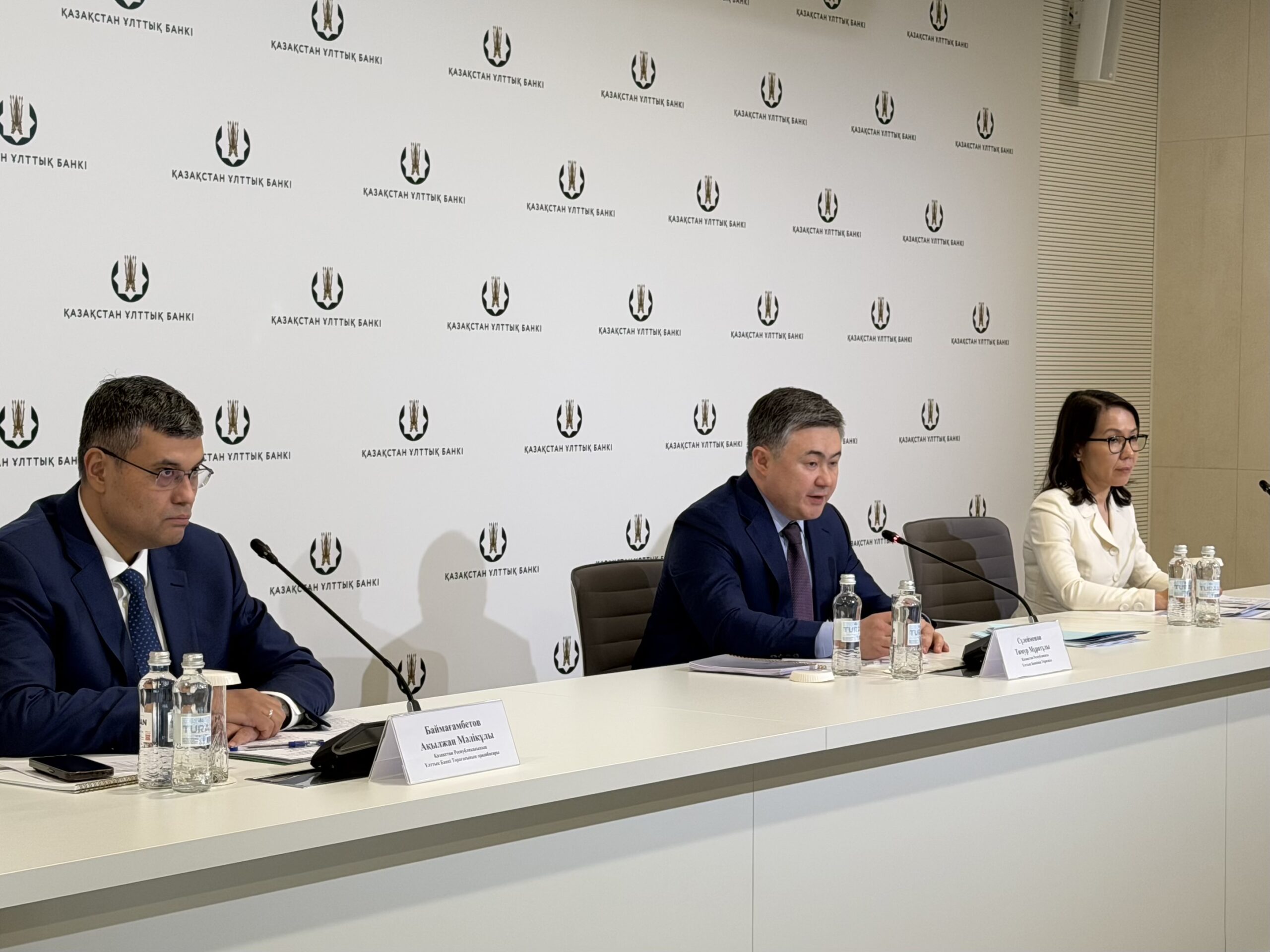
From L to R: Deputy Governor Akylzhan Baimagambetov; Timur Suleimenov and Deputy Governor Aliya Moldabekova. Photo credit: Nargiz Raimbekova/ The Astana Times
He also said additional restraint on inflation has come from a moratorium on increases in utility and fuel prices, as well as more favorable movements in the tenge exchange rate. At the same time, the impact of the value-added tax increase was largely absorbed by prices last year and is now assessed as limited.
He noted that moderately tight monetary conditions should be maintained to stabilize inflation expectations and secure a lasting disinflation trend. At this stage, he indicated that there is still no room for a rate cut, as the economy continues to adjust to recent tax changes.
If inflation continues easing and the central bank’s base scenario is implemented, Suleimenov said the central bank may consider cutting the base rate, but only in the second half of this year.
He stressed that economic activity remained strong, citing accelerated investment and continued momentum in consumer demand based on 2025 results.
While some critics argue that the central bank is tightening too aggressively, Suleimenov rejected that view. According to standard monetary rules, he said, a neutral rate is broadly determined by inflation plus economic growth. With inflation around 12% and growth about 6%, a policy rate of 18% effectively places Kazakhstan near neutral conditions, rather than in a strongly restrictive stance.
Because of this, he said, the central bank has had to rely on additional instruments beyond the base rate, including macroprudential measures, mirror operations and higher reserve requirements, to withdraw excess liquidity from the financial system. These measures, however, carry their own costs and consequences.
External risks remain
“Additional risks are emerging in the external environment amid intensifying geopolitical tensions, reflected in volatility in oil prices, shifts in the price dynamics of Kazakhstan’s trading partners, and potential reactions from major central banks and other global actors,” said Suleimenov.
External inflationary pressures remain broadly moderate, though geopolitical uncertainty is increasing the risk of higher inflation globally, he noted. As a result, many central banks are preparing for a prolonged period of restrictive global monetary conditions.
Speaking about Kazakhstan’s key trade and investment partners, Suleimenov said that in Russia, inflation accelerated to 6% in January, largely reflecting the impact of the VAT increase.
In the European Union, inflation slowed to 2% and core inflation to 2.4%, prompting the European Central Bank to keep its key rate unchanged. In the United States, inflation eased to 2.4% in January, but the Federal Reserve has refrained from further policy adjustments, keeping its benchmark rate unchanged at its latest meeting as it assesses a range of economic risks.
Oil prices
The continued escalation in the Middle East also forces the National Bank to reconsider its oil price scenarios.
“In its baseline scenario for 2026, the National Bank revised upward its assumptions for oil prices compared with the previous forecast, reflecting the escalation of tensions in the Middle East. Under these assumptions, the average Brent crude price is expected to reach $66.3 per barrel in 2026. As market dynamics gradually return to a balance between supply and demand, prices are projected to trend toward around $60 per barrel,” Suleimenov explained.
Addressing journalists, Suleimenov outlined that the bulk of the country’s revenues depend on oil prices.
“That means more than 50% of export revenues and over 30% of the revenues of the state budget and the National Fund are generated by oil. As a result, when oil prices rise, it generally boosts economic activity, particularly through the oil and gas sector’s contribution to GDP. Higher prices also increase inflows to the National Fund and the state budget,” Suleimenov explained.
“Of course, this does not happen immediately. The oil market operates largely through contracts agreed in advance. Much will depend on how long the military conflict continues,” he said, adding that he doesn’t see any conditions for the weakening of the tenge exchange rate.
He reiterated that the priority task remains bringing inflation down to single digits. “The medium-term target remains unchanged to bring inflation down to 5%,” said Suleimenov.
The next decision on the base rate is expected on April 24.
