
ASTANA – Kazakhstan and Georgia are working to make it easier for financial institutions to access each other’s capital markets, with regulators exploring mutual market recognition mechanisms to support cross-border investment and financial services. The initiative was a key focus of AIFC Connect: Tbilisi 2026, an event hosted by the Astana International Financial Centre (AIFC), the National Bank of Georgia, GFTN and ITS on Oct. 28 as part of the Tbilisi Finance Summit 2026.
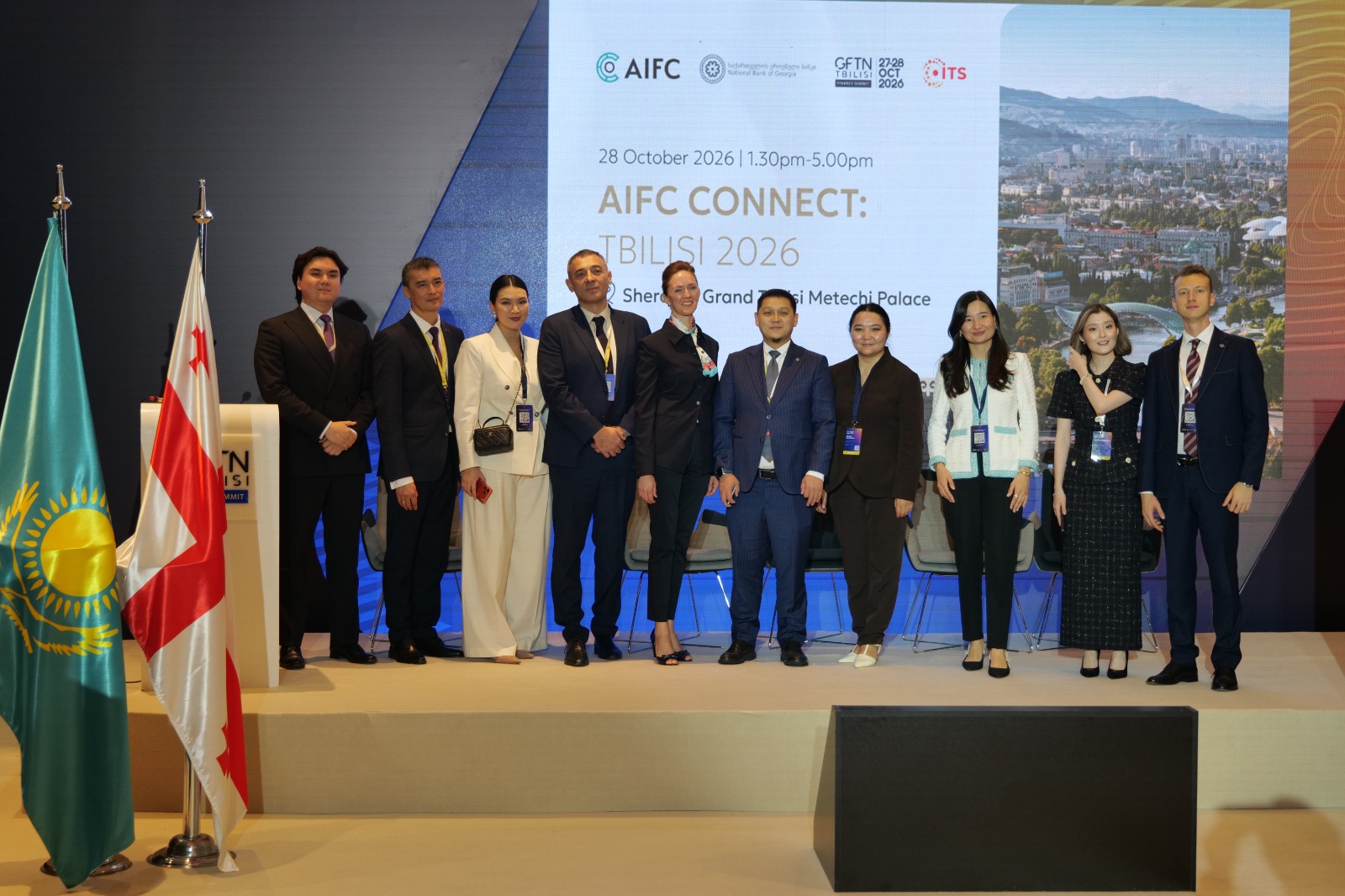
Photo credit: AIFC
The initiative builds on a memorandum of understanding signed on Sept. 9 by the Astana Financial Services Authority (AFSA), the AIFC’s financial regulator, and the National Bank of Georgia. The agreement provides a framework for regulatory cooperation, information exchange and developing mechanisms to facilitate access to the two markets, particularly in capital markets and asset management. Under the memorandum, the regulators will develop practical arrangements that account for the legal and regulatory requirements of both jurisdictions.
“Our shared priority now is to translate these commitments into practical measures,” said Evgeniya Bogdanova, AFSA chief executive officer.
She said the goal was to expand opportunities for financial institutions, facilitate entry into new markets and support cross-border services while maintaining investor protection standards.
The Tbilisi event brought together regulators, banks, investment firms, stock exchanges and financial and technology companies from both countries to discuss economic trends, capital markets and opportunities for closer cooperation.
Bakhtiyar Tleubekov, chairman of the AIFC Authority’s management board, said the Trans-Caspian International Transport Route added another dimension to Kazakhstan-Georgia cooperation by improving connectivity between Asia and Europe and creating opportunities for trade and infrastructure investment.
“The AIFC is well positioned to contribute to these efforts through its internationally recognized legal and regulatory framework and capital market infrastructure,” he said.
The event also featured an overview of Georgia’s economic outlook and capital markets by Irakli Gabriadze, head of the Economic Development Corporation of Georgia, and a presentation on Kazakhstan’s capital market by Birzhan Astayev, chief markets and products officer of the Astana International Exchange.
A panel discussion brought together representatives of financial and investment institutions to examine opportunities for cross-border transactions, investment and business cooperation. Participants included representatives of Kazakhstan’s National Investment Holding Baiterek, Halyk Bank Georgia, ITS, TBC Capital and Galt & Taggart.
Trade and investment ties
Economic ties between Kazakhstan and Georgia provide a foundation for deeper financial cooperation. Bilateral trade reached $184.5 million in 2025, while trade turnover totaled $53 million in January-April 2026, according to the AIFC. Kazakhstan has invested more than $500 million in Georgia’s economy, while more than 600 companies with Georgian participation operate in Kazakhstan.
The AIFC also serves as a platform for Georgian businesses seeking access to Kazakhstan’s market and international financial services. Twenty companies from Georgia are registered in the center, representing sectors including finance and insurance, information and communications, manufacturing and agriculture. The center offers a legal and regulatory framework based on English common law principles. AFSA supervises financial and market activities, while the Astana International Exchange provides infrastructure for raising capital and trading securities. The AIFC Court and International Arbitration Centre handle legal matters and commercial dispute resolution.
The Middle Corridor connection
Financial cooperation is part of a broader partnership spanning transport, logistics and infrastructure. Kazakhstan and Georgia are among the countries working to improve transport links along the Middle Corridor, which connects Asia and Europe. Their efforts include expanding container transportation, coordinating tariffs and advancing digitalization along the route, creating potential investment opportunities in transport infrastructure and related sectors.
One example is Middle Corridor Multimodal Ltd., an AIFC-registered company established by railway companies from Kazakhstan, Georgia, Azerbaijan and China. The company aims to coordinate rail and maritime transport along the corridor and improve transit operations.
The AIFC said its platform has attracted more than $28 billion in investment to Kazakhstan’s economy since its launch. More than 6,800 companies from over 90 countries are registered in the center. The Tbilisi event concluded with business networking and business-to-business meetings focused on potential cross-border investments and joint initiatives.
