
ASTANA – Kazakhstan plans to significantly expand repairs of its aging energy and utilities infrastructure under a 13 trillion tenge (US$27.3 billion) national modernization program, with the government aiming to double the pace of network upgrades while increasing the use of domestic manufacturers, officials said at a July 28 government meeting.
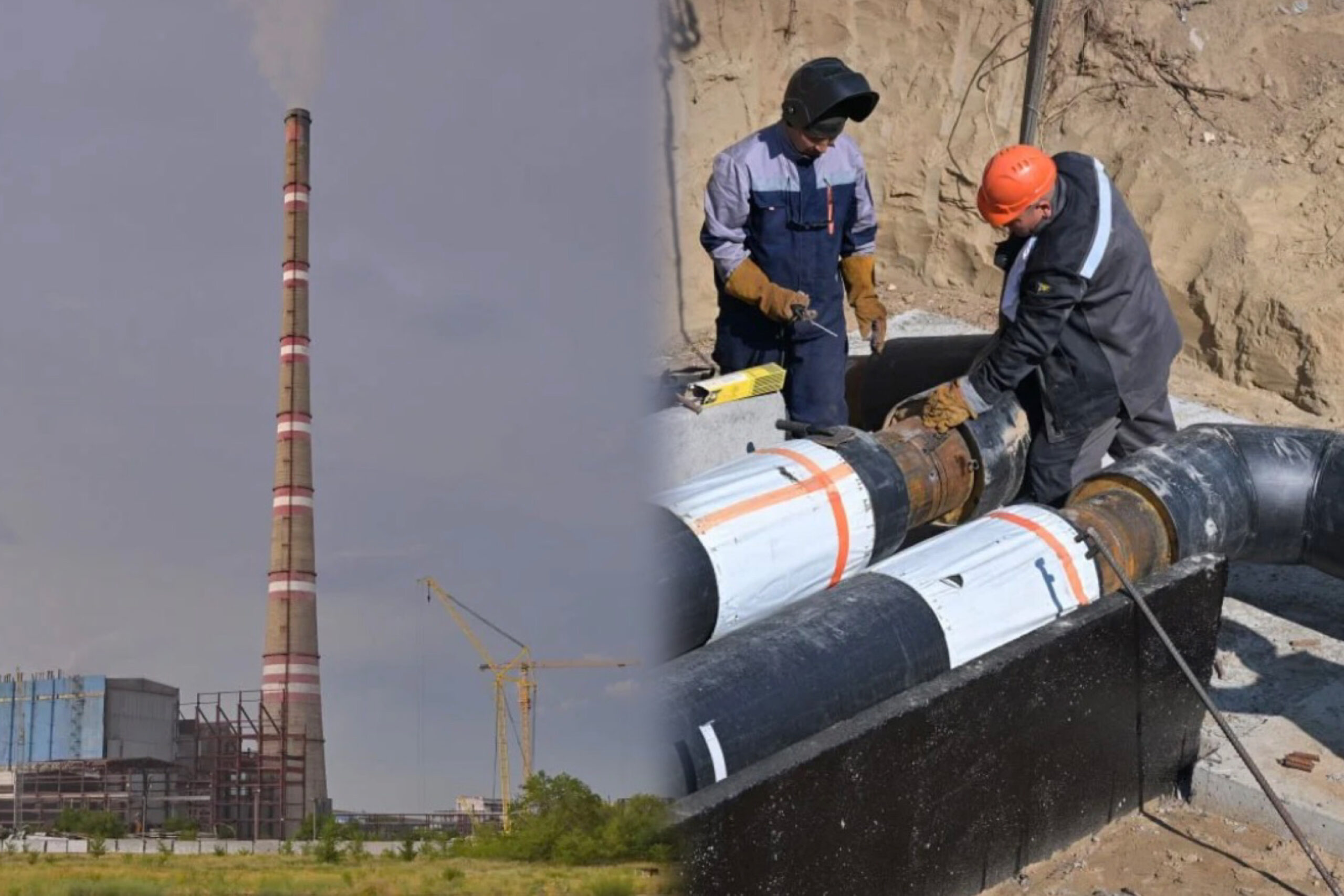
Repair work on utility infrastructure forms part of Kazakhstan’s plan to modernize aging energy and public services networks. Photo credit: Prime Minister’s press service.
Launched at the end of 2024, the National Project on the Modernization of the Energy and Utilities Sectors is designed to reduce the deterioration of engineering infrastructure, improve the reliability of energy supply and public utilities, and strengthen long-term investment in the sector.
Investment and repairs
Deputy Minister of National Economy Assan Darbayev said the project’s institutional framework was completed in 2025 through legislative amendments and the launch of a digital platform overseeing implementation. The project now covers 247 regulated utility companies.
Between 2025 and 2029, Kazakhstan plans to invest 13 trillion tenge (US$27.3 billion) in the initiative, allocating 6.8 trillion tenge (US$14.3 billion) to utilities infrastructure and 6.2 trillion tenge (US$13 billion) to the energy sector, according to the Prime Minister’s press service.
The investment is expected to finance the repair and modernization of 84,000 kilometers of engineering networks, add 7,309 megawatts of generating capacity, and build or modernize 27 power generation facilities. By 2029, the government aims to reduce the nationwide average infrastructure wear rate to 40% and cut accident rates by 25%.
Darbayev said financing for the housing and utilities sector has doubled in 2026 compared with the previous year. The government has also secured 625 billion tenge (US$1.3 billion) in financing from six international financial institutions for projects scheduled this year, which officials say will help attract long-term capital while reducing pressure on utility costs.
The government repaired 6,600 kilometers of engineering networks in 2025. This year, it plans to increase that figure to 12,000 kilometers with planned financing of 1.138 trillion tenge (US$2.4 billion), marking the project’s transition from institutional preparation to large-scale construction and modernization works.
Improving utility networks
A key objective of the program is improving the financial and operational condition of utility companies operating aging infrastructure.
According to Darbayev, eight utilities were removed from the government’s highest-risk category in 2025, with another eight expected to improve their status this year. By 2029, authorities aim to move 70 utility companies out of the critical-risk category.
Prime Minister Olzhas Bektenov said implementation of the national project remains under the personal oversight of President Kassym-Jomart Tokayev and instructed regional administrations to accelerate modernization efforts. He also directed the National Economy Ministry and other government agencies to ensure the effective use of investment allocated under the program.
Priority for local producers
The modernization program is also expected to boost domestic industrial production.
Minister of Industry and Construction Yersayin Nagaspayev said procurement rules give priority to Kazakh manufacturers. Only companies included in the national register of domestic producers are eligible to participate in project tenders, while procurement is conducted through a dedicated electronic platform designed to give suppliers greater visibility into future demand.
Around 500 domestic manufacturers have been registered as potential suppliers for the national project. According to Nagaspayev, 27 projects are currently in the construction phase, with procurement of construction materials already underway.
Officials said demand for domestically produced equipment and materials under the modernization program is expected to reach approximately 2 trillion tenge (US$4.2 billion) by 2029.
