
The war that opened on Feb. 28, with joint American and Israeli strikes on Iran taught the Arab monarchies of the Gulf a lesson about geography. Iranian retaliation reached every member of the Gulf Cooperation Council. The Armed Conflict Location and Event Data (ACLED) global monitor counted more than 660 attack events across the Gulf by early April, with at least 41 people killed. QatarEnergy halted LNG production on March 2 and declared force majeure two days later. On March 18, Iranian missiles damaged Ras Laffan, the complex that handles the bulk of Qatari gas exports. Kuwait and Bahrain cut oil output for lack of storage.
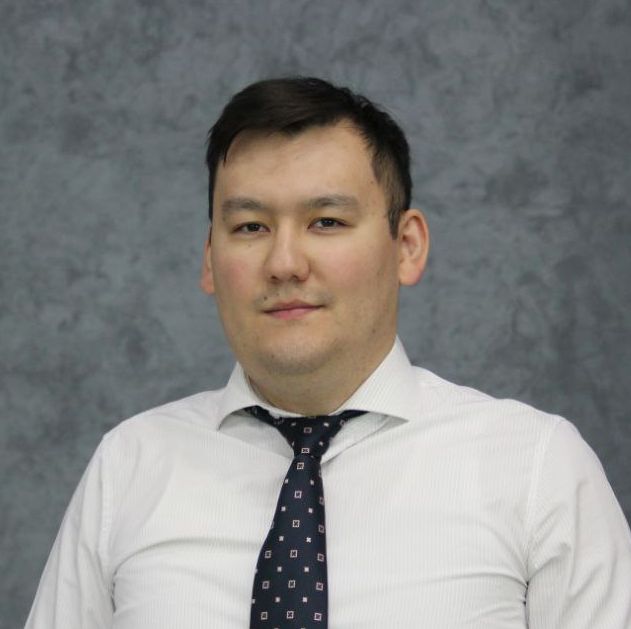
Rassul Kospanov.
American bases prevented none of it. Washington remains the deterrent against invasion. It cannot hold open a 33-kilometer waterway, and it cannot move an LNG train inland. The Soufan Center described a Gulf divided into states with export pipelines that bypass Hormuz and states without them. Everything the region has built over 50 years, from petrochemical complexes to aviation hubs, sits within missile range of Iran and behind a single contested strait.
This is the setting in which Kazakhstan’s position changes. Kazakhstan lies roughly 3,000 kilometers from the Strait of Hormuz and carries no exposure to it. For Gulf sovereign capital, that geography has become a category of asset in its own right.
What has actually closed
Signed memoranda and executed transactions are different instruments, and the gap between them is where most analysis of Gulf money in Central Asia goes wrong. Qatar’s Senate-ratified strategic partnership with Kazakhstan covers nine projects valued at about $20 billion. Against that headline, the completed deals are smaller and more informative.
Power International Holding closed its $1.1 billion purchase of Mobile Telecom-Service, owner of the Tele2 and Altel brands, in January 2025. Lesha Bank finalized its acquisition of Bereke Bank, the nationalized former Sberbank subsidiary, for 65 billion tenge, around $135 million, in October 2024. AD Ports Group committed some $30 million to the Sarzha grain terminal at Kuryk, taking 51 percent alongside Semurg Invest, with phase one capacity of 570,000 tons a year due in the second half of 2026. During the Abu Dhabi crown prince’s visit in May 2025, the two governments witnessed 22 agreements worth more than $5 billion, and Emirati investment stock in Kazakhstan passed $4.3 billion.
Gas is the largest line and the least settled. UNESCAP attributed $11 billion of Kazakhstan’s 2024 foreign direct investment to UCC Holding’s program with QazaqGaz: two gas processing plants of 1 and 2.5 billion cubic meters, a compressor station, the Aktobe-Kostanay trunk line, and the second string of the Beineu-Bozoy-Shymkent pipeline. Construction has begun. The capital in the ground is nowhere near $11 billion, and that distinction deserves to be kept in view.
The continental hedge
Kazakhstan supplies what Hormuz stopped guaranteeing in March. AD Ports framed the Sarzha terminal as part of the UAE’s national food security strategy, moving Kazakh wheat across the Caspian along the Trans-Caspian route, which touches no chokepoint within reach of Iranian launch sites. Qatari telecom capital is building 5G in a country whose base stations cannot be struck from Bandar Abbas. Lesha Bank now holds a licensed universal bank in a jurisdiction that sits outside the war-risk insurance perimeter that shut down Gulf shipping in March.
Renewable power follows the same logic through an indirect route. TotalEnergies approved a final investment decision in April 2026 on the $1.2 billion Mirny wind and battery project in Zhambyl Region, holding 60 percent alongside KazMunayGas and Samruk-Energy at 20 percent each. Mirny will be folded into the 9 GW Asian renewables joint venture that TotalEnergies has formed with Abu Dhabi’s Masdar. Emirati capital reaches Kazakh megawatts through a French balance sheet, which is how a good deal of Gulf exposure to the region will arrive.
For Astana the calculation runs in the other direction. Gulf money carries neither the sanctions overhang attached to Russian capital nor the debt questions attached to some Chinese lending, and it arrives at a moment when Kazakhstan is trying to widen the field of external partners. It also arrives with conditions. An appendix to the Kazakhstan-Qatar agreement bars the government from opening antitrust or pricing investigations into Mobile Telecom-Service until 2027, a restriction an Almaty appellate court upheld in 2025 when it canceled a competition probe into the operator. Sovereign capital buys regulatory space along with the asset.
What comes next
The war has not made Kazakhstan a Gulf ally, and nobody in Astana is proposing that it should become one. What the war did was harden an argument that was previously commercial. Kazakhstan’s value to Abu Dhabi and Doha lies in being reachable overland and unreachable from Iranian launch sites, which is a claim no port on the Arabian Peninsula can make about itself.
Whether that value compounds depends on a single measurable thing: how much of the announced $20 billion arrives. Ras Laffan will be rebuilt. The assumption that made building everything in one place rational will not be. Kazakhstan is one of the few destinations where the Gulf capital can act on that revision without asking Washington, Moscow, or Beijing for permission, and Astana should price its own position accordingly.
The author is Rassul Kospanov, a fellow at Nightingale Int. network.
Disclaimer: The views and opinions expressed in this article are those of the author and do not necessarily reflect the position of The Astana Times.
