
Germany’s future in Central Asia’s boom market will be decided in the lecture hall
Kazakhstan is the gateway to a growth region, yet Germany lacks knowledge of it. Those who invest in talent gain networks and markets. Those who wait fall behind. Berlin needs to act.
On Monday, President Kassym-Jomart Tokayev has arrived in Germany. Interest is high, since Kazakhstan is becoming one of Germany’s most important economic partners. Knowledge about the country has barely kept pace. Some would call it typically German. We discover new markets, debate billion-euro projects and know surprisingly little about the countries behind them.
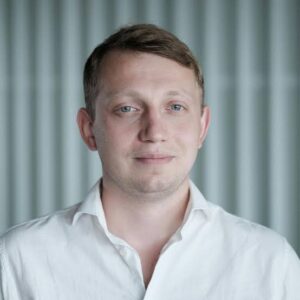
Alexander Dergay.
In 2025, the country accounted for more than 80 percent of German trade with Central Asia. The country is evolving from a commodity supplier into a production location and logistics hub, and it is the gateway to a market of more than 80 million people. Yet who in Germany knows Kazakh universities, companies and institutions? Who speaks the languages, has studied there or has built networks over years? Very few.
In Kazakhstan, this gap is increasingly becoming a competitive disadvantage. Too few German students spend extended time in the country, university partnerships remain limited and personal networks are thin. The result is a shortage of people who know the market from first-hand experience, beyond presentations and statistics.
An analysis by Boston Consulting Group (BCG) shows how far the region’s economic weight has already shifted. In the paper “Why Investors Are Turning to Central Asia and Caspian,” published in September 2025, the authors examine the investment potential of Kazakhstan, Uzbekistan, Azerbaijan and the Kyrgyz Republic. Together, the four states have around 70 million inhabitants and an economic output of about $440 billion. Kazakhstan accounts for almost 60 percent of regional GDP.
The study also highlights the region’s comparatively well-educated labor pool, with almost seven million workers holding a university degree and a further 11.5 million with vocational or equivalent qualifications. Konstantin Polunin, the director and partner at BCG and one of the study’s authors, summarized the development to this newspaper last year. “What we are seeing is a lasting structural change,” he said.
“Germany underestimates this potential,” Kanat Kozhakhmet, the president of Narxoz University in Almaty, told this newspaper. “Cooperation between Kazakh and German universities has so far been clearly insufficient.” In his view, universities, internships, research and skilled-worker programs belong much closer to the center of economic relations. “We need to build a roadmap for cooperation,” he said.
Founded in 1963, Narxoz University is one of the nation’s long-established economics universities. For German partners, Kozhakhmet sees potential in joint study and practical programs, resource research, technology projects and the training of technical specialists.
Kazakhstan sends its students into the world
His criticism concerns the reach of German universities, whose quality he does not question. German universities, he said, are barely visible at Kazakh schools, at education agencies and in the networks through which families organize study abroad. Other countries have courted young talent more actively for years. Whoever reaches these students builds ties to a generation that will later work in companies, ministries, state corporations and academia.
According to UNESCO data, around 91,200 Kazakhs study abroad. Germany counts 126,400, with a population roughly 4.5 times larger. This places Kazakhstan among the countries with the largest outbound student flows worldwide. Around 59,000 Kazakhs studied in Russia in 2021. China now counts more than 11,000 Kazakh students, and other published estimates exceed 14,000.
Figures on the state Bolashak scholarship program show how strongly Astana treats education as a strategic investment in competitive talent. Over 33 years, more than 13,200 specialists have been trained abroad. Today, 45 percent of alumni work in the private sector or as entrepreneurs, 25 percent in state structures and 18 percent in national companies.
Of the Bolashak and academic stays abroad reported for 2024/25, 57.3 percent went to the USA, 29 percent to the United Kingdom and 4.6 percent to Germany. For a country whose higher education system enjoys a strong international reputation, this is a small share.
Germany also falls short of its potential in academic mobility. In 2024, 792 Kazakh students went to Türkiye and 691 to Poland. Germany attracted 193. This stands out because German universities are growing internationally, with around 420,000 foreign students and doctoral candidates expected for the 2025/26 winter semester. According to available data, only about one in 220 international students comes from Kazakhstan. An internationally successful higher education location is therefore tapping only a small part of the potential in a country with a strong orientation toward study abroad.
Kazakhstan becomes an education hub itself
At the same time, Kazakhstan is changing from a source country of mobile students into a regional higher education location. In the 2025/26 academic year, around 35,000 foreign students from 88 countries were enrolled. The government is building a network of international branch campuses and partnerships, with more than 30 projects at various stages of development.
The United Kingdom and Türkiye show how such relationships can grow. More than 5,700 Kazakhs have studied in the UK on Bolashak scholarships alone. Cardiff University opened its first campus abroad in Astana, which is also the first campus of a Russell Group university in Central Asia.
Türkiye works through the jointly run Khoja Akhmet Yassawi University in Turkistan, a large scholarship program and closer links between study and business practice. Within a decade, the number of international students in Türkiye rose from around 72,000 to more than 340,000.
Germany has a network, though a small one
The German-Kazakh University in Almaty has around 700 students, nine bachelor’s and five master’s programs, and hosts about 20 German guest lecturers per semester. Anhalt University of Applied Sciences is present in Almaty. At Yessenov University in Aktau, programs in logistics, energy and environmental engineering, and mechatronics run with German participation. The Goethe-Institut’s PASCH network includes eight schools, 20 teachers and around 2,600 pupils. DAAD, GIZ, the Goethe-Institut, the AHK, political foundations and German companies add to this.
Mobility remains low despite this base. In 2025, the DAAD funded a total of 942 people from Kazakhstan and 141 people from Germany traveling to Kazakhstan. Of the 114 Germans in project funding, 105 spent a month or less in the country. Individual funding went to 11, and 9 of them stayed longer than six months. Kazakh authorities cite around 2,000 students from Kazakhstan in Germany, compared with a few dozen German citizens at Kazakh universities.
In Aktau, an Institute for Sustainable Engineering has been established with German support, including stays at German partner universities. Beyond that, a dense network of academic contacts exists. In 2023, both governments already pointed to 178 university agreements. The figure, however, says little about the depth of cooperation.
Double-degree programs illustrate this. At the end of 2023, universities offered 181 such programs with foreign partners. Of these, 102 ran with Russian universities, 12 with Poland, 10 with Germany and 9 with France. Germany has an established academic presence in the country, yet has so far left the potential of more institutionalized partnerships largely unused.
Skills shortages make education an economic issue
The AHK survey of German companies in Central Asia gives the topic an immediate economic dimension. In the World Business Outlook of spring 2025, shortages of skilled workers and economic policy conditions were among the companies’ main concerns. Around 64 percent of the companies surveyed were based in Kazakhstan. Qualified staff are in demand particularly in energy, construction, telecommunications and IT.
At the same time, Kazakhstan wants to keep more processing and technological value creation in the country. Mining, energy, mechanical engineering, logistics and digitalization need engineers, mechatronics technicians, IT specialists, laboratory staff and environmental technology experts. Germany brings machinery, industrial experience and a strong vocational training system. Universities are expanding technical programs. Both can be linked directly to investment projects.
“Kazakhstan in Practice”
A German approach can build on existing structures. With “Russia in Practice,” the DAAD already had a format that combined study with everyday business life. German students and graduates went to companies on site for six months, and the DAAD financed the scholarship, travel, insurance and, where needed, language courses. The same basic idea could be relaunched for Central Asia, with longer stays, a company or research institution as practice partner, language support and a clear link to the degree program.
“Kazakhstan in Practice” or “Central Asia in Practice” could bring young German experts to industrial and resource regions, logistics specialists to Aktau and the Middle Corridor, computer scientists to digital projects and economists to companies or universities. Narxoz would be a partner in Almaty. Kozhakhmet wants to link such formats more closely with companies and points to resource research, technology and engineering training as fields for new cooperation.
For Polunin, the education question continues an economic development that began with growing international interest in Central Asia. “We pointed out last year that the rise of Central Asia is a lasting structural change,” he told this newspaper.
“Today the question is whether the capital the region attracts can be turned into real capabilities. That requires human capital, research, training and technology. Kazakhstan has the opportunity to position itself as an economic gateway and increasingly also as the education and science hub of Central Asia. For Germany, this opens the possibility of thinking about economic cooperation, talent development and research much more closely together,” Polunin added. Many individual projects could thus become a joint strategy.
Kozhakhmet’s idea of an education roadmap would build on structures that already exist. If new industrial projects are agreed during the presidential visit, the staffing question can be addressed at the same time, from the university in Almaty to the German company on the Middle Corridor.
The author is Alexander Dergay, the founder and managing partner of Orbis Nova, a research and analysis firm. Dergay is also cooperating with geopolitical foresight agency Nightingale Int. He worked for several years as an adviser and analyst specializing in geostrategic risk before serving as an foreign policy editor at the Berliner Zeitung and the Ostdeutsche Allgemeine Zeitung, Germany.
Disclaimer: The views and opinions expressed in this article are those of the author and do not necessarily reflect the position of The Astana Times.
