
ASTANA – Kazakhstan is moving to bring a larger share of its jewelry industry into the formal economy by tightening controls over precious-metal turnover and improving access to legally sourced gold for jewelers, as the domestic jewelry market reached nearly $168 million in 2025.
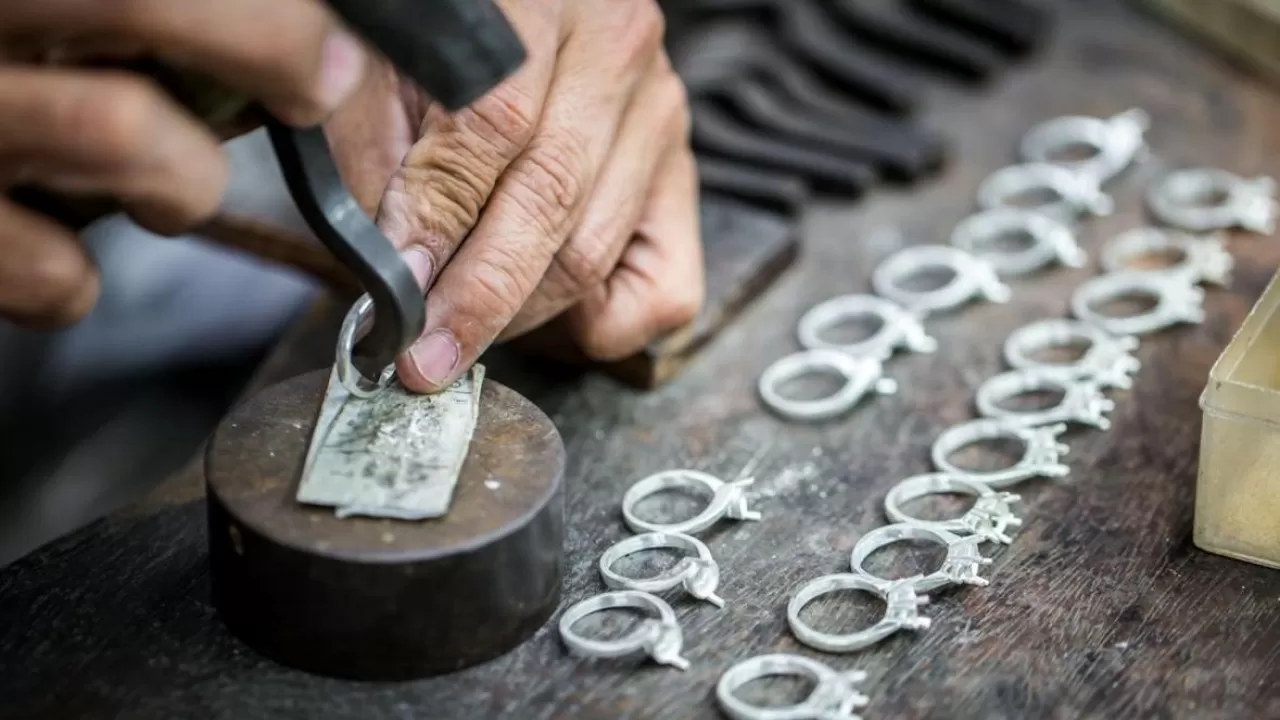
Photo credit: Press service of the Ministry of Industry and Construction
The rise of the production was discussed at a government meeting chaired by Deputy Prime Minister and Minister of National Economy Serik Zhumangarin on combating the shadow economy and illegal circulation of precious metals on Sept. 16.
According to the Ministry of Industry and Construction, Kazakhstan’s domestic jewelry market grew 3.4% in 2025, while jewelry production increased 31% to $7.2 million. Jewelry exports amounted to $65.4 million. At the same time, market participants estimate that a significant share of jewelry turnover remains in the shadow economy.
Government targets transparency in jewelry trade
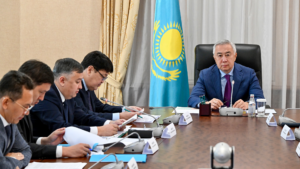
Deputy Prime Minister and Minister of National Economy Serik Zhumangarin chaired a Sept. 16 meeting on combating the shadow economy and illegal circulation of precious metals. Photo credit: PM’s press service.
The authorities are considering measures to increase transparency across the jewelry supply chain, including the handling of precious-metal scrap and waste. In 2025, pawnshops transferred nearly 3.2 tons of precious-metal scrap and waste to Tau-Ken Altyn for processing, down from 3.8 tons in 2024.
Against this backdrop, participants proposed working with the Agency for Regulation and Development of the Financial Market on mandatory transfer of precious-metal scrap and waste to refining entities, as well as improving the rules governing their acceptance and sale. The proposals are intended to strengthen oversight of the movement of precious metals and reduce opportunities for their circulation outside the formal economy.
Jewelers seek access to legal gold
Zhumangarin stressed that efforts to formalize the industry should also ensure that jewelers have practical conditions to operate legally.
“Jewelers are true artisans whose profession is passed down from generation to generation. We have major jewelry centers, and it is important to preserve this heritage and bring the industry into the formal sector as much as possible,” Zhumangarin said.
He emphasized the need to provide jewelers with access to a legal and affordable source of gold.
“Creating transparent conditions for their work will be one of the key steps toward formalizing the industry,” he said.
The comments reflect the authorities’ focus not only on enforcement but also on ensuring that businesses can obtain raw materials through legal channels.
Hallmarking remains limited
Mandatory hallmarking was another focus of the meeting. The number of businesses submitting jewelry for hallmarking increased sharply from 45 in 2024 to 959 in 2025. However, the number remains relatively small compared with the total number of taxpayers engaged in the jewelry trade.
There are currently 3,520 taxpayers operating in the jewelry sector, meaning that approximately 27% underwent mandatory hallmarking in 2025. The authorities proposed working with the Committee for Technical Regulation and Metrology to identify high-risk businesses and conduct relevant inspections.
Particular attention will be given to the possible reintroduction of processed jewelry into circulation, an area identified as requiring additional control.
Broader measures target shadow economy
The jewelry sector is part of a wider government effort to reduce the shadow economy through digitalization and closer integration of state information systems. According to the State Revenue Committee, 24 regulatory legal acts have been adopted and 20 information systems modernized over the past five years as part of efforts to combat the shadow economy.
The share of the shadow economy in GDP declined from 17.58% in 2023 to 15.69% in 2025. The government is also introducing digital tracking mechanisms in agriculture, oil and gas, energy, trade and construction to improve transparency and traceability.
Following the meeting, Zhumangarin instructed government agencies to ensure implementation of the Comprehensive Plan on Combating the Shadow Economy for 2026–2028 and strengthen interagency cooperation. He also ordered further work on proposals to improve regulation of precious-metal circulation and the jewelry market.
