
ASTANA – Representatives of Central Asian business associations, IT companies, experts and government bodies gathered in Astana on Sept. 28 to discuss proposals to make the region’s five digital markets more compatible and create easier conditions for technology companies to expand across Central Asia.
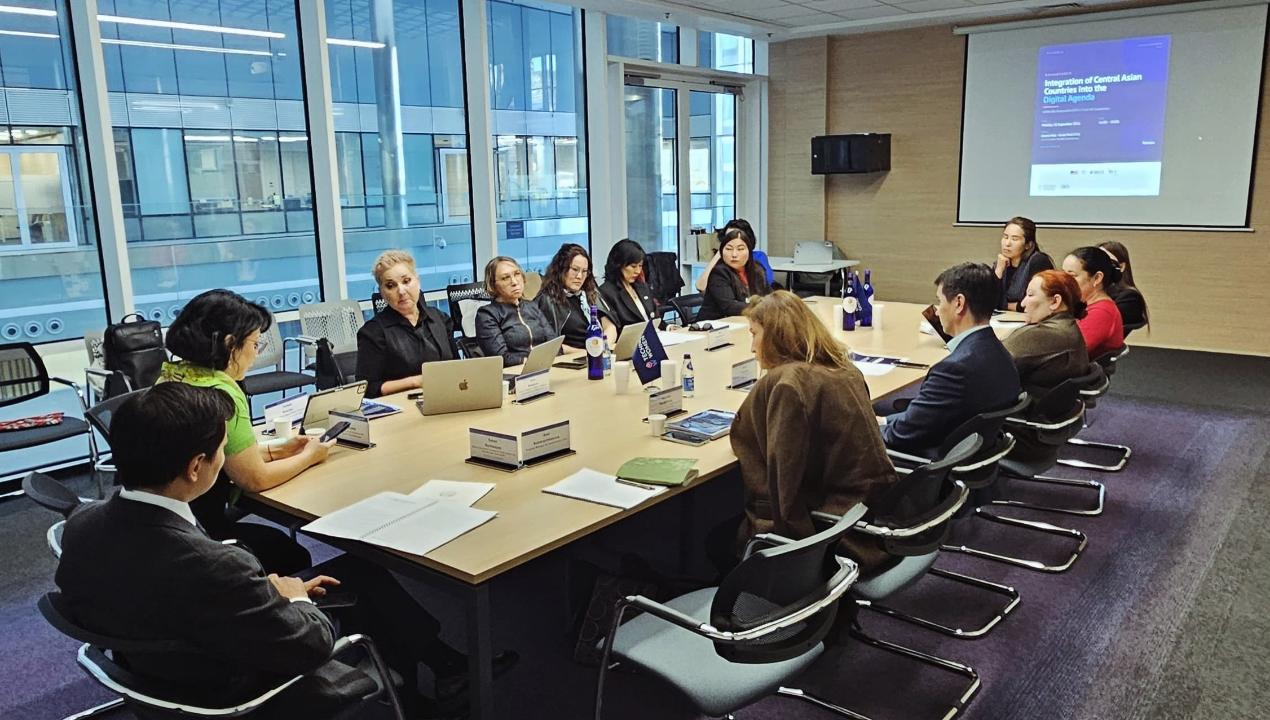
Representatives of Central Asian governments, business associations, IT companies and expert communities take part in a regional roundtable on digital integration in Astana. Photo credit: Ministry of Artificial Intelligence and Digital Development.
The regional roundtable was held with the support of Kazakhstan’s Ministry of Artificial Intelligence and Digital Development as part of the B5+1 Cycle. Discussions focused on initiatives proposed by the business community for inclusion in the Regional Business Agenda for 2027.
Toward compatible digital systems
A central proposal discussed at the meeting was a draft Agreement on Cooperation among Central Asian States in Digital Policy and Artificial Intelligence Governance. The proposed framework does not call for identical digital legislation or a supranational regulator. Instead, it envisages maintaining national legislation and digital sovereignty while gradually making countries’ legal and digital systems compatible.
The areas identified for closer alignment include electronic document management and digital identification, personal data protection, cybersecurity and AI regulation.
The initiative also proposes creating conditions for the mutual recognition of electronic documents, electronic signatures and digital identification tools. According to the proposal, this could reduce administrative and legal barriers for businesses providing digital services across borders.
“Our task is not to create another layer of regulation. We need to build digital bridges between the countries of Central Asia,” said Chair of the Board of TechnoWomen Aziza Shuzheeva.
Common principles for responsible AI
Another proposal presented at the roundtable was a draft Code of Ethics for the Responsible Use of Artificial Intelligence in Central Asia. The document would establish common ethical principles for the five countries while maintaining the priority of national legislation. It is designed as a recommendation and does not envisage a supranational AI regulator, mandatory certification or accreditation of AI systems.
One core principle is that AI can assist people in making decisions but should not replace human responsibility.
The draft proposes that when an AI-assisted decision significantly affects a person’s rights or interests, an algorithm should not make the decision alone. It also outlines proposed rights to know when a person is interacting with AI, receive an understandable explanation of an AI-generated result and request human review.
The document identifies several practices as unacceptable, including harmful manipulation, exploitation of vulnerable groups, discriminatory practices, unlawful use of personal data, and the use of synthetic content for fraud or harm.
Focus on Central Asian languages
The proposed code also addresses the region’s linguistic and cultural diversity. Participants proposed developing regional language resources and datasets to improve AI systems’ ability to work with Kazakh, Kyrgyz, Uzbek, Tajik, Turkmen and other regional languages.
The draft also includes provisions related to protection against algorithmic discrimination, gender equality and greater participation of women in the development, deployment and assessment of AI systems. Particular attention is proposed for the impact of AI technologies on children, older people, people with disabilities and residents of rural areas.
Six business proposals
The initiatives discussed at the meeting build on consultations the Regional IT & AI Working Group conducted with entrepreneurs, industry associations and experts across Central Asia.
During the previous cycle, the consultation process involved business communities representing more than 60 companies and organizations from Central Asia and the United States, including Meta, Mastercard and Google.
The broader objective is to encourage international technology companies to view Central Asia not as five separate markets but as an increasingly interconnected digital region with a population of more than 80 million. Proposed mechanisms include creating a permanent regional platform for dialogue between governments and the private sector, allowing businesses to participate early in discussions on digitalization and AI regulations.
Participants also discussed strengthening engagement with global technology companies, cloud providers, telecommunications operators and investors to identify regulatory and infrastructure barriers to investment in the region.
Building a regional technology market
The roundtable results are expected to contribute to the development of the B5+1 Regional Business Agenda for 2027. The long-term objective discussed at the meeting is to make it easier for startups and technology companies originating in Astana, Tashkent, Bishkek, Dushanbe or Ashgabat to expand into neighboring markets.
The proposed approach would allow companies to operate across a more compatible regional digital environment while preserving each Central Asian country’s national legislation and digital sovereignty.
