
ASTANA — Global certainty is not stopping investment. It is redrawing where capital goes and Kazakhstan can benefit from this shift, said Asian Development Bank Vice President Fatima Yasmin in an interview with The Astana Times.
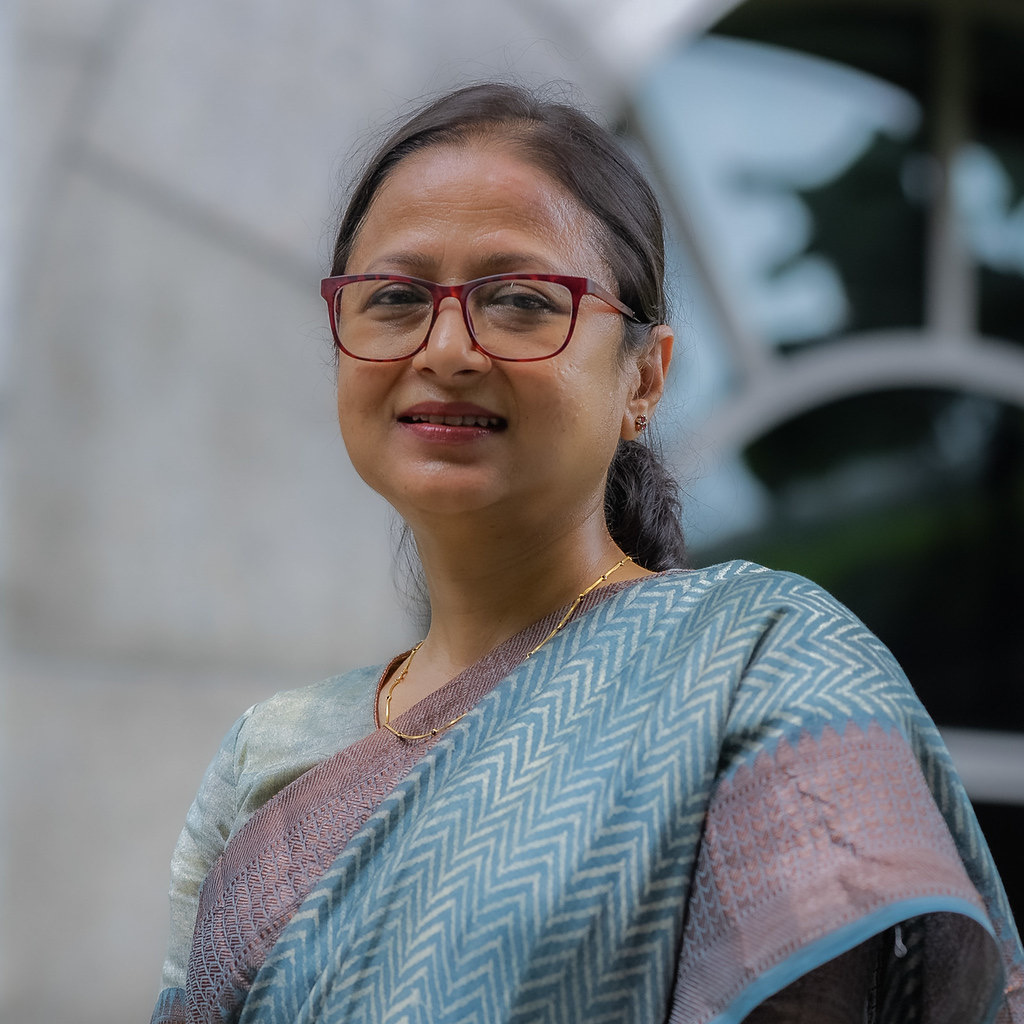
Fatima Yasmin. Photo credit: ADB
“Global uncertainty is making investors more selective, but it is not stopping investment,” said Yasmin, who visited Kazakhstan last week to attend the Foreign Investors’ Council meeting in Astana.
“In fact, capital is increasingly moving toward countries that can offer reliability, connectivity, and long-term growth opportunities. Investors are looking at new trade routes, energy and food security, critical minerals, digital infrastructure, and regional supply chains. Central Asia sits at the intersection of many of these priorities,” she explained.
In terms of Kazakhstan’s place in this changing map of opportunities, she said the nation is “well positioned to benefit from this shift.”
“It has the scale, resource base, and institutional capacity to serve as a regional investment anchor. In 2024, the country accounted for nearly 70% of accumulated FDI stock in the region. Its geostrategic location is becoming more valuable as companies reassess supply chains and seek alternative trade routes,” said Yasmin.
But to fully harness that potential, Kazakhstan has to diversify towards higher value-added production, processing, logistics, and technology-enabled sectors.
“Predictable rules, transparent procurement, bankable projects, and skilled human capital will be critical to strengthening Kazakhstan’s position as a reliable regional platform for investment, trade, and production,” she said.
This is where Yasmin sees the greatest potential for further expansion of cooperation between ADB and Kazakhstan – in its efforts to become a “more diversified, competitive, sustainable and inclusive economy.”
During his visit to Kazakhstan in March, ADB President Masato Kanda met with Kassym-Jomart Tokayev and announced up to $5.4 billion in indicative financing for Kazakhstan over 2026–2029 to support the country’s development priorities.
Yasmin highlighted the importance of better regional cooperation and integration.
“Kazakhstan is well placed to become a stronger trade, transport and logistics hub between Asia and Europe. ADB can further support this by helping strengthen transport and logistics links, especially the Trans-Caspian International Transport Route and CAREC corridors, while also improving border management and multimodal connectivity,” said Yasmin.
The nation should also expand efforts to boost private sector development. This, she noted, could be done through stronger public-private partnerships, direct financing to private sector companies, local currency financing, SME and microfinance support, and enhanced capital markets.
“Looking further ahead, digital infrastructure, artificial intelligence, and critical minerals to manufacturing value chains offer new opportunities,” Yasmin said, stressing that ADB’s role in this process is not merely one of providing financing, but also in policy advice, project preparation, knowledge sharing, and convening public and private partners around bankable reforms and investments.
She also pointed to the need to look at sustainability as a broader economic development goal, linking resilience, competitiveness and quality of life.
“It encompasses, for example, strengthening resilience to disasters, developing human capital through quality education and health, creating an enabling environment for private sector growth and job creation, improving competitiveness, and enhancing people’s quality of life,” she explained.
In this context, upgrading water and wastewater systems, district heating, housing and municipal services can make cities more livable and resilient, she said.
“ADB’s work with Otbasy Bank on green and affordable housing is one example of how sustainability can be linked directly to better living conditions and inclusion,” she said.
Transport links are central to that effort, connecting regional markets and giving people better access to jobs and services. Yasmin also pointed to food and water security as emerging priorities, as floods, droughts and glacier melt put pressure on agriculture and rural livelihoods.
“Finally, sustainability must have a strong social dimension. Investments in health, education, skills, affordable housing, gender equality, and inclusive finance are essential to ensure that the green transition creates opportunities and does not leave regions, workers, women, youth, or vulnerable groups behind,” said the vice president.
Kazakhstan has the foundations to expand its role as a continental transit and logistics hub, Yasmin said, but that ambition should be understood in broader terms than roads and railways alone.
“This goes beyond roads and railways, and includes waterborne transport on the Caspian Sea, aviation, energy transmission, digital networks, and different types of services. Projects such as ADB-financed Aktobe-Kandyagash road show how targeted infrastructure can improve safety, efficiency, and access to neighboring markets,” she said.
According to her, Kazakhstan’s next priority should be to pair major infrastructure investment with reforms that would make trade and transport links work more smoothly across border.
“On the hard infrastructure side, priorities include railways and roads along CAREC Corridor 2, which largely coincides with the Trans-Caspian Transport Corridor, upgrading the Caspian Sea ports, and advancing electricity transmission and fiber optic cable project connecting Kazakhstan and other Central Asian economies with Azerbaijan,” she said.
Soft infrastructure is just important, including harmonized rules with trading partners, e-logistics systems, faster border procedures and corridor-wide logistics solutions.
“Together, these measures can help Kazakhstan further strengthen its leading role in the Eurasian transport and transit systems,” she said.
